
Image: BBC World
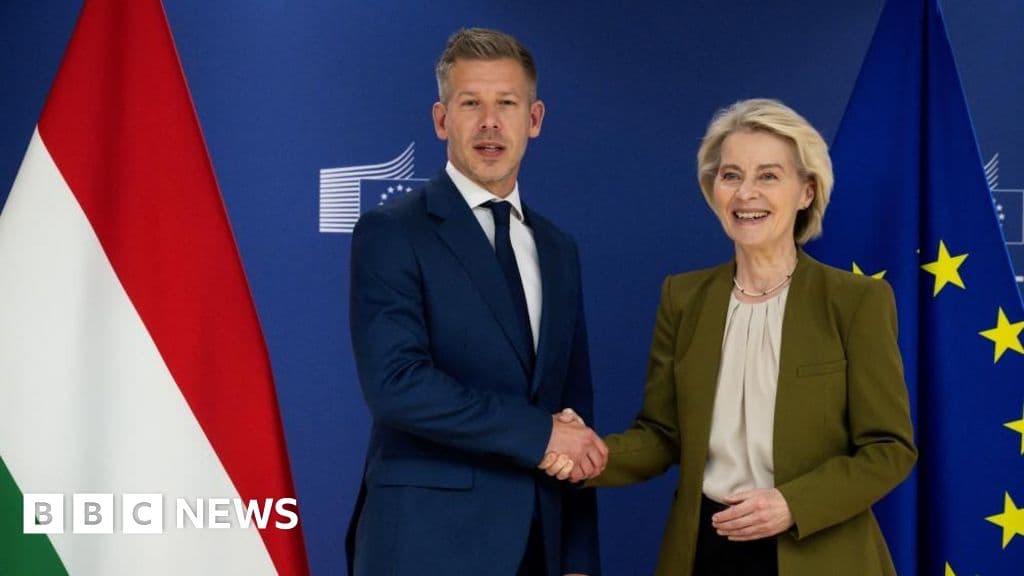
Hungary's new PM Péter Magyar vows to unlock frozen EU funds, promising economic revival as he meets EU leaders for the first time since his election.
GlipzoIn a significant political shift, Péter Magyar, the new Prime Minister-elect of Hungary, is set to revitalize the nation’s relationship with the European Union. Following a decisive victory in the elections on April 12, Magyar’s Tisza Party dismantled a 16-year tenure led by Viktor Orbán, marking a pivotal moment in Hungary’s political landscape.
Magyar's recent discussions with European Commission President Ursula von der Leyen were described as "extremely constructive and successful." He confidently stated, "In one sentence, EU resources will soon arrive in Hungary," indicating a promising future for Hungary’s economy once these funds are unlocked.
The newly elected leader has pledged to rejuvenate Hungary’s financial situation by accessing billions of euros in EU funds that have been frozen due to allegations of corruption and democratic backsliding under Orbán's administration. The Tisza Party aims to navigate through the conditions imposed by the EU, which emphasize anti-corruption measures and the need for judicial independence.
Márton Hajdu, a colleague of Magyar, outlined the straightforward conditions for releasing the funds: - No tolerance for corruption - Respect for the independence of the judiciary
Magyar's administration will have to act swiftly to meet these requirements, as the EU funds are crucial for revitalizing Hungary’s economy, which has struggled with minimal growth for the past three years.
After his meetings in Brussels, Magyar reassured the Hungarian public that the EU's expectations would not undermine national interests. He emphasized that the unblocked funds could be instrumental in resurrecting Hungary’s struggling economy.
Von der Leyen also commended the discussions, expressing her support for Magyar’s commitment to reinstating shared European values. She stated that the EU Commission would actively assist in Hungary’s pathway to reform, reinforcing a cooperative approach to governance.
Despite not being officially sworn in until May 9, Magyar is determined to expedite the process of securing EU funds. Just two days post-election, he reached out to Von der Leyen to discuss the release of financial support. He announced plans to return to Brussels on May 25 to formalize a political agreement that could pave the way for financial assistance.
His immediate focus is on unlocking €10.4 billion from the EU’s Covid-19 recovery fund, which is at risk of expiring by the end of August. This fund is tied to Hungary's commitment to implementing necessary reforms aimed at enhancing governance and anti-corruption measures.
In addition to the Covid-19 recovery funds, Magyar has his sights set on a further €6.3 billion in cohesion funds that were previously blocked due to rule-of-law concerns. He also anticipates potential access to €16.1 billion in low-interest EU defense loans. Furthermore, Magyar aims to eliminate a €1 million daily fine Hungary has incurred for non-compliance with EU migration directives.
With a commanding two-thirds majority in the National Assembly, the Tisza Party is well-positioned to implement significant reforms. The party, formed just over two years ago, secured 141 out of 199 seats, giving it the power to amend Hungary's constitution. This strong parliamentary support will be crucial as Magyar navigates the complexities of reforming Hungary’s relationship with the EU.
In a further sign of Magyar’s diplomatic ambitions, he has initiated plans to mend relations with Ukraine. He expressed intentions to meet with President Volodymyr Zelensky in early June in the Hungarian-majority town of Berehove, located in southwestern Ukraine. This move follows Orbán’s recent lifting of a veto against a €90 billion loan to Ukraine, suggesting a shift towards more cooperative relations within the region.
The developments in Hungary are not just significant for the nation but also for the entire European Union. As Magyar embarks on his governance, the manner in which he addresses the EU’s concerns will set a precedent for Hungary’s future, potentially stabilizing its economy and restoring its standing within the EU.
Magyar’s proactive approach could lead to a renaissance in Hungary’s financial landscape, fostering growth and ensuring that the country remains aligned with European standards and values. The outcomes of these negotiations will be closely watched by EU officials and citizens alike, as Hungary navigates this critical juncture in its history.
Looking ahead, all eyes will be on how quickly and effectively the new government implements reforms. The upcoming meetings in Brussels will be pivotal in determining the timeline for releasing essential funds. As the Tisza Party begins its tenure, its ability to address the EU's stipulations will be a defining factor in Hungary's economic recovery and political stability. Expect significant developments as Magyar's government strives to transform promises into tangible results for the Hungarian people and the broader European community.

Tensions soar as the US and Iran engage in air strikes near the Strait of Hormuz, raising concerns over global oil supply and regional stability.
BBC World
Trump's international interventions face serious stalemates. What will this mean for U.S. foreign policy? Explore the critical challenges ahead.
Indian Express
Tehran denies resignation of President Masoud Pezeshkian amid claims of IRGC influence. What does this mean for Iran's political stability? Click to learn more!
Indian Express