
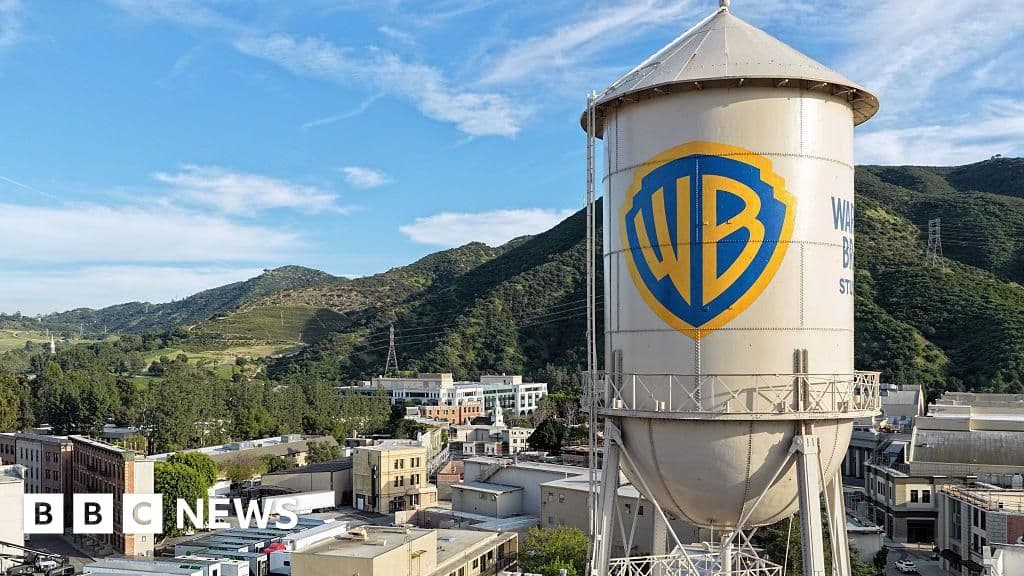
Image: BBC Business
Over 1,400 Hollywood stars oppose the Paramount-Warner merger, fearing job loss and reduced creative opportunities in a struggling entertainment industry.
GlipzoIn a bold stance against corporate consolidation in the entertainment industry, over 1,400 prominent figures in Hollywood, including acclaimed actors and directors, have signed an open letter opposing the proposed merger of Paramount and Warner Bros Discovery. This significant alliance features notable names such as Emma Thompson, Ben Stiller, Javier Bardem, and Rose Byrne, who collectively express concerns that the merger could inflict further damage on an industry already grappling with challenges.
The open letter articulates a strong message: "This transaction would further consolidate an already concentrated media landscape, reducing competition at a moment when our industries—and the audiences we serve—can least afford it." This statement underscores the belief among signatories that the merger threatens not only the fabric of Hollywood but also the diverse creative voices that rely on a competitive marketplace.
The proposed merger, which is estimated to be valued at $111 billion (£82.2 billion), comes at a precarious time for the entertainment sector. The industry is still feeling the repercussions of the COVID-19 pandemic, alongside the labor unrest that characterized 2023 with major strikes from actors and writers' unions. Additionally, the rapid changes brought on by big-tech innovations and shifting consumer preferences have left many industry professionals questioning the viability of their careers.
The merging of these two major studios could reduce the number of operational film studios in the U.S. to just four, a move that critics warn would lead to: - Fewer job opportunities for creators and production staff. - Increased costs for consumers. - Limited choices for audiences both in the U.S. and globally.
As more entertainment professionals add their names to the growing list of dissenters, the urgency of this movement becomes apparent. Kristen Stewart, Kristin Scott Thomas, and Glenn Close are among the many who have voiced their unequivocal opposition to the merger, reinforcing the idea that this is not just a corporate issue but a profound concern for the future of storytelling.
Among the signers is Damon Lindelof, the co-creator of celebrated series like Watchmen and Lost, who took to social media to voice his concerns. He stated, "Hollywood mergers mean fewer movies and fewer TV shows and that means fewer jobs," illustrating the direct impact that such consolidations could have on employment within the industry. Lindelof warns that when major studios combine, it often results in one studio becoming a shadow of its former self, leading to a decline in creative output.
This sentiment reflects a growing anxiety among industry professionals who feel that the merger will stifle diverse storytelling and limit opportunities for new talent.
In response to the mounting opposition, Paramount Skydance has reiterated its commitment to maintaining creative independence and producing quality content. David Ellison, the CEO of Paramount Skydance and son of tech billionaire Larry Ellison, has assured that the two studios will operate as distinct entities while aiming to increase their output to at least 30 high-quality feature films annually.
Ellison stated, "As creators, we know firsthand that this is also a moment when the industry has been facing significant disruption—and the need for strong, creative-first and well-capitalized companies that can continue to invest in storytelling has never been greater." This pledge aims to reassure industry professionals that the merger will not diminish creative opportunities but rather enhance them.
As the situation develops, the merger still requires approval from shareholders and government regulators, with a crucial vote scheduled for later this month. Paramount Skydance hopes to secure this approval by emphasizing its commitment to preserving independent creative leadership and ensuring that creators have more avenues for their work, not fewer.
The outcome of this merger could reshape the landscape of Hollywood for years to come. If approved, the consolidation may lead to a significant shift in how films and television shows are produced and distributed, potentially limiting the diversity of voices and stories that reach audiences.
The implications of the Paramount-Warner Bros Discovery merger extend beyond the immediate business interests of the studios involved. They touch on broader themes of competition, creativity, and consumer choice in an era where the entertainment industry is already under pressure. As audiences increasingly seek diverse and innovative content, the potential reduction of competition raises valid concerns about the future of storytelling.
As we watch this situation unfold, the entertainment community's response could very well dictate the direction of Hollywood in the coming years. The fight against this merger is not just about two studios; it is about preserving the artistic integrity of an industry that thrives on diversity and innovation.
As the clock ticks down to the shareholder vote, the voices of Hollywood's artists remain a powerful force. The outcome of this merger will not only affect the studios involved but could redefine the future of film and television for creators and audiences alike. The coming weeks will be critical in determining whether the industry can maintain its competitiveness and creativity in a rapidly evolving landscape.

Zahan Kapoor reveals an unconventional role in his upcoming film, signaling a significant shift from his breakout success in Black Warrant. What’s next for this rising star?
Bollywood Hungama
Discover how Vishal Jethwa is transforming his physique for Shakti Shalini, emphasizing the mental discipline behind peak fitness.
Bollywood Hungama
Discover the dark truths of urban development in Kammatipaadam, a film that reveals the often-overlooked sacrifices behind city growth.
Indian Express