
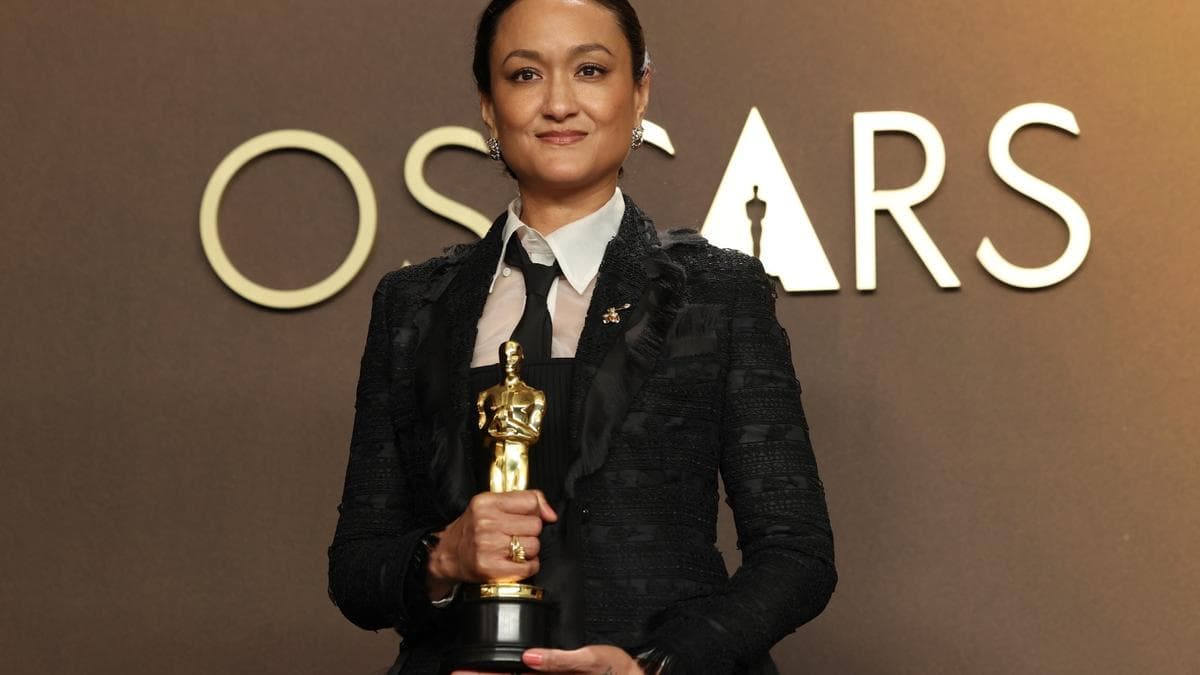
Image: The Hindu
Autumn Durald Arkapaw's Oscar win marks a turning point for women in cinematography. What does this mean for the future of female filmmakers?
GlipzoAutumn Durald Arkapaw made history at the 2026 Academy Awards by winning the Best Cinematography Award for her remarkable work on Sinners. Her victory is particularly significant as she is the first woman and the first woman of color to receive this prestigious honor in the cinematography category, a milestone that highlights the ongoing struggle for representation in the film industry. This landmark achievement resonates far beyond Hollywood, reaching audiences and filmmakers in India, where women have long faced challenges in breaking through the male-dominated realm of cinematography.
In India, the landscape of cinematography remains heavily skewed towards male professionals, making Arkapaw's win a beacon of hope for many aspiring female directors of photography (DOPs). Talented women like Anjuli Shukla, Savita Singh, Priya Seth, Modhura Palit, Kavya Sharma, and Preetha Jayaraman are slowly but surely carving out their space in a field that has historically sidelined their contributions. Despite the progress made, the journey towards equality is fraught with obstacles.
Even as female DOPs begin to reshape the visual storytelling of Indian cinema, significant disparities remain. Many women face a lack of recognition and opportunities due to prevailing gender biases. Four prominent cinematographers discussed the importance of visibility, mentorship, and perseverance in paving the way for future generations of women in film. Each shared personal insights into their experiences and the unique challenges they encounter on set.
As for the types of shots that inspire them, Jayaraman favors the classic “dolly shot,” while Palit treasures close-ups of faces, and Seth enjoys crafting well-designed, rehearsed single takes.
These female cinematographers celebrate what they call “small-big wins” during productions. For Sharma, it’s exhilarating when a team member presents a brilliant idea. Palit finds joy in a well-executed camera operation, and for Jayaraman, the most rewarding aspect is ensuring that all women on her set feel safe and included.
“Visibility and representation are powerful,” Sharma asserts, emphasizing that diverse storytelling fosters a richer cinematic experience. She expressed her enthusiasm for Arkapaw’s Oscar win, hoping it would prompt industry leaders to acknowledge and address the glaring representation gap.
Sharma’s breakthrough came with her work on Aarya Season 3, where she progressed through the ranks via second-unit work. She credits director Ram Madhvani for his commitment to hiring women, pointing out that such opportunities can dramatically alter the filmmaking process. Madhvani himself recognizes Sharma’s drive and unique perspective, noting that the varied experiences women bring to their roles enhance the storytelling process.
The impact of female DOPs on set dynamics is profound, as Sharma explains: “It’s not just about being visible; it’s about transforming the energy and approach to storytelling.” However, access to opportunities remains one of the fiercest battles women face in this field. Sharma has encountered blatant bias, revealing instances where directors explicitly stated they preferred male DOPs.
While Arkapaw’s Oscar win serves as a source of inspiration, it also carries a bittersweet undertone for cinematographer Priya Seth. Within hours of Arkapaw’s historic achievement, the Indian Women Cinematographers collective expressed both pride and frustration. The moment underscores the need for sustained efforts to elevate women's roles in the industry, ensuring that recognition is not a fleeting moment but the beginning of a broader transformation.
Seth and other women in cinematography continue to advocate for increased visibility and opportunities. Their experiences illustrate the ongoing struggle against outdated misconceptions about female capabilities in this demanding profession.
As the film industry grapples with evolving norms, the call for greater representation continues to grow louder. Arkapaw’s groundbreaking win can potentially serve as a catalyst for change, inspiring new policies and initiatives aimed at supporting female cinematographers. The narrative surrounding women in film is shifting, and the momentum gained from Arkapaw's success may encourage more studios and directors to actively seek out and hire women for key roles behind the camera.
The future looks promising, yet it demands continual vigilance and advocacy from those within the industry. The stories of women like Arkapaw, Sharma, Seth, and others are not just personal victories; they symbolize a collective movement toward equality in filmmaking. As audiences, we can support this change by championing diverse voices and demanding representation in the films we watch.
In the coming years, it will be crucial to watch how the industry responds to these calls for change. Will more women claim their rightful place in cinematography? Will the traditional barriers continue to crumble? Only time will tell, but the path forward is illuminated by recent victories, and the future of cinematography is bright with possibility.

Zahan Kapoor reveals an unconventional role in his upcoming film, signaling a significant shift from his breakout success in Black Warrant. What’s next for this rising star?
Bollywood Hungama
Discover how Vishal Jethwa is transforming his physique for Shakti Shalini, emphasizing the mental discipline behind peak fitness.
Bollywood Hungama
Discover the dark truths of urban development in Kammatipaadam, a film that reveals the often-overlooked sacrifices behind city growth.
Indian Express