
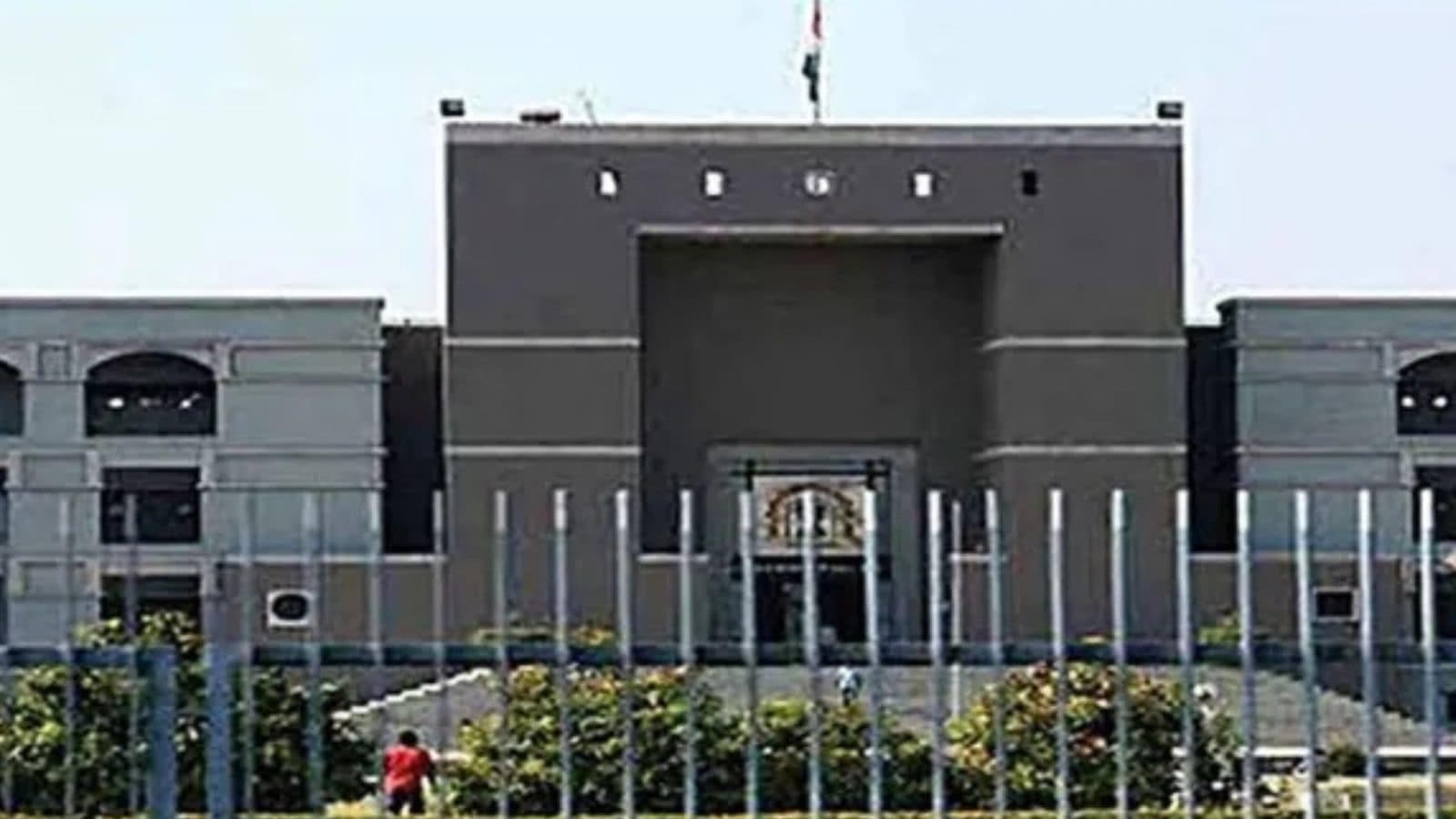
Image: Indian Express
Gujarat HC dismisses appeals in 2002 riot cases, citing evidentiary flaws. What does this mean for justice in communal violence cases?
GlipzoIn a significant legal decision, the Gujarat High Court has upheld the acquittals in two notorious cases linked to the 2002 riots, which involved harrowing allegations of victims being "thrown alive into the fire" and chased by violent mobs. The court dismissed appeals filed by the State in 2003 and an individual petitioner in 2007, reinforcing the importance of legal standards in ensuring justice amidst a backdrop of communal violence.
On April 18, 2026, the judgment was delivered by a bench consisting of Justice Nirzar Desai and Justice DN Ray. This ruling specifically challenged a 2003 decision from an additional sessions judge in Vadodara, which had acquitted five individuals accused of the heinous crime against a man named Samsuddin alias Kasam Khan in Khodiyar Nagar, Vadodara on February 28, 2002. The court’s decision highlights the complexities and challenges faced in adjudicating cases stemming from large-scale communal disturbances that erupted following tragic events like the Godhra train burning on February 27, 2002.
The context of the case is rooted deeply in the communal riots that devastated parts of Gujarat in 2002. Following the Godhra train incident, where 59 people lost their lives, widespread riots ensued, leading to numerous allegations of violence against minority communities. In this atmosphere, the FIR filed regarding Samsuddin's death emerged from a neighbor's complaint amid the chaos of the riots.
Prosecutors claimed that the five accused, along with around 200 others, formed an unlawful assembly with the intent to not only murder Samsuddin but also to incite widespread destruction of Muslim residential areas and businesses. The allegations included graphic descriptions of how a mob entered Samsuddin’s home, assaulted him, and ultimately threw him into a fire, resulting in his tragic death.
The State of Gujarat argued that the trial court had erred in its findings, stating that the prosecution's case was adequately supported by evidence. They highlighted the absence of the deceased’s bones at the site immediately following the incident, suggesting that the trial court had focused too heavily on this aspect without considering the circumstances of the riot.
The High Court's ruling centered around the evidentiary shortcomings in the prosecution's case. One crucial point made by the forensic expert was that it was impossible to ascertain whether the bones recovered days later belonged to a male or female, casting doubt on their connection to Samsuddin. The court cited this as a pivotal factor in its decision to support the acquittal.
Moreover, the complainant’s lack of knowledge about the identity of the assailants was also a significant concern for the court. The judgment noted that the incident unfolded during the night, in a situation where visibility was severely limited, which hindered the ability to identify the alleged attackers. The State had contended that the complainant had named the accused and identified them in court; however, the bench found this assertion insufficient to warrant a reversal of the acquittals.
The Gujarat High Court underscored that, as an appellate body, it cannot simply replace the trial court's judgment unless it finds the initial findings to be fundamentally flawed or manifestly erroneous. In this instance, the court concluded that the State had not demonstrated how the trial court’s findings contradicted the material on record.
The dismissal of the appeals serves as a reminder of the challenges in prosecuting cases related to communal violence, particularly where evidence is scarce or inconclusive. Legal experts suggest that the ruling might influence future cases tied to the 2002 riots and similar communal disturbances, as it emphasizes the importance of solid evidence and reliable witness testimony in the pursuit of justice.
The implications of this ruling extend beyond these individual cases; they highlight ongoing issues surrounding communal violence in India and the legal system's ability to deliver justice. The court's decision to uphold acquittals reflects the complexities of ensuring accountability in such volatile situations, where evidence may be compromised or lost due to the chaos of riots. It raises questions about the effectiveness of the investigative processes in cases of communal violence and the need for reforms to ensure justice for victims.
As the Gujarat High Court's ruling has set a precedent regarding the burden of proof in communal violence cases, legal analysts will be closely watching how future cases are handled. Stakeholders, including human rights organizations and legal experts, may advocate for reforms in investigative procedures to improve the collection of evidence in riot-related cases. Furthermore, this decision could spur further discussion about the need for systemic changes within the justice system to enhance accountability and ensure that victims of communal violence receive the justice they deserve.
In conclusion, while the Gujarat High Court has chosen to uphold the acquittals in these specific cases, the ongoing discourse surrounding justice for victims of the 2002 riots and similar incidents will likely continue to evolve, demanding attention from legal authorities and society at large.

Tensions soar as the US and Iran engage in air strikes near the Strait of Hormuz, raising concerns over global oil supply and regional stability.
BBC World
Trump's international interventions face serious stalemates. What will this mean for U.S. foreign policy? Explore the critical challenges ahead.
Indian Express
Tehran denies resignation of President Masoud Pezeshkian amid claims of IRGC influence. What does this mean for Iran's political stability? Click to learn more!
Indian Express