
Image: BBC Business
Discover the UK government's plans for new social media regulations for under-16s by year-end, sparking debate among families, experts, and campaigners.
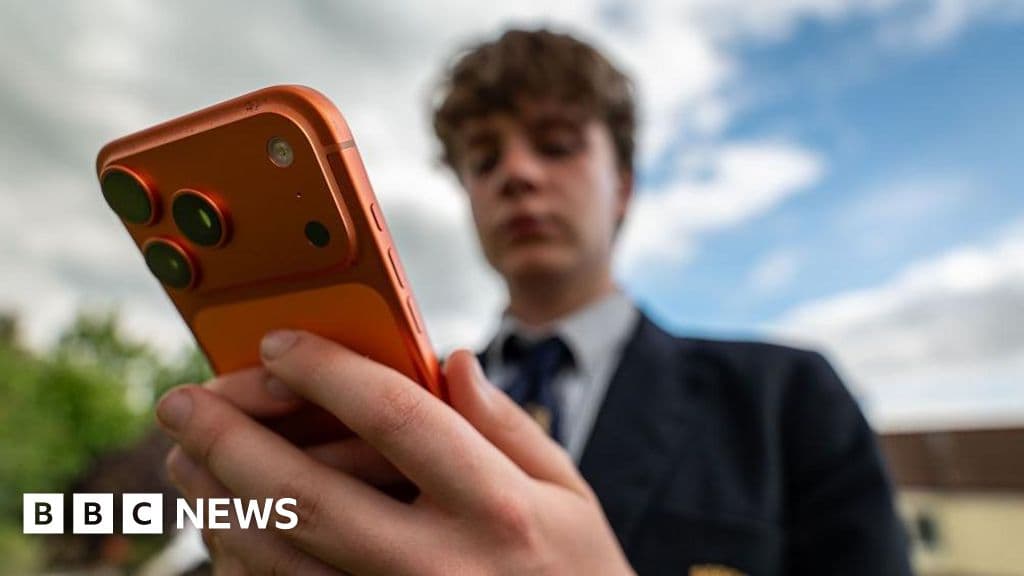
GlipzoThe UK government is set to introduce new regulations for social media usage among those under the age of 16 by the end of this year. This announcement was made by Technology Secretary Liz Kendall, marking a significant step towards enhancing online safety for minors. The government’s consultation on this matter, which has been ongoing since March, seeks to gather insights from parents and children to determine the most effective measures moving forward.
Kendall emphasized the urgency of the situation, stating, "The question isn't whether we're going to act - we will." As the consultation period draws to a close, anticipated responses to public feedback are expected this summer. The government is particularly interested in exploring various options, including a complete ban on social media platforms for children, a step already taken by Australia.
The consultation has generated a substantial response, receiving over 70,000 submissions from charities, advocacy groups, and the general public. These responses reflect a spectrum of opinions regarding potential restrictions, ranging from outright bans to other interventions aimed at improving safety for children online.
Some of the proposed measures under consideration include: - Night-time curfews for social media usage - Disabling features like auto-play and infinite scroll - Stricter age verification checks for accessing platforms - Regulations on children's interaction with AI chatbots
Despite the wealth of input, opinions on an outright ban vary significantly. Supporters of the ban, including police leaders, argue that platforms failing to remove certain harmful features should face restrictions for users under 16. In stark contrast, some advocate for alternative solutions rather than a blanket ban, suggesting that enforcing existing laws may be more effective.
Among the voices advocating for change is Ellen Roome, a bereaved mother whose son, Jools, tragically passed away at just 14 years old in 2022. Roome is slated to meet with Prime Minister Sir Keir Starmer to press for urgent action on social media access for minors. "Social media is a product, and like any other faulty product causing the deaths of children, it should be restricted until the companies responsible have fixed it and proven it is safe," Roome stated, highlighting the potential dangers social media poses to young users.
Furthermore, Lord Nash, a former education minister, has urged the government to fulfill its commitment to introduce age and functionality restrictions without delay. He underscored the importance of acting swiftly to protect children from potential online harms.
The call for action is echoed by the Academy of Medical Royal Colleges, the UK's foremost medical authority, which has classified social media use among youth as a serious health concern. In their submission, they argue that the risks associated with social media usage are comparable to those of smoking. They recommend that healthcare providers routinely assess children's screen time and social media exposure during medical consultations.
As discussions unfold, there remains no unanimous consensus within the scientific community regarding the impact of screen time on children. Critics of a total ban, such as Ian Russell, chair of the Molly Rose Foundation, contend that existing laws should be enforced more strictly rather than resorting to what they term "sledgehammer techniques like bans." This sentiment reflects a growing concern about the practical effectiveness of outright restrictions, especially considering reports from Australia where children have managed to access platforms that were supposed to be blocked for under-16s.
In addition, a coalition of child safety charities suggests that tech companies should be held to the same standards as the British Board of Film Classification, which governs movie ratings. This alignment could ensure that protections for teens are on par with those applied to films released in the UK.
As the UK government gears up to respond to the consultation feedback, the next steps remain crucial. The anticipated announcement this summer will likely set the tone for the country's approach to online safety for young users. Stakeholders will be watching closely to see how the government balances the need for safety with the rights of children to access digital spaces.
With various perspectives still in play, it’s clear that any forthcoming regulations will require careful consideration and robust enforcement mechanisms. As society becomes increasingly aware of the dangers posed by unregulated social media, the demand for comprehensive strategies to protect children online will only grow stronger. The landscape of social media regulation is evolving, and the decisions made in the coming months will shape the future of how young people interact with technology.
In conclusion, the UK government’s initiative to regulate social media for those under 16 represents a pivotal moment in addressing online safety. As families, campaigners, and the medical community rally for change, the outcome of this initiative could redefine the relationship between children and digital platforms for years to come.

Tensions soar as the US and Iran engage in air strikes near the Strait of Hormuz, raising concerns over global oil supply and regional stability.
BBC World
Trump's international interventions face serious stalemates. What will this mean for U.S. foreign policy? Explore the critical challenges ahead.
Indian Express
Tehran denies resignation of President Masoud Pezeshkian amid claims of IRGC influence. What does this mean for Iran's political stability? Click to learn more!
Indian Express