
Glipzo
WorldTechnologyBusinessSportsEntertainmentScienceHealthPolitics
Glipzo
WorldTechnologyBusinessSportsEntertainmentScienceHealthPolitics
  1. Home
  2. /
  3. Politics
  4. /
  5. Germany Reacts to US Troop Withdrawal Amid NATO Concerns
Germany Reacts to US Troop Withdrawal Amid NATO Concerns

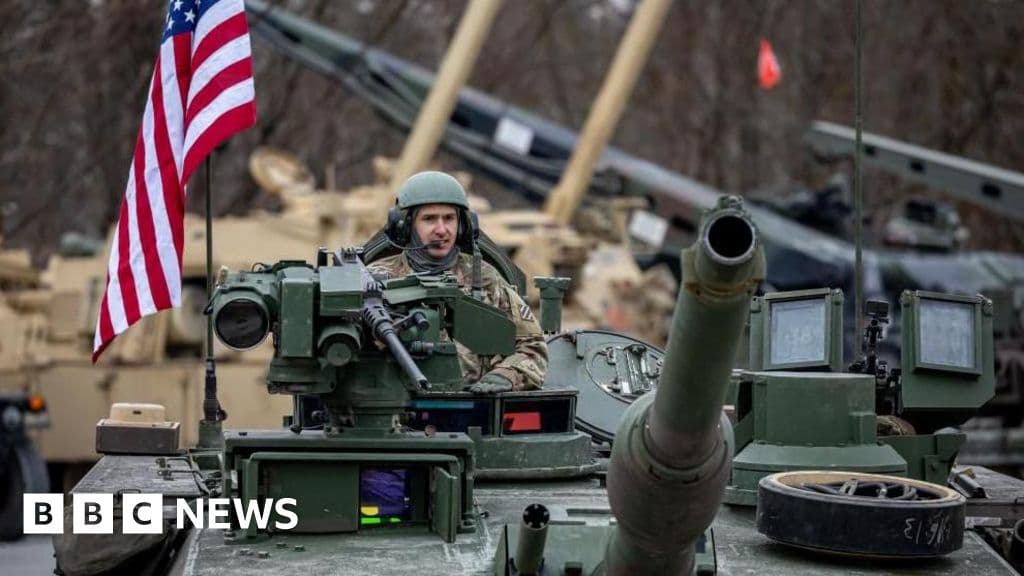
Image: BBC World

Politics
Sunday, May 3, 20264 min read

Germany Reacts to US Troop Withdrawal Amid NATO Concerns

Germany's defense minister calls US troop withdrawal 'foreseeable' as NATO seeks clarification. What does this mean for European security? Click to learn more.

Glipzo News Desk|Source: BBC World
Share
Glipzo

Key Highlights

  • US to withdraw 5,000 troops from Germany, raising NATO concerns.
  • Germany boosts defense spending amid US troop reductions.
  • Trump criticizes German Chancellor Merz over Iran negotiations.
  • NATO emphasizes need for European nations to invest in defense.

In this article

  • U.S. Troop Presence in Germany: A Strategic Overview The U.S. military maintains the largest troop presence in Europe in Germany, with over **36,000 active-duty soldiers** stationed there. In contrast, the numbers are substantially lower in other European nations, with approximately **12,000** troops in Italy and **10,000** in the UK. The American military presence has long been viewed as a stabilizing factor in European security, particularly as tensions rise globally.
  • Political Context: Tensions Between Trump and Merz The decision to withdraw troops occurs against a backdrop of recent criticism from President **Donald Trump**, who took issue with German Chancellor **Friedrich Merz**' comments regarding the U.S. negotiations with Iran. Merz described the U.S. as having been "humiliated" in negotiations, a claim that did not sit well with Trump. **Trump** responded on his platform, **Truth Social**, suggesting that Merz lacked understanding of U.S. foreign policy and the negotiations with Iran.
  • NATO's Reaction: Concerns Over Alliance Integrity The broader implications of the troop withdrawal have not gone unnoticed by NATO leaders. **Donald Tusk**, the Polish Prime Minister, warned that the real threat to the transatlantic community stems from the disintegration of the alliance itself rather than external adversaries. Tusk urged member nations to take action to reverse what he termed a "disastrous trend."
  • Germany's Defense Spending: A Shift in Priorities In light of these developments, Pistorius highlighted the need for Europe to assume greater responsibility for its own security. He noted that **Germany** has made strides in increasing its military budget, projecting a defense expenditure of **€105.8 billion** (£91 billion) by **2027**. This shift comes as a response to previous criticisms from Trump regarding Germany's defense spending, which had been below NATO's guideline of **2%** of GDP.
  • The Future of NATO and U.S. Military Presence in Europe The recent announcements from both the U.S. and Germany bring to light crucial questions about the future of NATO and the transatlantic security framework. **NATO's spokesperson**, **Allison Hart**, pointed out that the troop withdrawals emphasize the urgent need for European nations to invest more in their own defense. She noted that NATO allies had previously agreed to allocate **5%** of their GDP towards defense at a summit in **The Hague** last year.

In a significant development for international relations, Germany's defense minister, Boris Pistorius, acknowledged that the U.S. troop withdrawal of 5,000 personnel from Germany was anticipated. This statement comes as NATO seeks clarity from Washington regarding the implications of this decision.

U.S. Troop Presence in Germany: A Strategic Overview The U.S. military maintains the largest troop presence in Europe in Germany, with over **36,000 active-duty soldiers** stationed there. In contrast, the numbers are substantially lower in other European nations, with approximately **12,000** troops in Italy and **10,000** in the UK. The American military presence has long been viewed as a stabilizing factor in European security, particularly as tensions rise globally.

Pistorius emphasized the importance of U.S. soldiers in Europe, stating, "The presence of American soldiers in Europe, and particularly in Germany, is in our interest and in the interest of the U.S." This sentiment is echoed by NATO officials, who are actively working with the U.S. to understand the full ramifications of the troop withdrawal.

Political Context: Tensions Between Trump and Merz The decision to withdraw troops occurs against a backdrop of recent criticism from President **Donald Trump**, who took issue with German Chancellor **Friedrich Merz**' comments regarding the U.S. negotiations with Iran. Merz described the U.S. as having been "humiliated" in negotiations, a claim that did not sit well with Trump. **Trump** responded on his platform, **Truth Social**, suggesting that Merz lacked understanding of U.S. foreign policy and the negotiations with Iran.

Amid this political tension, Trump hinted at further reductions in troop levels, stating, "We're going to cut way down, and we're cutting a lot further than 5,000." He has also mentioned the possibility of reducing troop levels in Italy and Spain, raising alarms among NATO allies about the potential weakening of the alliance.

NATO's Reaction: Concerns Over Alliance Integrity The broader implications of the troop withdrawal have not gone unnoticed by NATO leaders. **Donald Tusk**, the Polish Prime Minister, warned that the real threat to the transatlantic community stems from the disintegration of the alliance itself rather than external adversaries. Tusk urged member nations to take action to reverse what he termed a "disastrous trend."

Moreover, two prominent U.S. lawmakers from Trump's own Republican Party expressed their apprehension regarding the troop withdrawal. Senator Roger Wicker and Representative Mike Rogers, leaders of the Senate and House Armed Services Committees, respectively, stated that maintaining a strong military presence in Europe is crucial for U.S. interests. They underscored the importance of deterrence in the region at a time when global tensions are on the rise.

Germany's Defense Spending: A Shift in Priorities In light of these developments, Pistorius highlighted the need for Europe to assume greater responsibility for its own security. He noted that **Germany** has made strides in increasing its military budget, projecting a defense expenditure of **€105.8 billion** (£91 billion) by **2027**. This shift comes as a response to previous criticisms from Trump regarding Germany's defense spending, which had been below NATO's guideline of **2%** of GDP.

As Germany aims to enhance its military capabilities, it is also factoring in ongoing support for Ukraine amidst its conflict with Russia, with total defense spending expected to reach 3.1% of GDP when including various defense funds.

The Future of NATO and U.S. Military Presence in Europe The recent announcements from both the U.S. and Germany bring to light crucial questions about the future of NATO and the transatlantic security framework. **NATO's spokesperson**, **Allison Hart**, pointed out that the troop withdrawals emphasize the urgent need for European nations to invest more in their own defense. She noted that NATO allies had previously agreed to allocate **5%** of their GDP towards defense at a summit in **The Hague** last year.

As tensions continue to escalate, the decisions made by the U.S. and Germany will have significant ramifications for global security. Observers will be closely monitoring how NATO responds to these challenges and the extent to which European nations will step up their defense commitments.

In conclusion, the evolving dynamics surrounding U.S. troop levels in Germany and the broader NATO alliance will be critical to watch in the coming months. The outcomes of these decisions could shape international relations and security strategies for years to come.

Did you find this article useful? Share it!

Share

Related Articles

Critical Air Strikes Erupt Between US and Iran in Gulf Region
Politics
Jun 1, 2026

Critical Air Strikes Erupt Between US and Iran in Gulf Region

Tensions soar as the US and Iran engage in air strikes near the Strait of Hormuz, raising concerns over global oil supply and regional stability.

BBC World

Trump Faces Stalemate in International Military Strategy
Politics
Jun 1, 2026

Trump Faces Stalemate in International Military Strategy

Trump's international interventions face serious stalemates. What will this mean for U.S. foreign policy? Explore the critical challenges ahead.

Indian Express

Tehran Denies Rumors of President Pezeshkian’s Resignation
Politics
Jun 1, 2026

Tehran Denies Rumors of President Pezeshkian’s Resignation

Tehran denies resignation of President Masoud Pezeshkian amid claims of IRGC influence. What does this mean for Iran's political stability? Click to learn more!

Indian Express

Categories

  • World
  • Technology
  • Business
  • Sports

More

  • Entertainment
  • Science
  • Health
  • Politics

Explore

  • Web Stories
  • About Us
  • Contact

Legal

  • Privacy Policy
  • Terms of Service
  • Disclaimer

© 2026 Glipzo. All rights reserved.