
Image: BBC World
Germany's finance minister blames Trump's Iran war for a major economic downturn. What does this mean for transatlantic relations and Germany's future?
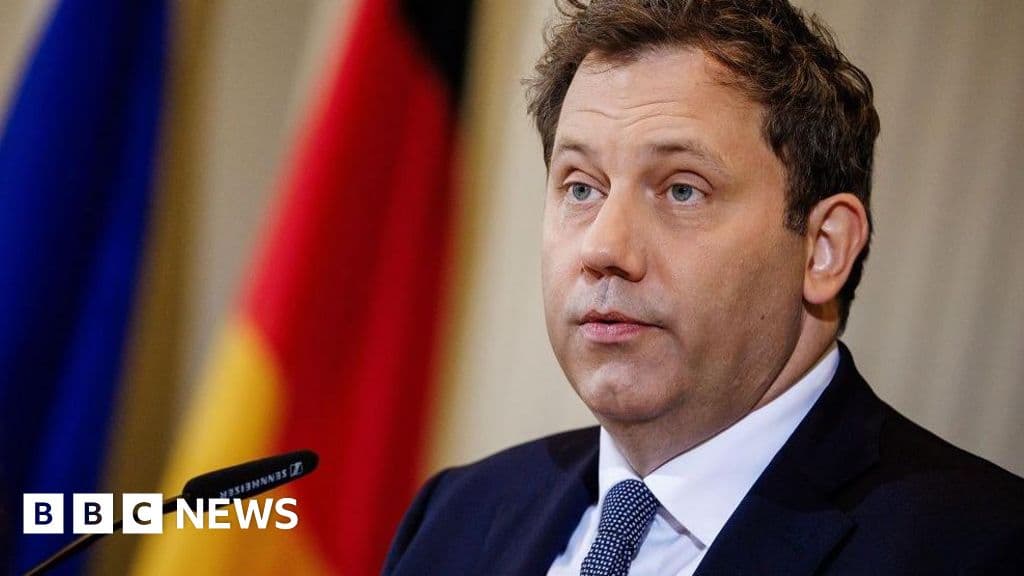
GlipzoGermany's finance minister has pinpointed Donald Trump's decisions regarding Iran as a primary factor in a severe drop in tax revenue, warning of serious economic repercussions. Lars Klingbeil, the finance minister, stated that Trump's so-called 'irresponsible war in Iran' has led to what he describes as a global energy shock that is significantly impacting Germany’s fiscal outlook.
In a recent announcement, the German government revised its estimated tax revenue for the period from 2026 to 2030, cutting it by approximately €70 billion (around $82 billion or £60.52 billion). Klingbeil expressed the gravity of the situation by stating, "This downgrade shows just how much the war in Iran is harming our economy," during a press conference in Berlin.
The strained relationship between Trump and Germany has been a recurring theme in international politics. Last month, Chancellor Friedrich Merz angered Trump by suggesting that the White House had been 'humiliated' by Iranian negotiators. This comment provoked a response from Trump, who threatened to withdraw a significant number of U.S. troops stationed in Germany.
Merz, who has been in office for just over a year, has frequently highlighted how Trump's policies have altered the previously robust ties between the United States and Europe. He remarked in February that a noticeable divide has emerged between the two regions, despite making efforts to mend relations through visits to the White House.
Germany, alongside other European nations, has expressed its discontent regarding the military engagement initiated by the U.S. and Israel against Iran on February 28. The ongoing conflict has exacerbated concerns about a potential global economic downturn. Despite Germany's coalition government attempting to revitalize the economy, it continues to face challenges, including high energy costs and weakened export demand.
In a recent address to students, Merz stated, "The Americans clearly have no strategy," and questioned the lack of a strategic exit plan from the ongoing conflict. He elaborated that Iranian negotiators have demonstrated a knack for avoiding productive discussions, further complicating the situation. "The entire nation is being humiliated by the Iranian leadership," he asserted.
In response to Merz’s remarks, Trump took to Truth Social to critique the German Chancellor. He claimed that Merz believes it is acceptable for Iran to possess nuclear weapons, and he criticized Germany's economic struggles, saying, "No wonder Germany is doing so poorly, both economically and otherwise!" Trump also advised Merz to focus on fixing his own country's issues, particularly in immigration and energy policies, instead of interfering with U.S. actions concerning Iran.
Just days after this exchange, the U.S. Department of Defense announced plans to withdraw 5,000 troops from Germany, a move that Germany's defense minister deemed predictable. The troop presence in Germany is significant, representing the largest U.S. military deployment in Europe, with around 12,000 troops stationed in Italy and another 10,000 in the United Kingdom.
Trump has long been a critic of the NATO alliance, often chastising allies for not supporting his initiatives, particularly regarding the Strait of Hormuz. This vital shipping route typically accounts for approximately 20% of the world's oil and liquefied natural gas (LNG) shipments. The ongoing hostilities have caused global fuel prices to skyrocket, raising the stakes for all involved.
Currently, both sides in the conflict are observing a ceasefire, which is intended to pave the way for a resolution to the war. On Wednesday, Trump expressed confidence that the conflict would conclude swiftly. Meanwhile, Iran has indicated it is weighing a U.S. proposal aimed at ending hostilities. However, negotiations have faced significant roadblocks, particularly due to the U.S. blockade on Iranian ports and efforts to reopen the Strait of Hormuz, which would allow nearly 2,000 ships stranded in the Gulf since February to traverse the waters safely.
As the situation unfolds, the implications of Trump's foreign policy decisions continue to resonate deeply within Germany's economy and its international relationships. The economic forecast remains uncertain, with significant challenges ahead for the German government in navigating the fallout from geopolitical tensions.
Looking forward, observers will want to monitor the effects of troop withdrawals, the evolution of negotiations regarding the Iran conflict, and how these developments influence Germany's economic recovery strategy. The interconnectedness of these issues suggests that the coming months will be critical for both domestic and international politics.
Ultimately, the interplay between U.S. foreign policy and European economic stability will be a focal point for experts and policymakers alike, as they seek to understand the broader ramifications of this ongoing crisis.

Tensions soar as the US and Iran engage in air strikes near the Strait of Hormuz, raising concerns over global oil supply and regional stability.
BBC World
Trump's international interventions face serious stalemates. What will this mean for U.S. foreign policy? Explore the critical challenges ahead.
Indian Express
Tehran denies resignation of President Masoud Pezeshkian amid claims of IRGC influence. What does this mean for Iran's political stability? Click to learn more!
Indian Express