
Image: BBC World
Explore five key takeaways from King Charles III's impactful address to Congress, highlighting the state of US-UK relations and future implications.
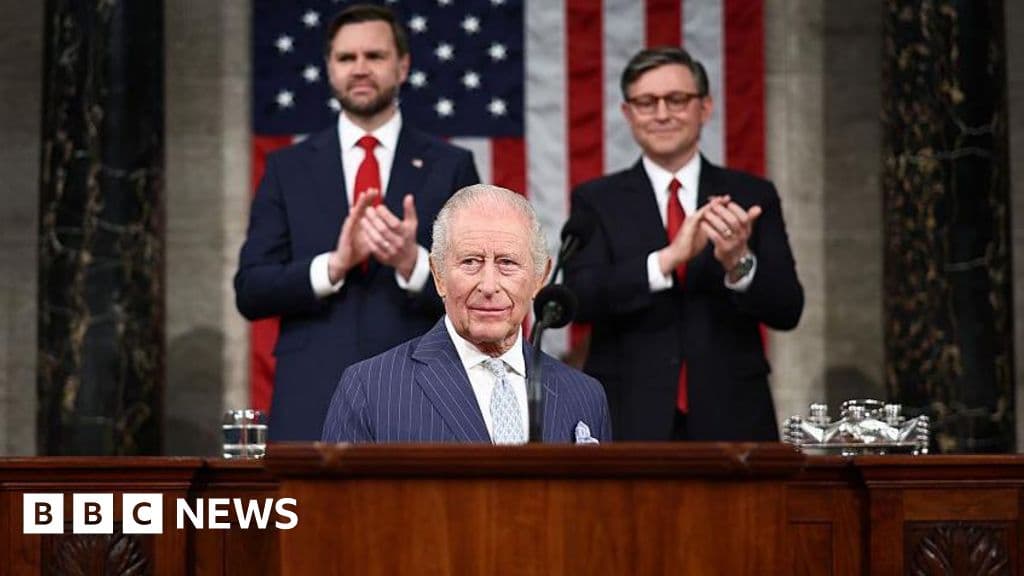
GlipzoIn a historic visit to the United States, King Charles III delivered a significant address to Congress on Tuesday, aimed at celebrating the 250th anniversary of the United States while navigating the complexities of current US-UK relations. The backdrop of the speech is marked by rising tensions, particularly regarding the UK’s stance on the US-Israeli conflict with Iran.
King Charles III’s visit was not just a ceremonial occasion. It has been described as a necessary diplomatic effort, aimed at mending the frayed ties between the two nations. His speech served as a royal charm offensive, designed to reaffirm the special relationship that has long existed between the US and the UK.
King Charles opened his address with an unvarnished acknowledgment of the “times of great uncertainty” facing both nations. He outlined ongoing global conflicts, including those in the Middle East and Europe, which have contributed to the diplomatic strain. By addressing these issues directly, the King demonstrated a willingness to confront the uncomfortable realities that both countries must navigate.
In a nod to the historical complexities of the US-UK relationship, he remarked, “With the spirit of 1776 in our minds, we can perhaps agree that we do not always agree.” This statement not only recognizes the historical context of the two nations but also sets the stage for a conversation about collaboration despite differences.
Towards the end of his remarks, King Charles emphasized the importance of “reconciliation and renewal” between the US and UK. His assertion that both nations could achieve great things when aligned resonated with the audience. This moment was underscored by a standing ovation, particularly when he referenced the executive power tradition rooted in British legal history, encapsulated in the Magna Carta, which laid the groundwork for the US Constitution.
The King’s comments on checks and balances struck a chord, especially among Democrats, who have voiced concerns over President Donald Trump’s approach to governance. The applause that began on the Democratic side before spreading throughout the chamber highlighted the bipartisan appeal of the King’s message.
One of the most striking moments came when King Charles stated, “America's words carry weight and meaning, as they have since independence. The actions of this great nation matter even more.” This line drew a mixed response, indicating that while many in the audience agreed with the sentiment, the implications of such a statement were not lost on the Democrats.
Critics of President Trump may have interpreted this as a reminder of the importance of responsibility in leadership, an echo of their ongoing concerns regarding his rhetoric and actions. This could suggest that King Charles, whether intentionally or not, was providing a subtle critique of the current administration’s approach.
King Charles’ address was particularly notable as it marked the first royal speech to Congress since Queen Elizabeth II did so in 1991. The historical significance of this moment cannot be understated, especially given the current geopolitical climate. As the King referenced the Atlantic partnership, he highlighted the mutual defense obligations of NATO, reminding attendees of the alliance's foundational purpose, which was notably activated after the 9/11 attacks.
Throughout his address, King Charles aimed to reinforce the Anglo-American alliance, suggesting that while challenges persist, the nations’ shared values and mutual respect can lead to renewed collaboration.
Looking ahead, the implications of King Charles III's address could be profound. As both nations navigate their respective political landscapes, the King's words may serve as a catalyst for renewed dialogue and cooperation. The emphasis on reconciliation and shared values suggests that there may be room for a revitalized partnership, contingent upon both countries’ willingness to engage constructively.
As King Charles concluded his speech, the atmosphere in the room reflected a cautious optimism. While the relationship between the US and UK is currently strained, there remains potential for healing and progress. Observers will be keen to see how this royal visit influences future diplomatic interactions and whether it can indeed pave the way for a stronger alliance in the years to come.
The significance of King Charles III’s address is multifaceted. It serves as a reminder of the historical ties that bind the US and UK while addressing contemporary issues that threaten to divide them. By acknowledging the challenges and emphasizing the importance of collaboration, the King not only honors the legacy of the relationship but also sets a hopeful tone for the future.
As the world watches, the next steps in US-UK relations will be crucial. Will King Charles III's diplomatic efforts lead to a more unified stance on global issues? Only time will tell, but the foundations laid during this visit may very well shape the future of this historic alliance.

Tensions soar as the US and Iran engage in air strikes near the Strait of Hormuz, raising concerns over global oil supply and regional stability.
BBC World
Trump's international interventions face serious stalemates. What will this mean for U.S. foreign policy? Explore the critical challenges ahead.
Indian Express
Tehran denies resignation of President Masoud Pezeshkian amid claims of IRGC influence. What does this mean for Iran's political stability? Click to learn more!
Indian Express