
Image: Wired
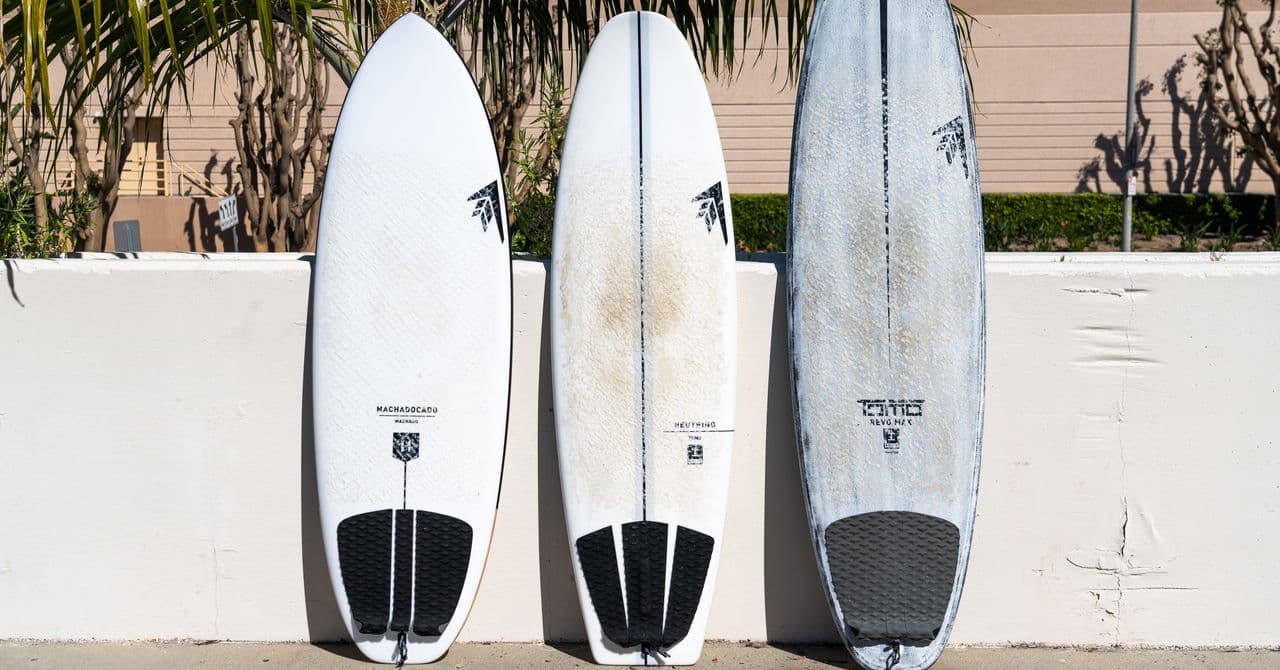
Explore the cutting-edge Firewire surfboards of 2026: Neutrino, Machadocado, and Revo Max, designed for performance and sustainability.
GlipzoFor generations, surfboard manufacturing has largely adhered to a traditional method: shaping foam, inserting a wooden stringer, and wrapping it in fiberglass. However, Firewire Surfboards has changed the game entirely. With its innovative 21-step construction process and advanced materials like aerospace-grade foams, carbon fiber, and bio-resins, Firewire is crafting surfboards that feel like they belong in the future. This review delves into three of their latest models—the Neutrino, Machadocado, and Revo Max—each uniquely designed to cater to different surfing styles and wave conditions.
The surf industry often clings to conventional designs, but Firewire’s approach proves that cutting-edge materials can significantly enhance performance. During the fall and winter seasons, I put these three boards to the test, and the results were impressive. Here’s a closer look at each model and what I discovered.
December 2005 marked a pivotal moment in the surfboard industry with the sudden closure of Clark Foam, which had supplied around 90% of the traditional polyurethane (PU) surfboard blanks. This event, often referred to as “Blank Monday,” left many board manufacturers scrambling for alternatives. The shift towards expanded polystyrene (EPS) foam and epoxy resins became prevalent, but this transition also brought performance challenges. EPS boards tended to feel overly buoyant, often leading to a disjointed surfing experience.
Around this time, innovative Australian shapers Nev Hyman and Bert Burger were pioneering a new design concept. They introduced a technique called “sandwich construction,” where a composite deck skin was affixed to both the top and bottom of the EPS core. This design not only improved structural integrity and vibration dampening but also eliminated the need for a central wooden stringer, replacing it with two parabolic rails that enhanced control and speed.
In 2006, former ASP World Tour surfer Mark Price experimented with a prototype of these boards and subsequently founded Firewire, collaborating closely with Hyman and Burger. By 2007, pro surfer Taj Burrow was competing on Firewire boards, marking a significant moment when he became the first elite surfer to win major events using non-traditional construction methods.
Throughout the years, Firewire has continually refined its Future Shapes Technology (FST). By 2017, they debuted Helium, a new construction method that reduced weight by 15%. This advancement included enhanced foam and deck skins and a refined vacuum process that minimized resin usage, resulting in lighter boards.
The transition from solid balsa to a mix of balsa and paulownia woods in the rails delivered a softer flex, making boards easier to maneuver and turn. I have ridden several Helium boards over the past few years, including this year’s Machadocado, crafted by legendary pro surfer Rob Machado.
The Neutrino is designed for precision surfing, excelling in both small and larger waves. Its lightweight construction allows for quick turns and agile maneuvers. The combination of EPS core and advanced resin technology enhances buoyancy while maintaining a stable ride. Surfers will appreciate how this board responds to their movements, making it ideal for those looking to fine-tune their skills.
Rob Machado's Machadocado is a standout model that exemplifies versatility. This board is perfect for intermediate to advanced surfers, offering a balance between performance and comfort. Its unique shape and flex characteristics enable sharp turns while providing enough stability to ride through choppy conditions. The Machadocado is not just a surfboard; it's a tool for expression on the waves.
The Revo Max is built for those who thrive on adventure and seek out challenging surf conditions. This model features a broader outline, providing increased paddle power and stability. It excels in bigger surf and is engineered to handle powerful waves, making it a favorite among those who push their limits.
Firewire Surfboards represents a crucial evolution in surfboard technology, merging sustainability with performance. By utilizing eco-friendly materials and innovative construction methods, they not only enhance the surfing experience but also contribute to a more sustainable future for the sport. This commitment to environmental responsibility is vital in today's world, where the impact of climate change is felt strongly in coastal regions.
Looking to the future, Firewire continues to innovate and lead in the surfboard market. The emphasis on sustainable materials and advanced technologies positions them as a frontrunner in an industry that is slowly acknowledging the need for ecological responsibility. As surfers become more conscious of their environmental impact, brands like Firewire will likely gain traction.
In conclusion, if you’re looking to elevate your surfing experience, consider trying one of Firewire's latest models. Their unique blend of technology and design not only enhances performance but also aligns with a growing movement towards sustainability in the surfing community. Keep an eye on Firewire as they continue to redefine what’s possible on the waves.
What to Watch For: As the surf industry evolves, expect more brands to adopt similar technologies and materials. Firewire’s influence could lead to broader shifts toward sustainable practices across the board, ultimately changing how surfboards are made and impacting the future of surfing itself.

Rajat Patidar leads RCB to back-to-back IPL titles! Discover his leadership insights and goals for a historic third title in the upcoming season.
Indian Express
Gujarat Titans' Vikram Solanki reflects on their IPL 2026 final loss, acknowledging shortcomings and praising RCB's performance. What’s next for GT?
Indian Express
Virat Kohli and Anushka Sharma celebrate RCB's IPL 2026 victory with joy and emotion. Discover the highlights of this unforgettable night!
Indian Express