
Image: BBC World
The FCC's early review of Disney's licenses after Kimmel's joke about Melania Trump raises critical questions about censorship and media freedom.
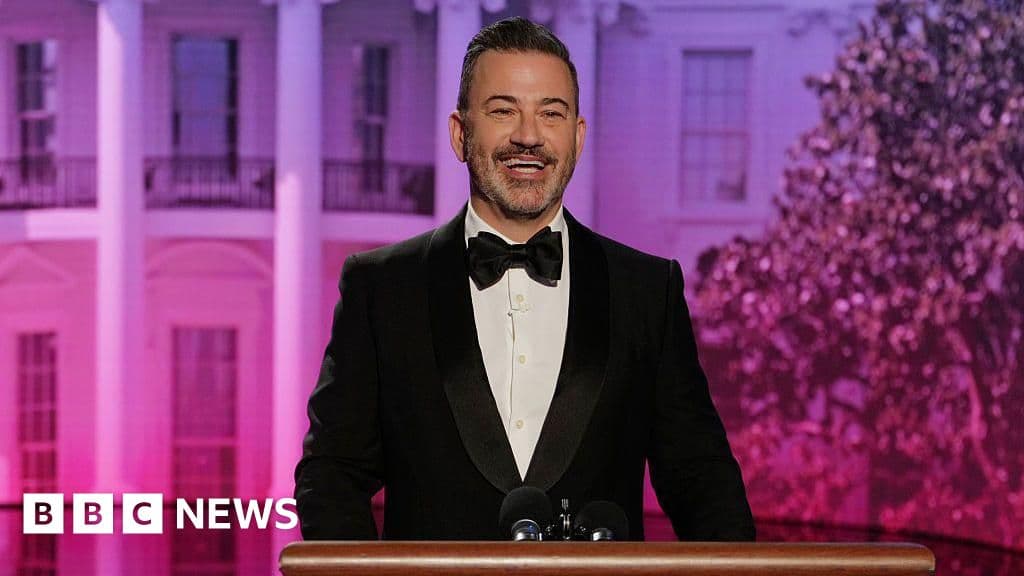
GlipzoIn a surprising move, the U.S. Federal Communications Commission (FCC) has initiated an early review of Disney's broadcast licenses following a controversial joke made by late-night host Jimmy Kimmel about Melania Trump. This decision comes shortly after former President Donald Trump called for Kimmel's dismissal from ABC, which is owned by Disney. The incident has raised significant questions about the intersection of comedy, politics, and media regulation in America.
The FCC's order, issued on Tuesday, is particularly notable given that it is investigating the practices of Disney's ABC stations for potential violations such as unlawful discrimination. In a climate where media personalities are increasingly scrutinized, the timing of this review has sparked intense debate about free speech and political influence in media.
The controversy began when Kimmel made a joke referencing Melania Trump, suggesting she had the appearance of an "expectant widow." This quip came just days before a gunman opened fire at a gala attended by the Trumps, heightening the sensitivity surrounding Kimmel's comments. In response, Trump urged that Kimmel be removed from the airwaves, labeling his remarks as a serious affront.
The FCC's directive requires Disney to submit license renewal applications for all its licensed television stations within 30 days. Typically, these licenses are not scheduled for renewal until 2028, making this early review a rare and significant occurrence in the regulatory landscape. The FCC can assess whether Disney meets its public interest standards during this process, a move that could ultimately jeopardize ABC's broadcasting licenses if violations are found.
The implications of the FCC's actions have been met with critique from various political figures. Anna M. Gomez, a Democratic FCC commissioner, condemned the FCC's order as a “political stunt”, claiming it was both unprecedented and unlawful. She expressed that companies should challenge the FCC’s actions, citing the First Amendment as a protective measure against such governmental pressure.
In light of these developments, White House Communications Director Steven Cheung has also weighed in, suggesting that Kimmel should be “shunned for the rest of his life” for his comments. This call for censorship raises questions about the limits of political discourse and the role of comedians in contemporary society.
In defense of his remarks, Kimmel addressed the controversy during his show, stating that his comments were intended as a light-hearted roast, not a call to violence. He emphasized his longstanding advocacy against gun violence, attempting to clarify the context of his joke amidst the surrounding chaos of recent events.
Kimmel's defense comes at a time when tensions are high, especially after the shooting incident at the gala, where Melania Trump accused Kimmel of exacerbating America's political sickness. The shooter, identified as Cole Tomas Allen, now faces charges related to attempting to assassinate the president, further complicating the narrative around Kimmel’s joke.
According to Jeffrey Schneider, a professor at the University of Southern California Gould School of Law, the FCC's call for an early license review is quite unusual. He noted that while early reviews have occurred in the past, they typically involve technical issues or fraudulent conduct rather than political commentary. Schneider expressed skepticism about the likelihood of Disney losing its licenses, pointing out that the burden of proof lies with the FCC to demonstrate intentional violations of regulations.
This situation raises broader questions about the role of governmental agencies in regulating free speech and the potential chilling effects on media personalities who engage in political satire. Schneider described the FCC's action as a “purely political act” intended to placate the Trump administration's supporters.
As the FCC conducts its review, the future of Disney's broadcast licenses hangs in the balance. The situation is likely to evolve into a significant legal and political battle, especially as companies like Disney may feel compelled to challenge the FCC's authority in this context. The coming weeks will be crucial as stakeholders, including media companies, political figures, and the public, navigate the implications of this unprecedented FCC action.
In the wake of this controversy, all eyes will be on how Disney responds to the FCC's demands and whether Kimmel's show will face further repercussions. The outcome of this situation may set a precedent for how future controversies involving public figures and regulatory bodies are handled.
The intersection of comedy and regulation is a complex arena that continues to provoke debate. The FCC's review of Disney's broadcast licenses following Kimmel's controversial comments raises important questions about censorship, the role of humor in political discourse, and the balance between free speech and accountability. As this story unfolds, it will be essential to monitor how both the FCC and Disney navigate these turbulent waters, as the outcomes could have lasting implications for the media landscape in the United States.

Tensions soar as the US and Iran engage in air strikes near the Strait of Hormuz, raising concerns over global oil supply and regional stability.
BBC World
Trump's international interventions face serious stalemates. What will this mean for U.S. foreign policy? Explore the critical challenges ahead.
Indian Express
Tehran denies resignation of President Masoud Pezeshkian amid claims of IRGC influence. What does this mean for Iran's political stability? Click to learn more!
Indian Express