
Glipzo
WorldTechnologyBusinessSportsEntertainmentScienceHealthPolitics
Glipzo
WorldTechnologyBusinessSportsEntertainmentScienceHealthPolitics
  1. Home
  2. /
  3. Politics
  4. /
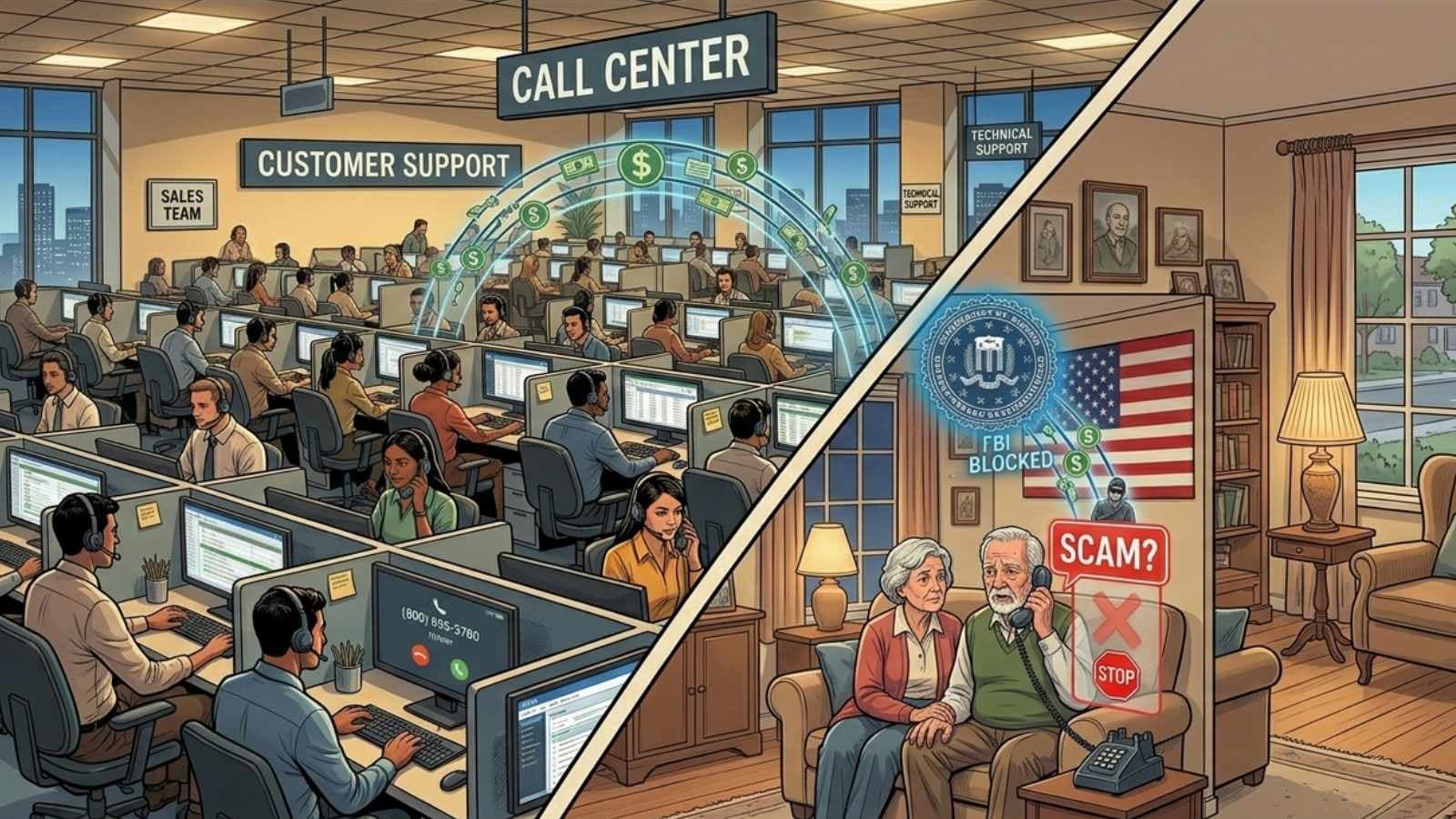
  5. FBI Shuts Down Indian Call Center Defrauding US Elderly
FBI Shuts Down Indian Call Center Defrauding US Elderly

Image: Indian Express

Politics
Thursday, May 21, 20264 min read

FBI Shuts Down Indian Call Center Defrauding US Elderly

The FBI shuts down an Indian call center defrauding US seniors of millions. Learn how scams target the elderly and what consumers can do to protect themselves.

Glipzo News Desk|Source: Indian Express
Share
Glipzo

Key Highlights

  • FBI shuts down Indian call center defrauding US seniors.
  • Scams cost Americans $2.1 billion last year alone.
  • Executives admit negligence in monitoring fraudulent activities.
  • Seniors reported $5.7 million in losses in Rhode Island alone.
  • Educate yourself to avoid becoming a victim of tech support fraud.

In this article

  • FBI Takes Action Against Fraudulent Call Center in India The **Federal Bureau of Investigation (FBI)** has launched a significant crackdown on a call center based in India, which has been implicated in defrauding **hundreds of elderly individuals** in the United States and beyond. This operation allegedly siphoned off **millions of dollars** through deceptive tech support scams, prompting the FBI to intervene and shut down operations.
  • Background of the Investigation The FBI's investigation was spearheaded by its Boston division and resulted in multiple arrests, including a former employee of the call routing company that facilitated the scams, along with five telemarketing fraudsters operating in India. The agency emphasized the importance of safeguarding senior citizens, stating, **“Our senior citizens deserve honor, respect, and protection.”**
  • The Mechanics of the Scam Fraudulent tech support scams often target elderly individuals, exploiting their lack of familiarity with technology. Here's how these scams typically operate: - **Initial Contact**: Scammers often contact victims via phone or pop-up messages, claiming to be from reputable tech companies. - **Creating Urgency**: They create a false sense of urgency, convincing victims that their computers are infected with viruses or that urgent updates are required. - **Financial Exploitation**: Victims are then asked to pay for unnecessary services or software, sometimes involving remote access to their computers, leading to further financial loss and identity theft.
  • A Call to Action for Consumers In light of these developments, it is crucial for consumers, particularly the elderly, to be aware of the signs of tech support scams. Here are some tips to avoid falling victim: - **Be Skeptical**: Always question unsolicited calls about your computer or software issues. - **Verify Companies**: If you receive a call from someone claiming to be from a well-known tech company, hang up and contact the company directly using official channels. - **Do Not Share Personal Information**: Never provide sensitive information, such as credit card details or social security numbers, to unknown callers. - **Report Suspicious Activity**: If you suspect a scam, report it to the FBI or the Federal Trade Commission (FTC).
  • The Broader Implications The closure of this call center is not just a victory for the FBI; it serves as a warning to other fraudulent operations worldwide. The agency's commitment to protecting the elderly is more critical than ever as the number of these scams continues to rise.
  • What’s Next? As the FBI continues to investigate and prosecute those involved in such scams, it is essential for individuals to remain vigilant. With the rise of technology, scammers are becoming more sophisticated, requiring ongoing education and awareness. Here are a few things to watch for moving forward: - **Increased Enforcement Actions**: Expect further crackdowns on similar operations, both domestically and internationally. - **Community Outreach**: The FBI may ramp up efforts to educate vulnerable populations about recognizing and preventing scams. - **Policy Changes**: Potential legislative measures might emerge to enhance protections for seniors against fraud.

FBI Takes Action Against Fraudulent Call Center in India The **Federal Bureau of Investigation (FBI)** has launched a significant crackdown on a call center based in India, which has been implicated in defrauding **hundreds of elderly individuals** in the United States and beyond. This operation allegedly siphoned off **millions of dollars** through deceptive tech support scams, prompting the FBI to intervene and shut down operations.

The announcement came on May 20, 2026, via a post on X (formerly Twitter), highlighting the severity of the fraud and the FBI's commitment to protecting vulnerable populations. Two senior executives connected to the fraudulent activities have admitted to neglecting their responsibilities in monitoring the call center's operations, which allowed the scams to perpetuate without oversight.

Background of the Investigation The FBI's investigation was spearheaded by its Boston division and resulted in multiple arrests, including a former employee of the call routing company that facilitated the scams, along with five telemarketing fraudsters operating in India. The agency emphasized the importance of safeguarding senior citizens, stating, **“Our senior citizens deserve honor, respect, and protection.”**

These scams have a profound impact, with the FBI reporting that Americans lost approximately $2.1 billion to tech support fraud last year alone. In Rhode Island, losses attributed to these scams reached a staggering $5.7 million, underscoring the widespread nature of the problem and its devastating effects on victims.

The Mechanics of the Scam Fraudulent tech support scams often target elderly individuals, exploiting their lack of familiarity with technology. Here's how these scams typically operate: - **Initial Contact**: Scammers often contact victims via phone or pop-up messages, claiming to be from reputable tech companies. - **Creating Urgency**: They create a false sense of urgency, convincing victims that their computers are infected with viruses or that urgent updates are required. - **Financial Exploitation**: Victims are then asked to pay for unnecessary services or software, sometimes involving remote access to their computers, leading to further financial loss and identity theft.

The FBI's recent actions highlight the coordinated effort to combat such fraudulent practices, emphasizing that the criminals behind these scams will face justice.

A Call to Action for Consumers In light of these developments, it is crucial for consumers, particularly the elderly, to be aware of the signs of tech support scams. Here are some tips to avoid falling victim: - **Be Skeptical**: Always question unsolicited calls about your computer or software issues. - **Verify Companies**: If you receive a call from someone claiming to be from a well-known tech company, hang up and contact the company directly using official channels. - **Do Not Share Personal Information**: Never provide sensitive information, such as credit card details or social security numbers, to unknown callers. - **Report Suspicious Activity**: If you suspect a scam, report it to the FBI or the Federal Trade Commission (FTC).

The Broader Implications The closure of this call center is not just a victory for the FBI; it serves as a warning to other fraudulent operations worldwide. The agency's commitment to protecting the elderly is more critical than ever as the number of these scams continues to rise.

The FBI's actions come amid growing concerns over the exploitation of vulnerable populations, highlighting the need for increased awareness and education regarding online and phone scams. The agency's statement emphasized the human cost of these scams: “Behind every fraudulent call was a real person left frightened, humiliated, or financially shattered.”

What’s Next? As the FBI continues to investigate and prosecute those involved in such scams, it is essential for individuals to remain vigilant. With the rise of technology, scammers are becoming more sophisticated, requiring ongoing education and awareness. Here are a few things to watch for moving forward: - **Increased Enforcement Actions**: Expect further crackdowns on similar operations, both domestically and internationally. - **Community Outreach**: The FBI may ramp up efforts to educate vulnerable populations about recognizing and preventing scams. - **Policy Changes**: Potential legislative measures might emerge to enhance protections for seniors against fraud.

The fight against tech support scams is ongoing, and as the landscape changes, both law enforcement and consumers must adapt to safeguard against these malicious practices. The FBI's recent efforts serve as a reminder that while the threat exists, accountability is on the horizon for those who exploit the vulnerable.

Did you find this article useful? Share it!

Share

Related Articles

Critical Air Strikes Erupt Between US and Iran in Gulf Region
Politics
Jun 1, 2026

Critical Air Strikes Erupt Between US and Iran in Gulf Region

Tensions soar as the US and Iran engage in air strikes near the Strait of Hormuz, raising concerns over global oil supply and regional stability.

BBC World

Trump Faces Stalemate in International Military Strategy
Politics
Jun 1, 2026

Trump Faces Stalemate in International Military Strategy

Trump's international interventions face serious stalemates. What will this mean for U.S. foreign policy? Explore the critical challenges ahead.

Indian Express

Tehran Denies Rumors of President Pezeshkian’s Resignation
Politics
Jun 1, 2026

Tehran Denies Rumors of President Pezeshkian’s Resignation

Tehran denies resignation of President Masoud Pezeshkian amid claims of IRGC influence. What does this mean for Iran's political stability? Click to learn more!

Indian Express

Categories

  • World
  • Technology
  • Business
  • Sports

More

  • Entertainment
  • Science
  • Health
  • Politics

Explore

  • Web Stories
  • About Us
  • Contact

Legal

  • Privacy Policy
  • Terms of Service
  • Disclaimer

© 2026 Glipzo. All rights reserved.