
Image: BBC World
Israeli airstrikes in southern Lebanon kill nine, including children, as violence escalates despite a fragile ceasefire. What comes next for the region?
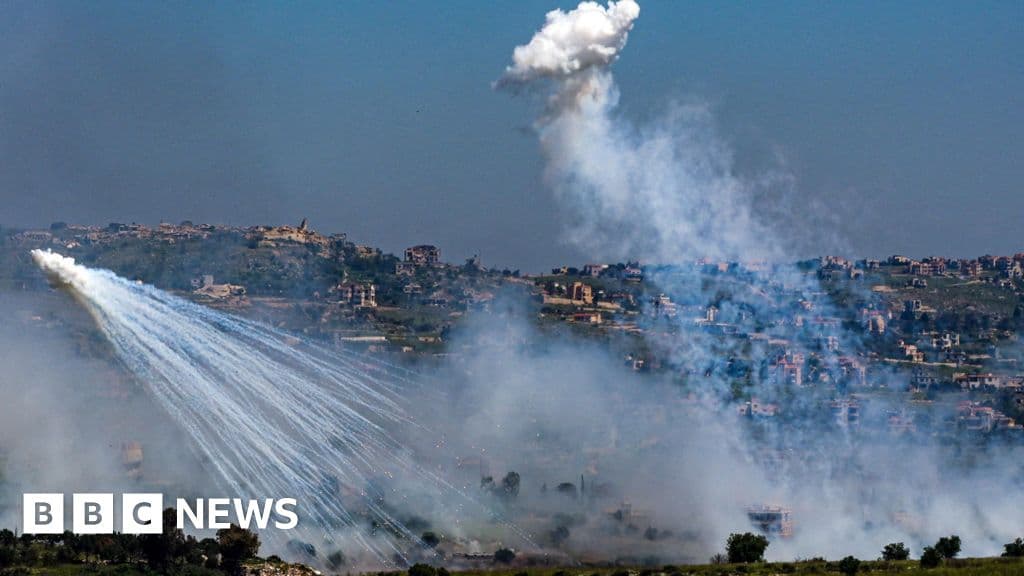
GlipzoOn Thursday, October 19, 2023, a series of Israeli airstrikes in southern Lebanon resulted in the tragic deaths of at least nine individuals, including two children, according to the Lebanese health ministry. This incident marks a grim continuation of hostilities that have persisted despite a ceasefire that was established just over a week ago, on April 16. The strikes, aimed at alleged Hezbollah infrastructure, also left 23 others injured, with the casualties including eight children and seven women.
The violence did not remain one-sided. Hezbollah, the Iran-backed militant group, confirmed it had conducted retaliatory attacks against Israeli forces, including a drone strike targeting soldiers stationed in the Bint Jbeil district. This recent escalation underscores the fragility of the ceasefire and raises questions about its sustainability in the face of ongoing military operations.
Lebanese President Joseph Aoun has expressed deep concern over what he describes as “continuing Israeli violations” of the ceasefire agreement. He stated that strikes and demolitions of civilian structures, including homes and places of worship, have persisted, undermining the truce's integrity. Aoun emphasized that pressure must be exerted on Israel to respect international laws and conventions, ceasing attacks on civilians, paramedics, and humanitarian organizations.
In a worrying signal of further instability, the Israeli military issued evacuation warnings for 15 villages in southern Lebanon. These warnings extend beyond the “Yellow Line,” a buffer zone of approximately 10 km (6 miles) from the border where Israel claims it will continue operations against perceived threats. This development has heightened fears among civilians about the violence spilling over into a broader conflict.
Israel argues that its military actions are a necessary response to what it perceives as violations of the ceasefire by Hezbollah. The ceasefire, brokered through U.S. mediation, allows for Israeli retaliation against what it describes as “planned, imminent, or ongoing attacks.” However, Hezbollah challenges this interpretation, asserting that it did not sign the ceasefire agreement and would only comply if Israel also respects it.
Despite the overall reduction in violence in Beirut and its southern suburbs, fighting has continued unabated in the southern regions of Lebanon. The persistent airstrikes and ongoing evacuation orders have sparked outrage among Lebanese officials, who claim these actions represent a blatant disregard for the ceasefire terms. Israel maintains that its operations are justified under the agreed framework, creating a complex and contentious situation.
The fragile nature of the ceasefire has exposed significant political divisions within Lebanon. President Aoun advocates for direct, face-to-face negotiations, suggesting that the ceasefire should evolve into a more permanent resolution to the conflict. In stark contrast, Parliament Speaker Nabih Berri, a Hezbollah ally, has expressed strong opposition to direct talks, cautioning that such discussions could introduce additional risks to national stability.
The backdrop to this ongoing conflict dates back to March 2, when Hezbollah launched rockets into Israel, prompting a fierce military response from the Israeli forces, which included extensive airstrikes and a ground invasion of southern Lebanon. Since that fateful day, the toll has been staggering, with over 2,500 lives lost in Lebanon, which includes 103 health professionals. The health ministry's figures do not differentiate between combatants and civilians but indicate that the casualties include at least 270 women and more than 170 children.
The human cost of this conflict extends beyond Lebanon's borders. The Israeli military reported that one of its soldiers was killed during operations in southern Lebanon, bringing the total number of Israeli troop fatalities since the conflict began in early March to 17. This escalating death toll emphasizes the urgent need for a sustainable resolution to prevent further loss of life on both sides.
The ongoing violence in southern Lebanon is not just a regional issue; it has wider implications for international security and humanitarian conditions. The sustained conflict threatens to destabilize the entire region, impacting neighboring countries and exacerbating the humanitarian crisis for civilians caught in the crossfire.
The international community must pay close attention to these developments, urging both sides to adhere to the ceasefire terms and seek diplomatic solutions. As the situation evolves, the path forward remains uncertain, with the potential for further escalation looming.
As the situation continues to unfold, observers should watch for: - Potential escalations from both Israel and Hezbollah. - The impact of international diplomatic efforts aimed at reinforcing the ceasefire. - The response from local populations and the humanitarian toll of continued violence. - Political developments within Lebanon that could influence the ceasefire's future.
As tensions remain high, the hope for a lasting peace hangs in the balance, and the world watches closely to see how the next chapter of this conflict will unfold.

Tensions soar as the US and Iran engage in air strikes near the Strait of Hormuz, raising concerns over global oil supply and regional stability.
BBC World
Trump's international interventions face serious stalemates. What will this mean for U.S. foreign policy? Explore the critical challenges ahead.
Indian Express
Tehran denies resignation of President Masoud Pezeshkian amid claims of IRGC influence. What does this mean for Iran's political stability? Click to learn more!
Indian Express