
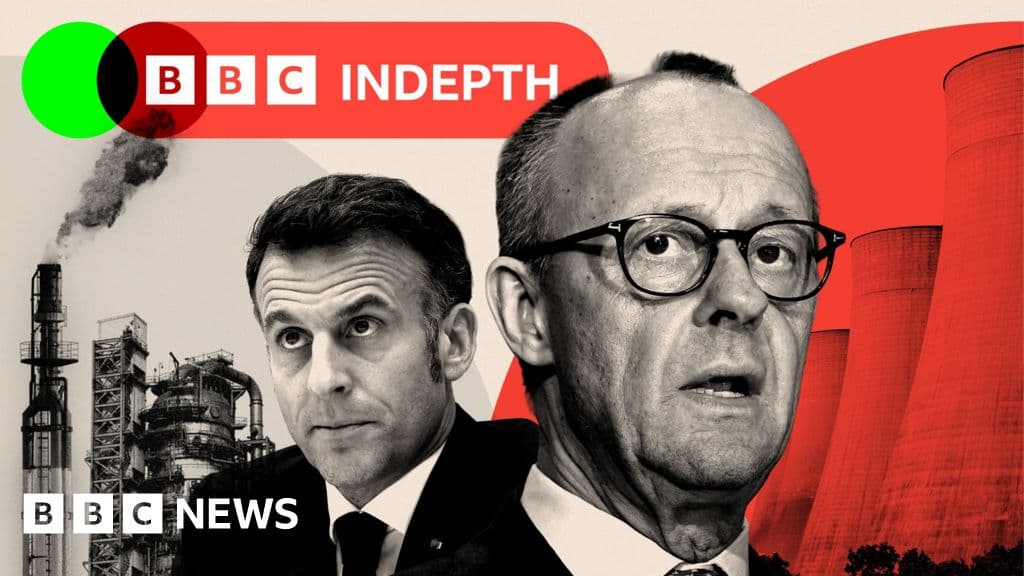
Image: BBC World
Explore how the Iran conflict is reigniting Europe's energy crisis and the urgent need for long-term solutions amid rising prices and geopolitical tensions.
GlipzoThe ongoing conflict in the Middle East is rapidly reigniting energy crises reminiscent of Europe’s turbulent past. Just as the European Union was beginning to stabilize following the fallout from Russia’s invasion of Ukraine in February 2022, new challenges have emerged that threaten to disrupt the continent's energy security once again. Ursula von der Leyen, President of the European Commission, previously declared, "This is a war on our energy, a war on our economy, a war on our values and a war on our future." Her words now resonate more than ever as Europe grapples with rising energy prices and supply uncertainties.
As the war in Iran escalates, European leaders are bracing for the repercussions that could ripple across their already strained energy markets. With a summit scheduled in Brussels, the focus has shifted from long-term strategies for energy independence to immediate concerns over soaring prices. A frustrated European diplomat, speaking on the condition of anonymity, lamented, "We swore we'd learn. We promised things would change but here we are." This sentiment underscores the urgency of the situation as Europe finds itself once again caught in a web of energy supply dilemmas.
The current crisis is not merely a reaction to the Iranian conflict but a continuation of Europe’s battle for energy security, which was exacerbated by Russia's aggression. After the invasion of Ukraine, the EU committed to reducing its dependence on Russian energy. By 2024, the bloc aims to eliminate all Russian gas imports, a significant shift from an era when Russia supplied approximately 55% of Germany's natural gas needs.
The EU's swift response to cut ties with Russian energy suppliers has resulted in a notable transformation. Currently, only 2% of EU oil imports come from Russia, with Hungary and Slovakia being the primary recipients. This pivot away from Russian energy was necessary, yet it has also created new dependencies, particularly on Norwegian and US supplies.
Despite the efforts to diversify energy sources, European leaders are facing increasing pressure. The ongoing turmoil in the Middle East adds layers of complexity to an already volatile energy landscape. European leaders are now scrambling to address short-term solutions in the face of angry voters concerned about rising energy costs.
"Instead of concentrating on much-needed long-term plans... [European] prime ministers and presidents are now in a panic over [energy] prices," the anonymous diplomat noted. This situation mirrors the previous crisis following Russia's invasion of Ukraine, highlighting persistent divisions and challenges within the EU regarding energy policy.
As Europe prepares for a critical summit in Brussels, the looming question remains: Can the continent secure its energy future amidst rising geopolitical tensions? The EU's current strategy hinges on balancing immediate energy needs with long-term sustainability goals.
What to Watch For: - Developments in Middle Eastern conflicts and their direct impact on global energy supplies. - The EU's progress in establishing alternative energy partnerships and enhancing domestic energy production. - Public response to energy price fluctuations and how this could influence forthcoming elections in member states.
As the situation evolves, it is clear that Europe must navigate a complex energy landscape marked by dependencies, crises, and commitments to a sustainable future. The path forward will require innovation, cooperation, and a steadfast commitment to reducing vulnerabilities in energy supply. The question remains: Will Europe rise to the challenge, or will it find itself once again at the mercy of external conflicts?

Tensions soar as the US and Iran engage in air strikes near the Strait of Hormuz, raising concerns over global oil supply and regional stability.
BBC World
Trump's international interventions face serious stalemates. What will this mean for U.S. foreign policy? Explore the critical challenges ahead.
Indian Express
Tehran denies resignation of President Masoud Pezeshkian amid claims of IRGC influence. What does this mean for Iran's political stability? Click to learn more!
Indian Express