
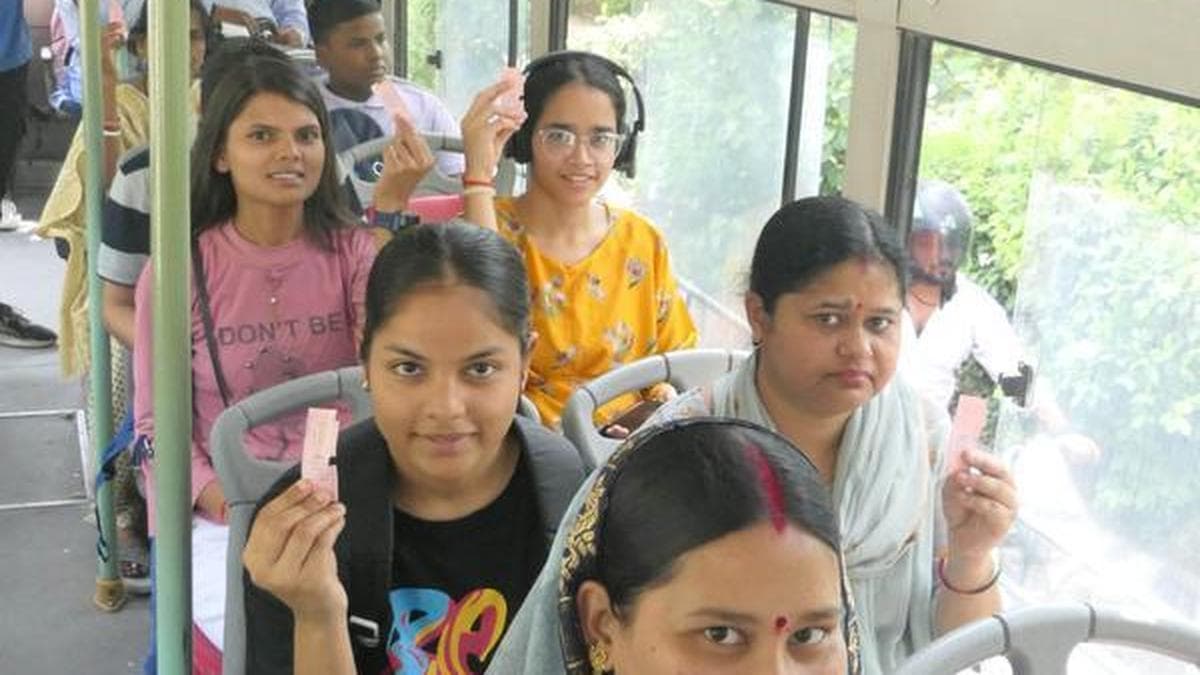
Image: The Hindu
Delhi CM Rekha Gupta extends free travel for women with pink tickets for 3 more months amid high demand for smart cards. Learn more about this initiative.
GlipzoIn a significant announcement, Delhi Chief Minister Rekha Gupta confirmed that the Pink Ticket initiative allowing women to travel free on public buses will be extended for an additional three months. This announcement was made on March 17, 2026, and comes amid overwhelming demand for the newly introduced Pink Saheli smart cards, which are intended to eventually replace the current ticketing system.
The CM urged women commuters not to feel pressured to rush to obtain the smart cards, as the existing pink tickets will remain valid for the duration of this extension. This decision aims to alleviate the congestion seen at various card issuance centers across the city, where lengthy queues have become common.
The Pink Ticket scheme is a part of Delhi's efforts to promote gender equality and enhance mobility for women. Under this program, women can travel for free on buses operated by the Delhi Transport Corporation (DTC) and other cluster buses. The initiative reflects the government’s commitment to providing safe and accessible public transport options, which is particularly crucial for women in urban areas.
The shift towards the Pink National Common Mobility Cards is designed to streamline the process and make travel even more convenient for women. These smart cards will eventually replace traditional pink tickets, making it easier for female commuters to access public transport without the need for physical tickets.
The launch of the Pink Saheli smart cards has spurred a rush at various issuance centers. Many women have flocked to District Magistrate and Sub-Divisional Magistrate offices, as well as select DTC locations, to secure their cards. However, CM Gupta's message is clear: there is no need to rush, as the existing pink tickets will continue to be honored for the next three months.
This extension not only provides immediate relief to the women facing long waits but also allows the government more time to address logistical challenges in the rollout of the smart card system.
The Pink Ticket initiative is more than just a transport policy; it represents a significant step towards improving women's mobility in Delhi. By facilitating free travel, the government aims to empower women, reduce barriers to employment and education, and promote greater participation in public life.
The Pink Saheli smart cards are expected to further enhance this initiative by providing a more efficient and user-friendly method of accessing public transport. However, the transition must be managed carefully to ensure that women are not left waiting for their cards, especially as the demand continues to grow.
As the government continues to implement the Pink Ticket and Pink Saheli schemes, all eyes will be on how effectively they manage the transition to smart cards. The next three months will be critical for assessing public response and usage patterns, as well as addressing any potential hiccups in the rollout process.
Future announcements about the Pink Saheli smart cards will be crucial in determining how well the program is received. The government must ensure that any issues are resolved promptly and that women are kept informed about their travel options.
In conclusion, the extension of the Pink Ticket scheme is a welcome relief for many in Delhi. As the city moves forward with its plans for the Pink Saheli smart cards, the commitment to improving women’s mobility remains a priority, setting a precedent for inclusive transport policies in urban centers across India.

Tensions soar as the US and Iran engage in air strikes near the Strait of Hormuz, raising concerns over global oil supply and regional stability.
BBC World
Trump's international interventions face serious stalemates. What will this mean for U.S. foreign policy? Explore the critical challenges ahead.
Indian Express
Tehran denies resignation of President Masoud Pezeshkian amid claims of IRGC influence. What does this mean for Iran's political stability? Click to learn more!
Indian Express