
Image: Indian Express
After facing a violent assault, Dalit bride Pooja Meghwal leads a powerful symbolic bindoli in Udaipur, demanding respect and rights for her community.
GlipzoOn April 29, a wedding procession in Udaipur took a troubling turn when Pooja Meghwal, a Dalit bride, faced aggressive opposition from a group who questioned her right to ride a mare, a traditional symbol of celebration. This incident, which escalated into violence, resulted in numerous injuries and an official report filed with the police. Yet, what followed was a powerful statement of resilience and unity for the Dalit community, culminating in a symbolic bindoli that took place on May 7.
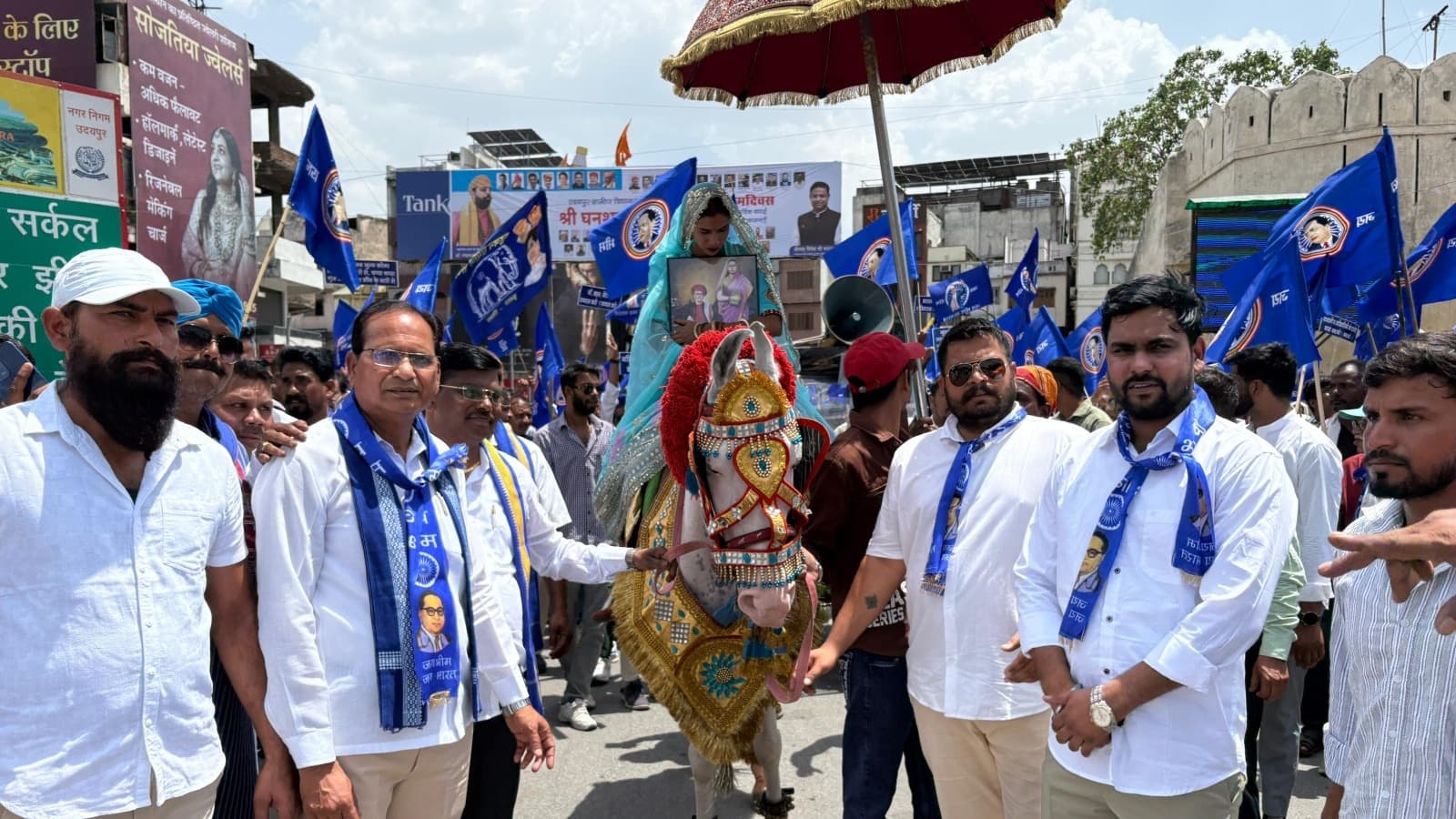
Pooja's second procession was nothing short of a statement as she rode a majestic white mare, dressed in a flowing turquoise blue poshak and holding a red and golden umbrella overhead. In her hands rested a photograph of social reformers Jyotirao Phule and Savitribai Phule, emblematic figures in the fight for social justice. The procession from Udaipur’s Town Hall to the Collectorate was filled with supporters, many adorned in white clothing, blue scarves, and holding banners showcasing images of Dr. Bhimrao Ambedkar and slogans advocating for the rights of marginalized communities.
“It was important for us to demonstrate that we are human beings deserving of respect and rights, just like everyone else in Bharat. Almost 80 years after independence, the mentality of untouchability still prevails,” said Pooja’s father, Bhairulal Meghwal, in an interview with The Indian Express.
The bindoli wasn't just a personal victory for Pooja but a collective stand against systemic discrimination. Organized by the Bhim Army, the event saw participation from various caste organizations, marking a significant moment of solidarity among the Dalit community. Roshan Meghwal, senior vice president of the Bhim Army in Udaipur, emphasized the importance of equality. “Thanks to figures like Savitribai Phule, women today enjoy equal rights. Yet, we still face barriers, like being denied the right to ride a mare,” he remarked.
The symbolic procession served multiple purposes: it was a celebration of culture, a protest against caste-based discrimination, and a call to action for government intervention. The march was not merely about Pooja’s right to celebrate her wedding; it highlighted a persistent issue faced by Dalits in the region, where they often encounter hostility for participating in traditional ceremonies.
The violent disruption of Pooja's original wedding procession occurred while it was traveling along the main road of Dhira Talai in the Dabok police station jurisdiction. According to the FIR filed by Bhairulal, the group opposing the procession hurled casteist slurs and threatened violence, demanding the ceremony be moved from in front of their homes. What began as a joyful event quickly turned chaotic, resulting in physical confrontations and property damage, as guests were attacked with stones and sticks.
Bhairulal reported that during the melee, several women had their mangalsutras forcibly taken, along with other valuables. The situation escalated so intensely that police intervention was required to restore order. The FIR included serious charges such as wrongful restraint and unlawful assembly, as well as violations under the Scheduled Caste and Scheduled Tribe (Prevention of Atrocities) Act. The accused includes several individuals from the opposing group who allegedly instigated the violence.
Following the symbolic bindoli, the Bhim Army presented a memorandum to local authorities, asserting that only a few arrests had been made, despite the violent nature of the attack. They called for additional charges to be filed against those involved, including potential violations of the Arms Act due to the use of a sword during the assault.
The atmosphere in Udaipur reflects a broader struggle against caste-based discrimination. Pooja's experience is not isolated; similar incidents have been reported in the region, including a recent occurrence in Chittorgarh. Activists are calling for systemic changes to dismantle the ingrained casteist attitudes that continue to affect the lives of many.
This incident and the subsequent bindoli serve as a poignant reminder of the ongoing fight for equality in India. The Dalit community's struggle for recognition and respect continues to face significant challenges, as exemplified by Pooja's experience. The recent events draw attention to the urgent need for societal change and legal reform to protect the rights of marginalized groups.
As India celebrates its 'Amrit Kaal'—a period marked by the government's focus on development and inclusion—the contrast with the realities faced by the Dalit community raises critical questions. What will it take for true equality to be realized? The road ahead requires not only awareness but also actionable steps to address the deep-seated prejudices that persist in society. The eyes of the nation will be watching as this story unfolds, seeking justice and equality for all.

Tensions soar as the US and Iran engage in air strikes near the Strait of Hormuz, raising concerns over global oil supply and regional stability.
BBC World
Trump's international interventions face serious stalemates. What will this mean for U.S. foreign policy? Explore the critical challenges ahead.
Indian Express
Tehran denies resignation of President Masoud Pezeshkian amid claims of IRGC influence. What does this mean for Iran's political stability? Click to learn more!
Indian Express