
Image: BBC World
Cuban officials condemn US sanctions as illegal, highlighting their impact on citizens during protests against fuel shortages. What's next for Cuba?
GlipzoCuba is once again in the spotlight as Foreign Minister Bruno Rodriguez vocally condemned the latest round of US sanctions, labeling them as illegal and abusive. This outcry follows an executive order issued on Friday by US President Donald Trump, targeting key sectors of Cuba's economy, including energy, defense, finance, and security. The order also aims at individuals accused of human rights abuses and corruption, further straining the already tense relations between the two nations.
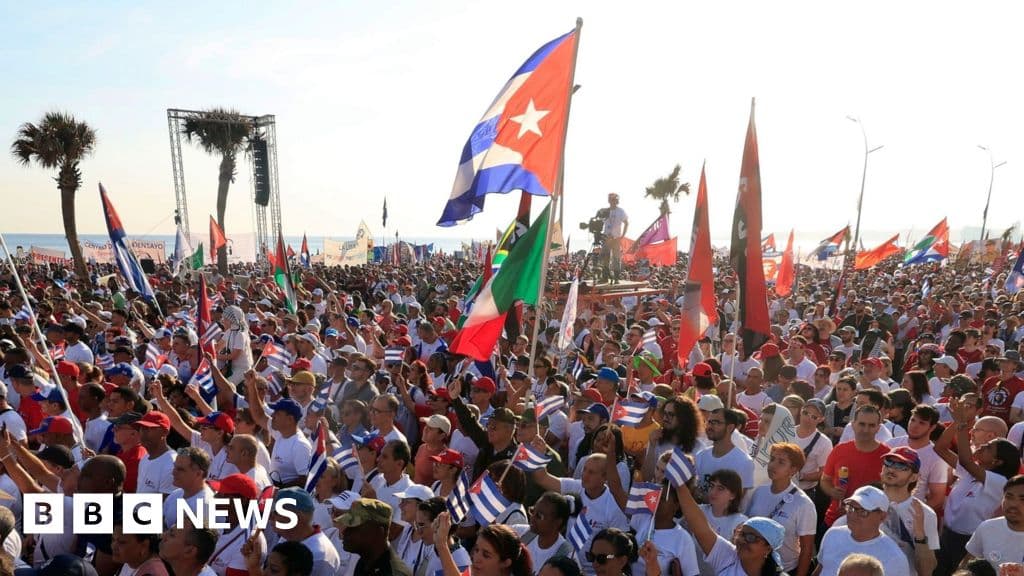
The sanctions were announced amid an ongoing crisis in Cuba, where citizens have been facing severe fuel shortages and widespread blackouts, a situation exacerbated by the US blockade on oil imports. Protests erupted outside the US Embassy in Havana as demonstrators marked International Workers Day, expressing their frustrations over the blockade which they blame for crippling their daily lives and essential services.
President Trump’s recent comments have stirred controversy, suggesting a more aggressive approach towards Cuba. During a speech in Florida, he stated that the US would be “taking over” the Caribbean island, located just 145 kilometers (90 miles) from Florida’s shores, “almost immediately.” His remarks hinted at a potential military presence, mentioning a possible deployment of the USS Abraham Lincoln, one of the largest aircraft carriers in the world, to assert US influence.
Rodriguez took to X, a social media platform, to denounce these “unilateral coercive measures,” asserting that they violate the United Nations Charter and are aimed at inflicting collective punishment on the Cuban populace. He shared videos of the protests, emphasizing the resolve of the Cuban people, stating, “Our people do not cower.” This reflects a national sentiment of resilience against external pressures.
The implications of these sanctions are dire. The US blockade has severely impacted healthcare, education, and public transportation in Cuba, leading to catastrophic shortages in essential supplies, including fuel for hospitals. Only a single Russian oil tanker has managed to reach the island since the implementation of the blockade, indicating a significant disruption in their oil supply chain.
Cuban President Miguel Díaz-Canel expressed his concerns over the sanctions, pointing out their detrimental effects on the Cuban people. He remarked on X, “The blockade and its reinforcement cause so much harm because of the intimidating and arrogant behavior of the world’s greatest military power.” His comments highlight the ongoing struggle of the Cuban government to maintain stability amidst external pressures.
The relationship between the US and Cuba has been tumultuous since 1959, when Fidel Castro led a revolution that ousted a US-backed government. This pivotal event led to the establishment of a communist regime in Cuba and the implementation of a comprehensive economic and trade embargo that has lasted since 1960. The sanctions announced by Trump are seen as a continuation of a long-standing policy aimed at undermining the Cuban government’s authority.
As Cuba commemorates 100 years since Castro's birth, these sanctions not only threaten the nation’s economic stability but also provoke a sense of national pride and resistance among Cubans. The protests and public expressions of dissent underscore the complex dynamics of a society grappling with both external and internal challenges.
Looking ahead, the evolving situation demands close attention as the Cuban government navigates these new sanctions. The international community will be watching how these developments unfold, particularly with the potential for further escalations in rhetoric or military posturing from the US.
As the world watches, the future of US-Cuba relations remains uncertain, and the impact of these sanctions could resonate far beyond the borders of this Caribbean island.

Tensions soar as the US and Iran engage in air strikes near the Strait of Hormuz, raising concerns over global oil supply and regional stability.
BBC World
Trump's international interventions face serious stalemates. What will this mean for U.S. foreign policy? Explore the critical challenges ahead.
Indian Express
Tehran denies resignation of President Masoud Pezeshkian amid claims of IRGC influence. What does this mean for Iran's political stability? Click to learn more!
Indian Express