
Glipzo
WorldTechnologyBusinessSportsEntertainmentScienceHealthPolitics
Glipzo
WorldTechnologyBusinessSportsEntertainmentScienceHealthPolitics
  1. Home
  2. /
  3. Politics
  4. /
  5. Critical USS Tripoli Deployment to Strait of Hormuz Explained
Critical USS Tripoli Deployment to Strait of Hormuz Explained

Image: Mint (Business)

Politics
Friday, March 20, 20264 min read

Critical USS Tripoli Deployment to Strait of Hormuz Explained

Discover how the USS Tripoli's deployment could impact the Strait of Hormuz amid escalating US-Iran tensions. What’s at stake for global oil shipping?

Glipzo News Desk|Source: Mint (Business)
Share
Glipzo

Key Highlights

  • USS Tripoli carrying 2000 Marines heads to Strait of Hormuz.
  • Strait of Hormuz crucial for 20% of the world's oil transport.
  • India boosts LPG production to mitigate supply risks amid conflict.
  • Potential for international coalition to ensure safe navigation.

In this article

  • The Importance of the Strait of Hormuz The **Strait of Hormuz** is a critical chokepoint for global oil transport, with about **20% of the world's oil** passing through this narrow passage. At its narrowest point, the Strait measures only **33 kilometers** wide, providing Iran with a strategic advantage to target shipping lanes. The ongoing conflicts between the **United States** and **Iran** further complicate this crucial maritime route, prompting the U.S. Navy to take proactive measures to ensure navigation safety.
  • USS Tripoli's Capabilities and Mission The **USS Tripoli**, based in **Sasebo, Japan**, boasts advanced capabilities, including **F-35 stealth fighter jets** and **MV-22 Osprey** transport aircraft. This small aircraft carrier leads an amphibious ready group, which typically includes additional vessels like the **USS New Orleans** and **USS San Diego**. While CNN has been unable to confirm the presence of these accompanying ships, the Tripoli's mission remains clear—to facilitate military operations that could potentially restore oil traffic through the Strait of Hormuz.
  • The Global Stakes Ensuring freedom of navigation in the **Persian Gulf** is critical not just for the U.S. but for the global economy. A disruption in oil traffic could lead to skyrocketing prices for oil and petroleum products, affecting economies worldwide. The unpredictability of U.S. military strategies under President Trump adds another layer of complexity to the situation, making it difficult to forecast the next moves.
  • India’s Role in the Conflict In the midst of this turmoil, **India** is actively engaging with key players in both the Gulf and Europe to advocate for a swift resolution to the conflict. In light of potential supply disruptions, India has ramped up its domestic **Liquefied Petroleum Gas (LPG)** production to **38%**, ensuring that both household and industrial consumers remain protected from supply shortages.
  • What’s Next? As the **USS Tripoli** prepares to enter the volatile region, the world watches closely to see how the situation unfolds. The potential for military escalation, particularly if Iran ramps up its aggression, looms large. Should the U.S. decide to engage in direct military action, it could significantly alter the dynamics of the Middle East conflict. Additionally, the unfolding role of international coalitions could redefine approaches to maintaining maritime security in one of the world's most strategically significant waterways.

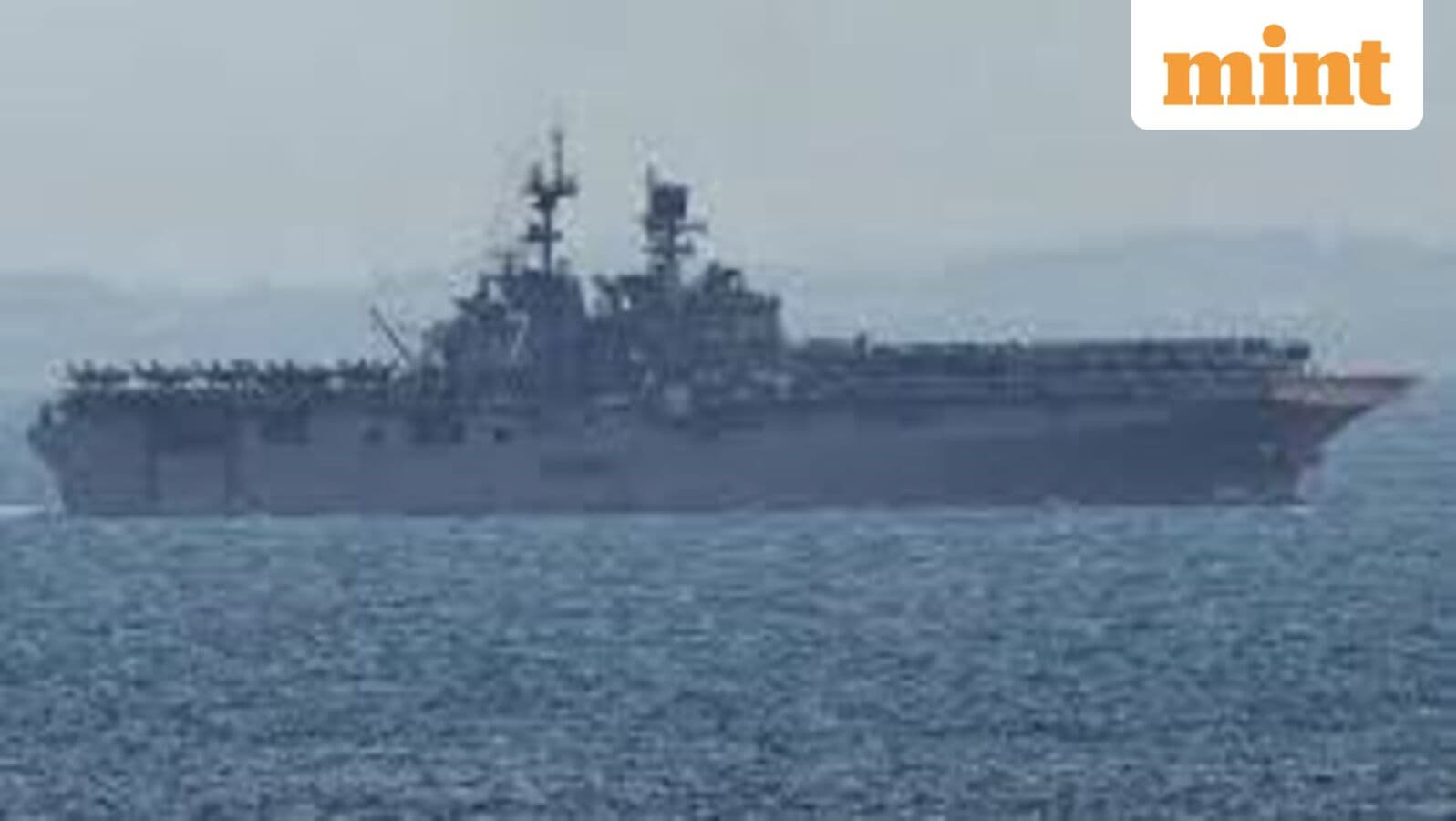
Amid escalating tensions in the Middle East, the USS Tripoli, an amphibious assault ship carrying over 2,000 Marines, is set to enter the northern Arabian Sea around March 22-23. This significant deployment raises questions about the future of the Strait of Hormuz, a vital passage for international oil shipping. The 50,000-ton vessel, from the 31st Marine Expeditionary Unit, is currently navigating south of Sri Lanka and is expected to reinforce the USS Abraham Lincoln carrier strike group in the Gulf of Oman.

The Importance of the Strait of Hormuz The **Strait of Hormuz** is a critical chokepoint for global oil transport, with about **20% of the world's oil** passing through this narrow passage. At its narrowest point, the Strait measures only **33 kilometers** wide, providing Iran with a strategic advantage to target shipping lanes. The ongoing conflicts between the **United States** and **Iran** further complicate this crucial maritime route, prompting the U.S. Navy to take proactive measures to ensure navigation safety.

Currently, President Donald Trump has not disclosed any definitive plans regarding troop deployments in Iran, despite acknowledging the fluid situation. The U.S. military's response will likely hinge on how the conflict evolves and whether Iranian actions escalate further against Gulf nations. Experts suggest that any troop movements could occur without prior announcement, given the sensitive nature of the situation.

USS Tripoli's Capabilities and Mission The **USS Tripoli**, based in **Sasebo, Japan**, boasts advanced capabilities, including **F-35 stealth fighter jets** and **MV-22 Osprey** transport aircraft. This small aircraft carrier leads an amphibious ready group, which typically includes additional vessels like the **USS New Orleans** and **USS San Diego**. While CNN has been unable to confirm the presence of these accompanying ships, the Tripoli's mission remains clear—to facilitate military operations that could potentially restore oil traffic through the Strait of Hormuz.

The Global Stakes Ensuring freedom of navigation in the **Persian Gulf** is critical not just for the U.S. but for the global economy. A disruption in oil traffic could lead to skyrocketing prices for oil and petroleum products, affecting economies worldwide. The unpredictability of U.S. military strategies under President Trump adds another layer of complexity to the situation, making it difficult to forecast the next moves.

While direct U.S. military engagement in the Persian Gulf seems risky amid ongoing Iranian missile attacks and drone operations, the formation of an international coalition under a UN mandate could emerge as a viable solution to guarantee safe passage through the Strait of Hormuz.

India’s Role in the Conflict In the midst of this turmoil, **India** is actively engaging with key players in both the Gulf and Europe to advocate for a swift resolution to the conflict. In light of potential supply disruptions, India has ramped up its domestic **Liquefied Petroleum Gas (LPG)** production to **38%**, ensuring that both household and industrial consumers remain protected from supply shortages.

Recently, two Indian-flagged LPG tankers, Shivalik and Nanda Devi, successfully traversed the conflict-ridden Strait of Hormuz. Their arrival at ports in Gujarat, including Mundra Port and Vadinar, has alleviated some supply concerns and demonstrated a commitment to maintaining energy security amidst the chaos.

What’s Next? As the **USS Tripoli** prepares to enter the volatile region, the world watches closely to see how the situation unfolds. The potential for military escalation, particularly if Iran ramps up its aggression, looms large. Should the U.S. decide to engage in direct military action, it could significantly alter the dynamics of the Middle East conflict. Additionally, the unfolding role of international coalitions could redefine approaches to maintaining maritime security in one of the world's most strategically significant waterways.

As stakeholders like India and the U.S. seek diplomatic solutions, the interplay of military readiness and economic imperatives will be crucial in determining the future of the Strait of Hormuz and global oil markets. The coming weeks will be pivotal in shaping the geopolitical landscape as tensions remain high and the stakes continue to rise.

Did you find this article useful? Share it!

Share

Related Articles

Major Developments: US Seizes Iranian Ship Amid Tensions
Politics
Apr 21, 2026

Major Developments: US Seizes Iranian Ship Amid Tensions

The US Navy has seized an Iranian ship after it ignored warnings, escalating tensions in the Gulf. What does this mean for US-Iran relations? Click to learn more.

BBC World
Critical UPSC Current Affairs Highlights: April 13-19, 2026
Politics
Apr 20, 2026

Critical UPSC Current Affairs Highlights: April 13-19, 2026

Stay updated with key UPSC current affairs from April 13-19, 2026. Explore language recognition, court rulings, and legislative changes shaping India.

Indian Express
Shocking: NSA Utilizes Anthropic’s Mythos Despite Blacklist
Politics
Apr 20, 2026

Shocking: NSA Utilizes Anthropic’s Mythos Despite Blacklist

The NSA is using Anthropic's Mythos AI tool despite a Pentagon blacklist, raising concerns over cybersecurity vulnerabilities and ethical AI use.

Indian Express

Categories

  • World
  • Technology
  • Business
  • Sports

More

  • Entertainment
  • Science
  • Health
  • Politics

Explore

  • Web Stories
  • About Us
  • Contact

Legal

  • Privacy Policy
  • Terms of Service

© 2026 Glipzo. All rights reserved.

