
Image: BBC World
Mexico confirms two US agents killed in a crash lacked authorization to operate, raising questions about sovereignty and US-Mexico relations.
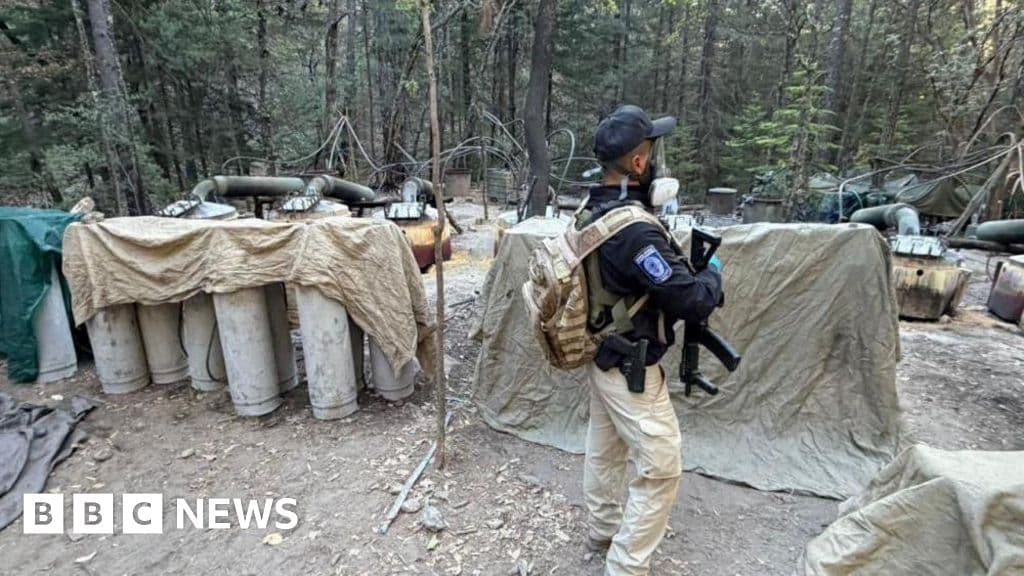
GlipzoIn a shocking revelation, the Mexican government has asserted that two U.S. agents who tragically lost their lives in a car accident last weekend were not authorized to conduct operations within its borders. The incident occurred in the northern state of Chihuahua, where the agents, reportedly affiliated with the CIA, were involved in a mission targeting suspected drug laboratories before their vehicle veered off a mountain road, leading to a catastrophic explosion.
The Mexican security ministry, following an investigation mandated by President Claudia Sheinbaum, confirmed that both agents lacked the necessary accreditation for operational activities. Their presence was not communicated to Mexican federal authorities, raising serious concerns about breaches of sovereignty and international protocol.
The fatal crash took place on April 19, when the agents were returning from a mission aimed at dismantling methamphetamine production facilities. Tragically, their vehicle skidded off a road and plunged into a ravine, resulting in the deaths of both agents and two members of the Chihuahua State Investigation Agency.
Chihuahua State Attorney General César Jáuregui provided some context at a press conference, suggesting that the U.S. officials were acting as “instructor officers” from the U.S. embassy, involved in training initiatives under a normal exchange framework with U.S. authorities. However, President Sheinbaum firmly stated that there were no joint operations occurring on Mexican soil, either by land or air, despite ongoing intelligence-sharing efforts.
This incident emerges against the backdrop of strained relations between Mexico and the U.S., particularly concerning counter-narcotics efforts. President Donald Trump has exerted pressure on Mexico to intensify its fight against drug trafficking, a request that Sheinbaum has met with resistance. She has emphasized that foreign officials must receive prior approval from the Mexican government to operate within its territory, reinforcing the notion that national sovereignty is paramount.
In a statement, the Mexican security ministry indicated that immigration documentation revealed one agent entered Mexico as a visitor, while the other possessed a diplomatic passport. These findings further highlight the lack of formal authorization for their operational presence in Mexico, as Mexican law explicitly prohibits foreign agents from engaging in such activities without federal consent.
The implications of this incident extend beyond a tragic accident. A Reuters investigation last September uncovered that the CIA had been conducting covert operations in Mexico for many years, focusing on tracking high-profile drug traffickers. Under the auspices of the Mexican government, the CIA has allegedly provided select Mexican law enforcement units with training, equipment, and financial resources.
Despite these operations, President Sheinbaum has maintained a clear boundary, stating her commitment to cooperating with the U.S. on security issues while pushing back against any direct U.S. military involvement. Her administration has launched a rigorous crackdown on drug trafficking in response to Trump’s demands, striving to balance domestic political pressures with international relations.
The fallout from this tragic event raises significant questions about the future of U.S.-Mexico cooperation in addressing drug trafficking and border security. As both nations navigate a complex relationship, this incident serves as a crucial reminder of the importance of clear communication and mutual respect regarding operational protocols.
Moving forward, observers should watch for: - Potential shifts in diplomatic relations: How will this incident impact ongoing discussions about joint operations? - Public reaction in Mexico: How will citizens and political leaders respond to perceived U.S. overreach? - Policy changes: Will the Mexican government tighten regulations on foreign operations within its borders? - U.S. responses: How will the U.S. government adjust its strategies in light of this incident?
In conclusion, as both nations grapple with the complexities of drug trafficking and border security, the tragic deaths of the U.S. agents may serve as a pivot point for more defined policies and cooperation frameworks moving forward.

Tensions soar as the US and Iran engage in air strikes near the Strait of Hormuz, raising concerns over global oil supply and regional stability.
BBC World
Trump's international interventions face serious stalemates. What will this mean for U.S. foreign policy? Explore the critical challenges ahead.
Indian Express
Tehran denies resignation of President Masoud Pezeshkian amid claims of IRGC influence. What does this mean for Iran's political stability? Click to learn more!
Indian Express