
Image: BBC World
Trump's latest meeting on Iran's ceasefire yields few results, raising questions about future negotiations and regional stability.
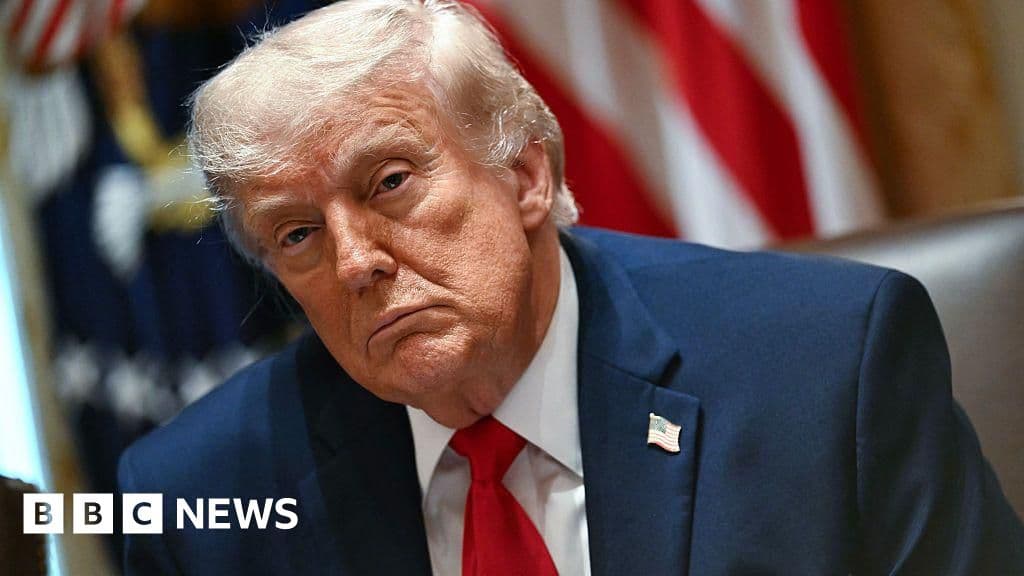
GlipzoIn a pivotal meeting held on Friday, U.S. President Donald Trump sought to finalize an agreement aimed at extending a ceasefire with Iran. Despite high expectations, the discussions yielded limited new information, leaving many questions unanswered. The meeting took place in the White House's Situation Room, a space typically reserved for addressing urgent crises. Trump emphasized that any deal would hinge on Iran’s commitment to never pursue a nuclear weapon and the reopening of the Strait of Hormuz for unrestricted shipping.
The Strait of Hormuz, a crucial maritime route for global oil shipments, has been a focal point of tensions between the U.S. and Iran. Trump stated that mines in the waterway needed to be destroyed as part of the deal. However, earlier statements from Iranian officials indicated a firm refusal to negotiate over their nuclear program, complicating the potential for a resolution.
Just a day prior to the meeting, U.S. and Iranian officials had reportedly agreed on a framework for a memorandum of understanding, pending approval from both Trump and Iranian leadership. This proposed agreement would potentially extend the ceasefire for 60 days and initiate talks regarding Iran’s nuclear aspirations.
A White House official communicated to CBS News that Trump is committed to a deal that prioritizes U.S. interests and adheres to key stipulations. “Iran can never possess a nuclear weapon,” the official asserted. Since the ceasefire began on April 8, Trump has suggested that negotiations were progressing, yet the lack of tangible outcomes thus far has raised concerns about the feasibility of any agreement.
In a post on social media, Trump expressed his readiness to lift the U.S. blockade on the Strait of Hormuz, which he claimed would allow ships stuck in the area to begin returning home. He also reiterated his demand for Iran to allow the U.S. to eliminate and destroy its enriched uranium stockpile.
“Iran will not see any financial transactions until further notice,” Trump declared, while also alluding to agreements on lesser issues. Following the meeting, a White House spokesperson confirmed its conclusion but did not provide any additional details, leaving many in the media and public seeking clarity.
Iran’s Fars News Agency reported that Trump's remarks were a blend of truth and misinformation. Furthermore, they pointed out that the memorandum did not include clauses for the destruction of nuclear materials. Following this, Esmaeil Baqaei, the spokesperson for Iran’s foreign ministry, stated that the focus remains on a resolution to end the conflict rather than on nuclear negotiations.
The U.S. has long demanded that Iran cease its production of highly enriched uranium and eliminate its stockpile, which could theoretically be weaponized. Iran, on the other hand, continues to maintain that its nuclear program is peaceful and denies any intentions of developing nuclear weapons.
Vice President JD Vance commented on the state of negotiations, noting that discussions were currently revolving around specific language points, particularly concerning uranium enrichment. “We’re not there yet, but we’re very close and we’re going to keep on working at it,” he remarked, indicating a cautious optimism about progressing discussions.
Mohammad Baqer Qalibaf, Iran’s chief negotiator, expressed deep skepticism regarding U.S. commitments, emphasizing that trust cannot be established through words alone but must be demonstrated through actions. “The winner of any agreement is the one who is better prepared for war the day after,” he stated, highlighting the fraught nature of the negotiations.
The backdrop of these discussions has been marked by military actions, which have escalated tensions in the region. On February 28, the U.S. and Israel conducted airstrikes against Iranian targets, prompting retaliatory attacks from Iran on U.S. positions and allied states in the Gulf. The conflict has led to significant disruptions in the Strait of Hormuz, further inflating global oil prices.
Both nations have accused each other of breaching the ceasefire agreement in recent days, adding layers of complexity to an already tense situation. The Islamic Revolutionary Guard Corps (IRGC) of Iran claimed responsibility for targeting a U.S. air base in Kuwait, which they alleged was linked to prior strikes on Bandar Abbas, a strategic Iranian port city.
As the situation unfolds, the international community will be closely monitoring developments regarding the U.S.-Iran negotiations. The potential for an agreement remains, but both sides appear entrenched in their positions, making a breakthrough elusive. The focus will likely shift to the outcomes of upcoming discussions and whether any concrete actions will emerge to restore trust between the two nations.
In conclusion, the next steps in this ongoing saga will be critical for regional stability and global oil markets, as both sides navigate the delicate balance between diplomacy and military posturing. What happens next could reshape the geopolitical landscape in the Middle East significantly.

Tensions soar as the US and Iran engage in air strikes near the Strait of Hormuz, raising concerns over global oil supply and regional stability.
BBC World
Trump's international interventions face serious stalemates. What will this mean for U.S. foreign policy? Explore the critical challenges ahead.
Indian Express
Tehran denies resignation of President Masoud Pezeshkian amid claims of IRGC influence. What does this mean for Iran's political stability? Click to learn more!
Indian Express