
Image: BBC World
Israel's military escalates by capturing Beaufort Castle in Lebanon, triggering international outcry. What does this mean for the region's stability?
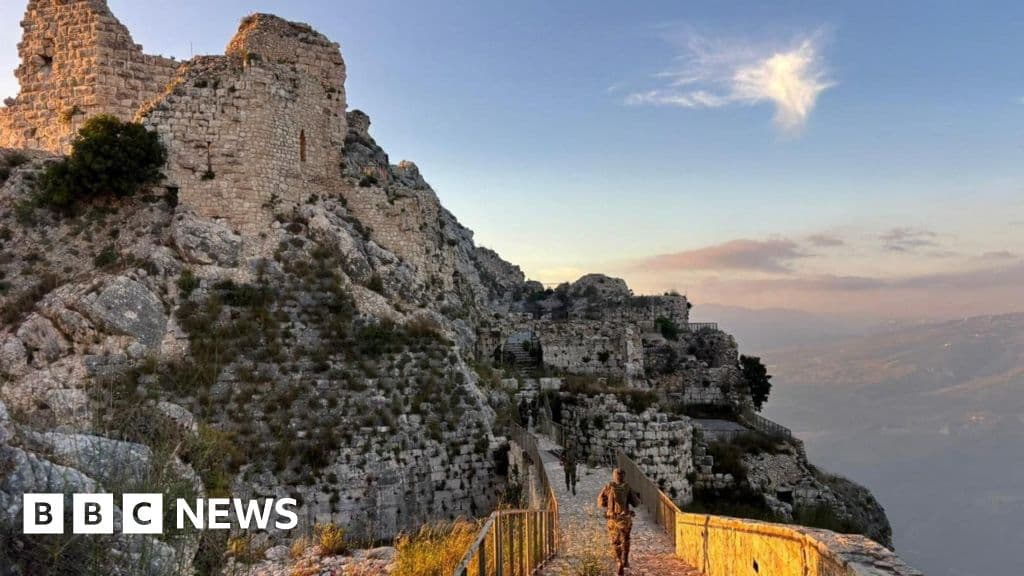
GlipzoIn a significant escalation of its military operations, Israel has taken control of Beaufort Castle, a strategic location in southern Lebanon. Prime Minister Benjamin Netanyahu heralded this development as a "decisive shift" in Israel's ongoing offensive against Hezbollah. This move comes as Israeli ground troops push further into Lebanese territories, surpassing the historically recognized boundary marked by the Litani River.
The capture of Beaufort Castle, a site that has held military importance for centuries, signals a new phase in the conflict. Netanyahu emphasized that this operation is not merely about territorial gain but represents a broader strategy to dismantle Hezbollah's influence in the region. He stated, "We have broken the barrier of fear. We are taking the initiative, we are operating on all fronts - in Syria, in Gaza, in Lebanon."
The recent developments have drawn sharp criticism from several European nations, including the UK, France, and Germany. These countries have expressed deep concern over Israel's escalating military actions, emphasizing the humanitarian impact on civilians in the affected regions.
UK Foreign Secretary Yvette Cooper voiced her apprehensions on social media, noting, "Israel's military escalation in Lebanon has killed and displaced civilians, destroyed infrastructure, and eroded space for diplomacy. It must end." She also urged Hezbollah to cease its attacks on Israel and disarm, highlighting the urgent need for de-escalation from all parties involved.
In a televised address, Lebanon's Prime Minister Nawaf Salam accused Israel of employing a "scorched-earth policy" that punishes civilians in southern Lebanon. He condemned the recent evacuation orders issued by the Israel Defense Forces (IDF), which advised residents to vacate southern Lebanon below the Zahrani River. This warning marks the second evacuation request within a short timeframe, stressing the gravity of the situation.
Beaufort Castle, a historical stronghold originally built by Crusaders nearly 900 years ago, has long been a pivotal point for military control in the region. Israel initially captured it in 1982 during the First Lebanon War, and its recent recapture is viewed as both a symbolic and strategic victory for the Israeli military.
Following the castle's capture, Israeli Defence Minister Israel Katz recalled the battles fought for its control, stating, "The Golani Brigade, which took it then, has returned and raised the Israeli flag above it." This declaration underscores the emotional and historical weight the site carries for Israel.
The implications of Israel’s actions extend beyond mere territorial gains. The advance into southern Lebanon poses risks of exacerbating tensions and leading to further civilian displacement. German Foreign Minister Johann Wadephul expressed his concerns, warning that continued military escalation could trigger a new wave of humanitarian crises within Lebanon.
The situation has prompted France, which has a historic relationship with Lebanon, to call for an emergency meeting of the United Nations Security Council. French President Emmanuel Macron emphasized the urgency of halting all military activities, stating, "Nothing justifies the major escalation currently under way in southern Lebanon."
As the conflict intensifies, the international community watches closely. The recent military maneuvers by Israel, particularly the capture of strategic locations like Beaufort Castle, could lead to a prolonged confrontation with Hezbollah. The potential for increased civilian casualties and displacement remains high, raising questions about the future stability of both Lebanon and the broader region.
Key points to monitor in the coming weeks include: - Continued military operations: Will Israel deepen its incursions into Lebanon, and how will Hezbollah respond? - International diplomatic efforts: Will global powers successfully mediate a ceasefire, or will tensions escalate further? - Humanitarian impact: What measures will be taken to address the needs of displaced civilians amid the ongoing conflict?
In conclusion, the situation in southern Lebanon is rapidly evolving, and the ramifications of these military actions will likely be felt for years to come. As tensions rise, the call for diplomacy and de-escalation grows ever more urgent, making it critical for all parties to seek a path toward peace.

Tensions soar as the US and Iran engage in air strikes near the Strait of Hormuz, raising concerns over global oil supply and regional stability.
BBC World
Trump's international interventions face serious stalemates. What will this mean for U.S. foreign policy? Explore the critical challenges ahead.
Indian Express
Tehran denies resignation of President Masoud Pezeshkian amid claims of IRGC influence. What does this mean for Iran's political stability? Click to learn more!
Indian Express