
Image: The Hindu
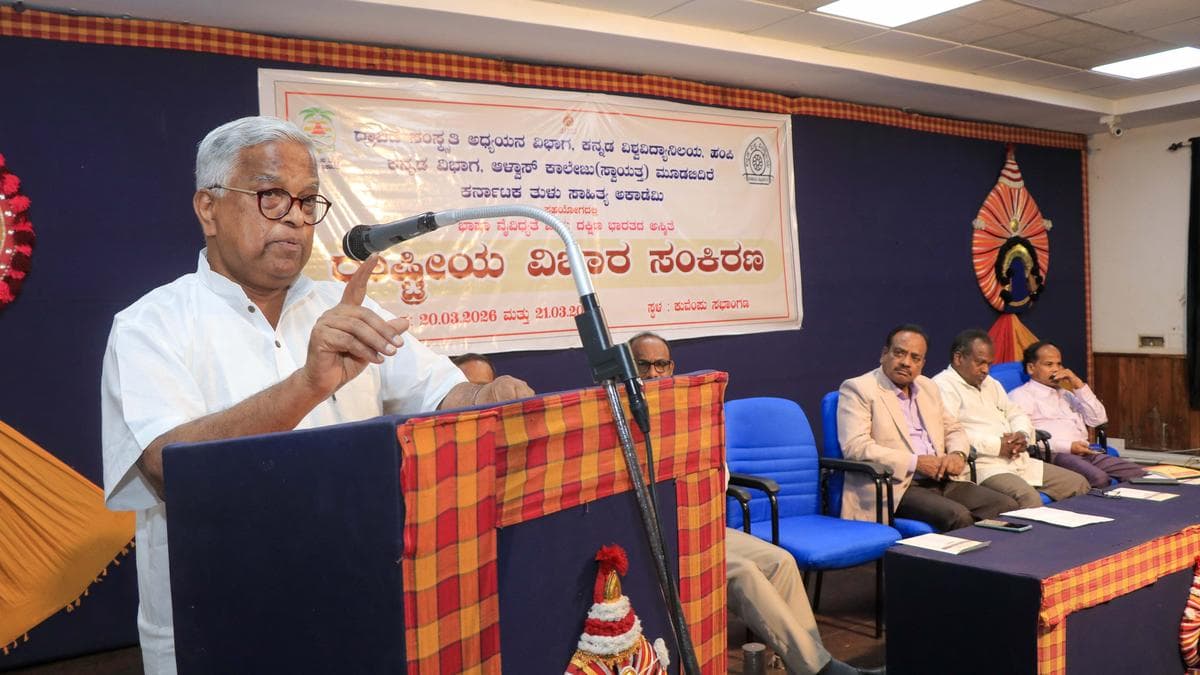
Kannada Development Authority's Purushottama Bilimale highlights urgent issues in India's language policy at a seminar in Mangaluru. Learn why it matters.
GlipzoIn a significant address at a prestigious seminar, Purushottama Bilimale, the Chairman of the Kannada Development Authority, expressed his serious concerns regarding the current state of linguistic data in India. Speaking at the inauguration of a two-day national seminar titled “Linguistic Diversity and South Indian Identity”, Bilimale emphasized the pressing need for updated linguistic research to address the growing imbalances in language policy frameworks across the country. The seminar was held at Alva’s College in Moodbidri, near Mangaluru, and was co-hosted by Kannada University, Hampi and the Karnataka Tulu Sahitya Academy.
This event draws attention to the critical role language plays in shaping cultural identities and the necessity for policy frameworks that reflect the rich tapestry of South Indian languages. Bilimale's remarks underscore the urgency of addressing the current gaps in data that inform language policies, which can lead to disparities in language preservation and usage.
Bilimale pointed out that outdated linguistic data can hinder the effectiveness of language policies, resulting in an imbalance that often neglects the needs of minority languages and dialects. This concern is particularly relevant in a country as diverse as India, where multiple languages coexist and contribute to the social fabric.
Some key points made during his keynote address include: - The need for a comprehensive linguistic survey that reflects current demographics and language usage. - The importance of inclusive language policies that cater to all linguistic groups, ensuring that no language is marginalized. - A call for collaboration between educational institutions, government bodies, and linguistic experts to foster an environment where linguistic diversity is celebrated and preserved.
Bilimale's statements resonate with many educators and linguists, who recognize that language is not just a means of communication but a vital part of identity and heritage. As the seminar continues, discussions will likely focus on how to effectively gather and utilize linguistic data to shape future policies.
The seminar at Alva’s College serves as a platform for scholars, policymakers, and linguistic enthusiasts to gather and discuss the nuances of language and identity in South India. It highlights the collaborative efforts between various organizations to bring attention to the importance of linguistic diversity.
Participants are expected to share insights on: - The role of language in shaping cultural identity and community cohesion. - Strategies for revitalizing endangered languages and promoting bilingual education. - The impact of globalization on local languages and dialects.
These discussions are crucial as they aim to pave the way for a more inclusive approach to language policy that recognizes the value of all languages, particularly those that are at risk of fading away.
The concerns raised by Bilimale are not just about preserving languages; they touch on broader issues of cultural identity, heritage, and social equity. As India continues to evolve, the importance of accurately reflecting linguistic diversity in policies cannot be overstated. This is a pivotal moment for advocates of linguistic rights and cultural preservation, as the outcomes of these discussions could lead to significant changes in how languages are treated within the educational and governmental frameworks.
Looking forward, key developments to watch for include: - The implementation of new linguistic surveys that could reshape language education and policy. - Potential initiatives that may arise from the seminar aimed at preserving minority languages. - Increased collaboration between linguistic organizations and government entities to ensure that all languages receive adequate support and recognition.
As the seminar progresses, it is hoped that it will not only shed light on the current issues but also inspire actionable solutions that will contribute to a more balanced and equitable approach to language policy in India. The outcome of these discussions could be instrumental in fostering a society that values and respects its diverse linguistic heritage.

Tensions soar as the US and Iran engage in air strikes near the Strait of Hormuz, raising concerns over global oil supply and regional stability.
BBC World
Trump's international interventions face serious stalemates. What will this mean for U.S. foreign policy? Explore the critical challenges ahead.
Indian Express
Tehran denies resignation of President Masoud Pezeshkian amid claims of IRGC influence. What does this mean for Iran's political stability? Click to learn more!
Indian Express