
Image: Indian Express
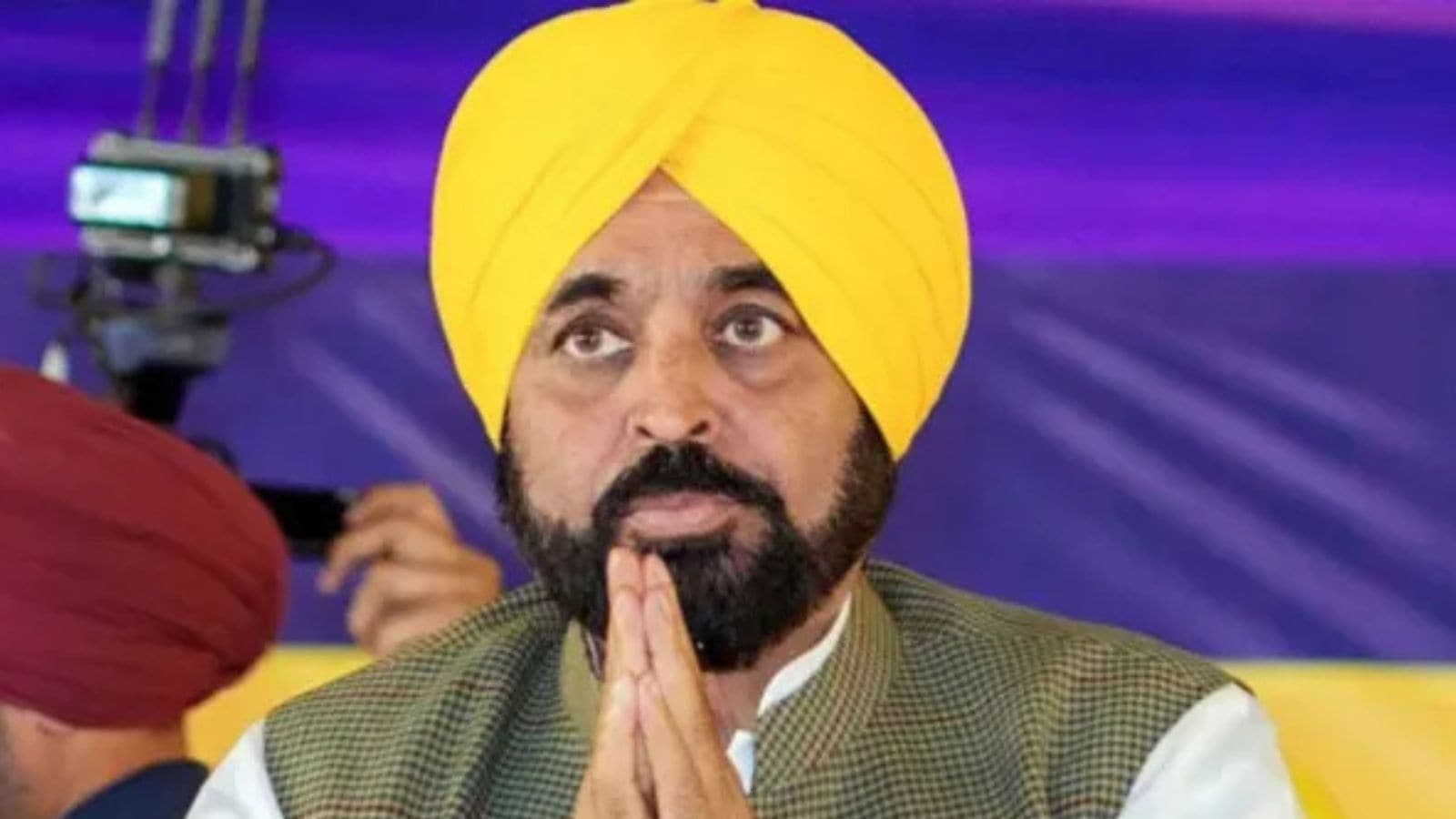
Discover the controversy surrounding Bhagwant Mann's image on ration kits in Punjab, raising questions about political branding in welfare programs.
GlipzoIn a recent move that has sparked significant outcry, Punjab Chief Minister Bhagwant Mann's image is prominently featured on ration kits intended for 40 lakh beneficiaries across the state. The initiative, known as the ‘Meri Rasoi Yojana,’ aims to provide essential food items to economically vulnerable families. However, this branding decision has ignited a political firestorm, raising questions about the appropriateness of using a chief minister’s likeness in government welfare programs.
The scheme was officially rolled out on May 15 and is designed to distribute quarterly ration kits to families covered under the National Food Security Act. Each kit includes staples such as 2 kg of chana dal, 2 kg of sugar, 1 liter of mustard oil, 1 kg of iodized salt, and 200 gm of turmeric powder. The Punjab government has touted the initiative as a vital nutritional support mechanism, especially in light of rising kitchen expenses.
The unveiling of the ration kits has not gone unnoticed. Opposition leaders, including Bikram Singh Majithia and Sukhpal Singh Khaira, took to social media platform X (formerly Twitter) to voice their disapproval. They accused the Aam Aadmi Party (AAP) government of misusing a public welfare initiative for political gains ahead of the 2027 Assembly elections.
Majithia expressed his indignation, labeling the situation as an “extreme case of grandiose narcissism.” In a similar vein, Khaira questioned whether Mann would provide an explanation for the appearance of his image on the kits. Both leaders shared videos showcasing the kits adorned with Mann’s portrait, further fueling the controversy.
The annual cost of the scheme is projected to be around Rs 900 crore, a significant investment aimed at alleviating the financial burden on impoverished households. However, the opposition argues that the inclusion of Mann's image undermines the integrity of a program funded by taxpayer money.
This recent incident has stirred up memories of a previous controversy involving former Chief Minister Parkash Singh Badal. Over a decade ago, Punjab faced potential funding losses when Badal’s photographs appeared on ‘108’ ambulances associated with the National Health Mission. The central government had objected to the use of his image, threatening to withhold grants exceeding Rs 12 crore unless the photographs were removed.
The current uproar over Mann's image on ration kits reflects a broader pattern of political branding within Punjab's governance. Opposition parties have consistently criticized the AAP administration for its perceived tendency to intertwine governmental initiatives with party identity.
In recent years, the Mann government has been scrutinized for its use of AAP's signature colors, yellow and blue, on various public infrastructure projects. Earlier this year, an incident arose when the government ordered 852 schools to be repainted in hues resembling AAP branding, which critics claimed was a misuse of public funds for political messaging.
Additionally, government hospitals and approximately 650 new PRTC buses have been similarly adorned, raising further allegations of political favoritism. This has led to accusations from opposition figures like Majithia and Khaira, who assert that the government is leveraging public resources for personal propaganda rather than focusing on institutional integrity.
The Tirath Yatra scheme, designed to facilitate pilgrimage travel, also featured Mann's photographs and AAP branding during its launch, intensifying concerns that welfare initiatives are becoming increasingly personalized. Critics argue that these programs should be seen as institutional efforts rather than vehicles for individual political branding.
Historically, political leaders in Punjab, including those from previous SAD-BJP regimes, have faced backlash for using personal images on various welfare materials, ranging from bicycles to ambulances. This ongoing trend underscores the contentious relationship between governance and political branding in the state.
The debate surrounding Bhagwant Mann's image on ration kits transcends mere political rivalry; it touches on fundamental issues regarding ethical governance and the use of taxpayer resources. As the 2027 elections loom closer, the implications of this controversy could significantly impact public perception of the AAP government and its commitment to transparent governance.
Moving forward, it will be critical to monitor how the AAP government addresses these criticisms and whether it will adjust its branding strategies in light of public sentiment. The unfolding narrative around public welfare and political identity in Punjab will likely play a significant role in shaping the political landscape in the years to come.
In conclusion, as this controversy unfolds, it raises crucial questions about the nature of welfare programs, the role of political imagery in public service, and how voters in Punjab will respond as they approach the ballot box in the coming elections.

Tensions soar as the US and Iran engage in air strikes near the Strait of Hormuz, raising concerns over global oil supply and regional stability.
BBC World
Trump's international interventions face serious stalemates. What will this mean for U.S. foreign policy? Explore the critical challenges ahead.
Indian Express
Tehran denies resignation of President Masoud Pezeshkian amid claims of IRGC influence. What does this mean for Iran's political stability? Click to learn more!
Indian Express