
Image: The Hindu
Congress slams Modi for failing to condemn US-Israel attacks on Iran, calling it a betrayal of India's values. What does this mean for India's future?
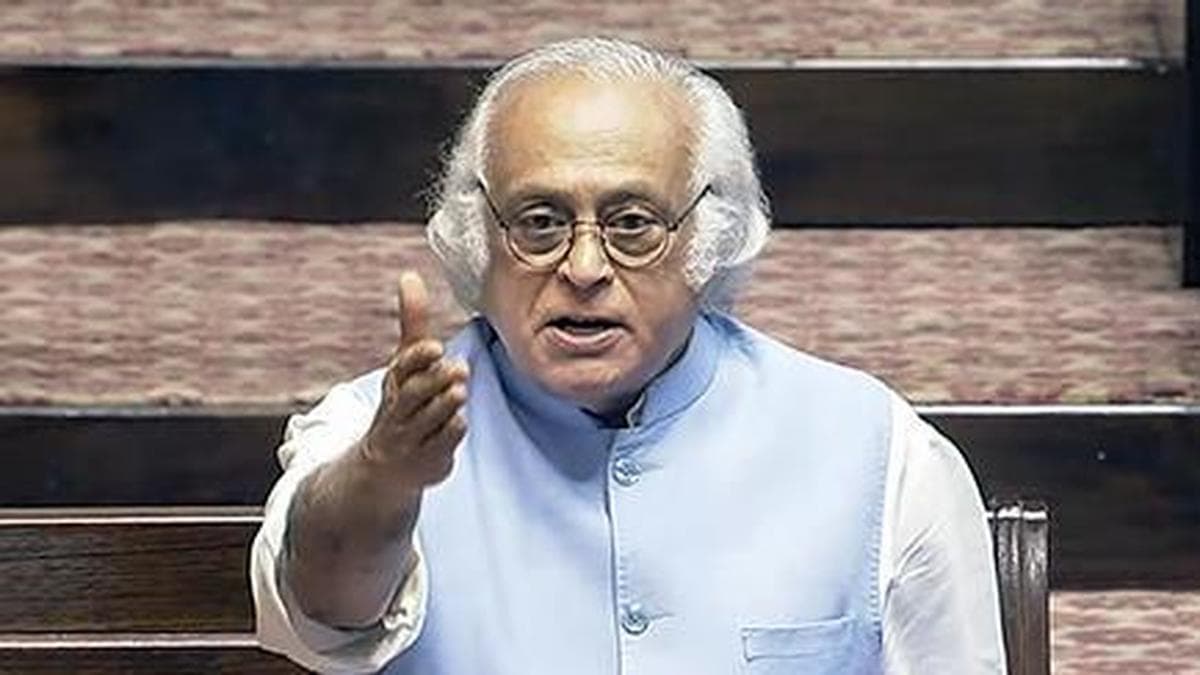
GlipzoIn a significant political move, the Congress Party has publicly criticized the Modi administration for its lack of response regarding the ongoing U.S.-Israel airstrikes on Iran. The remarks came from Congress general secretary for communications, Jairam Ramesh, who described the government's silence as a reflection of moral cowardice and a political betrayal of India's foundational values. This statement was made on March 21, 2026, amid escalating tensions in the Middle East that have drawn international attention.
Ramesh articulated his concerns through a statement posted on X, emphasizing that it has been 21 days since the onset of the aerial assaults. He pointed out that Prime Minister Narendra Modi returned from a widely publicized trip to Israel just 23 days ago, during which he reportedly celebrated his relationship with both U.S. President Donald Trump and Israeli Prime Minister Benjamin Netanyahu. Ramesh's questions were pointed: Has the Modi government condemned these assaults? The answer, he claimed, was a resounding NO.
In a series of rhetorical questions aimed at the Modi administration, Ramesh highlighted several critical issues:
His remarks painted a picture of a government unwilling to stand up for its supposed values or to leverage diplomatic relationships in a time of crisis. According to Ramesh, these omissions reflect a significant departure from India's traditional stance on international conflicts, particularly in the Middle East.
The conflict has intensified with Iran retaliating against the strikes by targeting energy infrastructures in neighboring Gulf countries. The ramifications have not only affected military dynamics but also led to a rising humanitarian crisis. According to reports, the death toll has exceeded 1,300 in Iran and over 1,000 in Lebanon, with additional casualties documented in Israel and among U.S. forces in the area. Millions have been displaced as the war continues without any sign of abating.
Furthermore, Iran's military actions have escalated tensions globally, as it has threatened recreational and tourist locations around the world in response to the ongoing conflict. The U.S. has responded by deploying additional warships and 2,500 Marines to the region, further complicating the situation.
The Congress party's critique of the Modi government is significant for several reasons: - Historical Values: India has traditionally maintained a stance of non-alignment and diplomacy in international conflicts. Critics argue that the current government's silence undermines these long-held principles. - Economic Implications: With the conflict affecting oil prices and global markets, India, as a major consumer of oil, stands to face economic repercussions that could impact its growth trajectory. - Geopolitical Positioning: As a nation that prides itself on its democratic values, India's inaction could damage its credibility on the global stage, particularly in the Middle East where it has interests in diplomatic relations.
As the conflict continues to evolve, the Modi government will face increasing pressure both domestically and internationally to take a firmer stance. Observers are keenly watching to see whether the administration will: - Engage in Diplomatic Initiatives: Will Modi use his connections with U.S. and Israeli leadership to broker a cease-fire? - Address Domestic Concerns: How will the government respond to the rising criticism from opposition parties regarding its foreign policy? - Prepare for Economic Fallout: In light of rising oil prices and potential supply chain disruptions, what measures will the government take to mitigate economic risks?
The unfolding situation remains tense, and the responses—or lack thereof—from the Modi government will likely shape India's international relationships and internal political dynamics in the months to come. As the conflict in Iran continues to escalate, the world watches closely, awaiting decisive action from leaders who claim to uphold the values of peace and democracy.

Tensions soar as the US and Iran engage in air strikes near the Strait of Hormuz, raising concerns over global oil supply and regional stability.
BBC World
Trump's international interventions face serious stalemates. What will this mean for U.S. foreign policy? Explore the critical challenges ahead.
Indian Express
Tehran denies resignation of President Masoud Pezeshkian amid claims of IRGC influence. What does this mean for Iran's political stability? Click to learn more!
Indian Express