
Image: BBC World
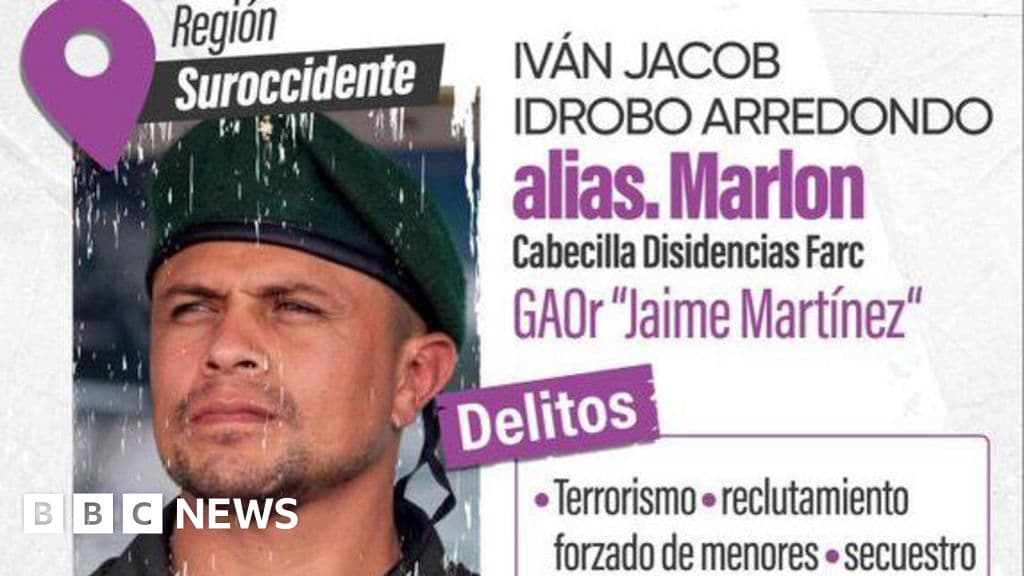
Colombia offers a historic $1.4M reward for the capture of rebel leader 'Marlon' after a deadly bomb attack, raising stakes ahead of upcoming elections.
GlipzoColombia is on high alert following a devastating bomb attack that claimed the lives of 20 people on the Pan-American Highway last Saturday. In response, the country's Defence Minister, Pedro Sánchez, has announced a historic reward of 5 billion pesos (approximately $1.4 million) for information leading to the capture of a notorious rebel leader known only as "Marlon". This shocking event not only marks one of the deadliest assaults on civilians in recent memory but also occurs just weeks before the pivotal presidential elections set for May 31.
The tragic incident unfolded when an explosive device detonated along the busy highway connecting the cities of Cali and Popayán. According to the governor of Cauca province, Octavio Guzmán, the blast was catastrophic, resulting in the deaths of 15 women and five men. The explosion was so powerful that it created a massive crater, obliterating several buses and vehicles in its wake.
Defence Minister Sánchez has not only condemned the attack but has also linked it directly to Marlon, whose real name is Iván Jacob Idrobo Arredondo. This accusation is part of a broader strategy by the Colombian government to curb violence and restore peace in a country plagued by civil unrest and drug-related crime.
Marlon is associated with a dissident faction led by the infamous rebel figure known as Iván Mordisco, currently recognized as Colombia's most wanted criminal. Mordisco was once a member of the Revolutionary Armed Forces of Colombia (Farc) but separated from the group during the peace negotiations in 2016. His faction is notorious for criminal activities, including illegal mining, extortion, and drug trafficking.
The Colombian government views this group as a significant threat not only to public safety but also to the stability of the nation. Sánchez's announcement of the reward reflects the urgency of the situation, as he described the attack as an act of terrorism that warrants swift action.
President Gustavo Petro has weighed in on the situation, labeling the attackers as "terrorists, fascists and drug traffickers." He ordered additional military presence in the region to combat this rising tide of violence. Petro's presidency, which concludes in August 2023, has been characterized by efforts to negotiate peace with various rebel groups; however, this latest incident has raised questions about the effectiveness of such approaches.
With elections looming, the political landscape in Colombia is shifting. Petro has endorsed left-wing candidate Iván Cepeda, who advocates for negotiations and a more diplomatic approach to resolving conflicts with armed groups. In contrast, candidates from the right-wing opposition are advocating for a more aggressive stance against these groups.
As Colombia prepares for the presidential elections on May 31, the public's response to the recent violence will undoubtedly influence voter sentiment. Polls indicate that Cepeda is currently leading, a reflection of the electorate's desire for strategies that prioritize peace and dialogue over militarization. A potential run-off election is anticipated on June 21, making the stakes even higher.
The outcome of these elections could have lasting implications for Colombia's approach to its ongoing struggles with insurgency and crime. If Cepeda is successful, it may lead to renewed efforts in negotiations with rebel factions such as those led by Marlon and Mordisco. Conversely, a victory for right-leaning candidates could result in a crackdown that escalates violence and further complicates the situation.
The recent bomb attack and the government's response highlight the ongoing challenges Colombia faces regarding internal conflict and public safety. The record reward for Marlon is not just a monetary figure; it symbolizes the government's commitment to tackling violence and restoring stability. The situation serves as a stark reminder of the fragility of peace in Colombia and the high stakes involved in the upcoming elections.
As the nation reflects on this tragedy, it will also be watching closely how the new president will address the complex web of issues stemming from decades of conflict. The choices made in the coming weeks will shape the future direction of Colombia as it strives for peace and security.
In summary, the tragic events surrounding the bomb attack and the government's subsequent actions underscore a pivotal moment in Colombian history. The world will be watching to see how Colombia navigates these turbulent waters as it approaches a critical juncture in its political landscape.

Tensions soar as the US and Iran engage in air strikes near the Strait of Hormuz, raising concerns over global oil supply and regional stability.
BBC World
Trump's international interventions face serious stalemates. What will this mean for U.S. foreign policy? Explore the critical challenges ahead.
Indian Express
Tehran denies resignation of President Masoud Pezeshkian amid claims of IRGC influence. What does this mean for Iran's political stability? Click to learn more!
Indian Express