
Image: BBC World
US indicts Raúl Castro for murder related to 1996 plane shootdown, escalating tensions with Cuba. What does this mean for future relations?
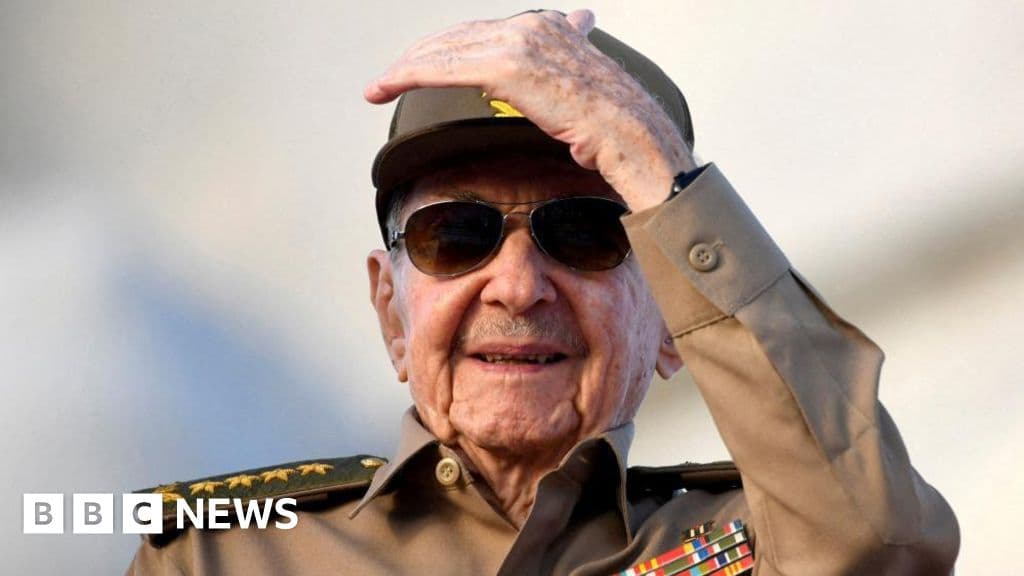
GlipzoIn a dramatic escalation of tensions between the United States and Cuba, Raúl Castro, the former leader of Cuba, has been charged with conspiracy to murder US nationals and other related offenses. This indictment stems from the 1996 downing of two planes operated by the Cuban-American organization, Brothers to the Rescue, which tragically resulted in the deaths of four individuals, including three American citizens.
The charges were officially announced on Wednesday by Acting Attorney General Todd Blanche during a press conference held at the Freedom Tower in Miami. At the time of the incident, Castro, 94, served as the head of Cuba's armed forces and faced significant backlash from the international community for the incident.
The indictment specifically details charges against Castro and five accomplices for their roles in the aircraft shootdown, which occurred while the planes were in international airspace, allegedly conducting humanitarian missions. The victims, Armando Alejandre Jr., Carlos Alberto Costa, Mario Manuel de la Peña, and Pablo Morales, were part of a group dedicated to providing assistance to Cubans fleeing the island. Blanche emphasized that the United States, under the leadership of President Donald Trump, will not forget its citizens.
Among the charges, Castro faces four counts of murder and destruction of aircraft. Each murder count carries severe penalties, including the possibility of life imprisonment or even the death penalty. The gravity of these accusations underscores the U.S. government's commitment to holding accountable those deemed responsible for the deaths of American citizens.
The indictment of Raúl Castro comes at a time of growing scrutiny on Cuba's communist regime. President Miguel Díaz-Canel dismissed the charges as a politically motivated act lacking any legal basis. He stated, “This is a political maneuver, devoid of any legal foundation,” reflecting the Cuban government's long-standing position against U.S. intervention.
Experts suggest that the U.S. is intensifying pressure on Cuba to compel significant changes in its political and economic systems. William LeoGrande, a political analyst at American University, remarked that the strategy appears to involve gradually increasing pressure on the Cuban government to negotiate from a position of weakness.
The U.S. has enacted multiple sanctions against Cuba, including a blockade that has severely restricted oil supplies, leading to blackouts and food shortages across the island. In a related development, U.S. Secretary of State Marco Rubio addressed the Cuban populace on the country's independence day, asserting that the current hardships are largely due to the Cuban military conglomerate, GAESA, which controls substantial sectors of the economy, from hotels to fuel.
GAESA's dominance over the economy has been cited as a key factor contributing to the ongoing crises in Cuba. Rubio conveyed that the U.S. government is committed to supporting a future where Cubans can thrive without the burdens imposed by their current leadership.
Díaz-Canel vehemently countered Rubio's statements, accusing the U.S. of distorting facts and blaming the Cuban government for issues exacerbated by external sanctions. He described the indictment of Castro as a pretext for potential military action against Cuba, framing it as an unjustified attack on the nation’s sovereignty.
As the U.S. moves forward with these charges, questions arise regarding the practicality of bringing Raúl Castro to justice. During the press conference, Blanche confirmed there is an active warrant for Castro's arrest, but he did not provide details on the likelihood of apprehending him. He stated, “We expect he will show up here, by his own will or another way,” implying that the U.S. may be prepared for various scenarios to bring Castro to trial.
Political analyst LeoGrande suggested that the U.S. might be willing to capture Castro if negotiations do not yield favorable results. The recent military operation targeting former Venezuelan President Nicolás Maduro serves as a potential precedent, although LeoGrande cautioned against assuming a similar outcome in Cuba, given Castro's diminished role since retiring from active leadership in 2018.
Despite his retirement, Raúl Castro continues to hold significant sway in Cuba as a symbol of the Cuban Revolution and remains a respected figure on the island. His legacy and the potential ramifications of these charges could further strain U.S.-Cuba relations, which had experienced a thaw during the presidency of Barack Obama.
The unfolding situation presents crucial implications for both Cuba and the United States as they navigate their complex historical relationship. The U.S. government's renewed focus on accountability for past actions may signal a shift towards more aggressive tactics against Cuba's leadership. As geopolitical dynamics evolve, the international community will be closely observing how Castro's indictment influences both domestic policies in Cuba and the overall diplomatic landscape.
In summary, the charges against Raúl Castro signify a pivotal moment in U.S.-Cuban relations, highlighting the ongoing struggles within the island nation and the U.S.'s commitment to advocating for change. As tensions escalate, stakeholders on both sides must prepare for the potential fallout and seek pathways toward resolution amid a rapidly shifting political environment.

Tensions soar as the US and Iran engage in air strikes near the Strait of Hormuz, raising concerns over global oil supply and regional stability.
BBC World
Trump's international interventions face serious stalemates. What will this mean for U.S. foreign policy? Explore the critical challenges ahead.
Indian Express
Tehran denies resignation of President Masoud Pezeshkian amid claims of IRGC influence. What does this mean for Iran's political stability? Click to learn more!
Indian Express