
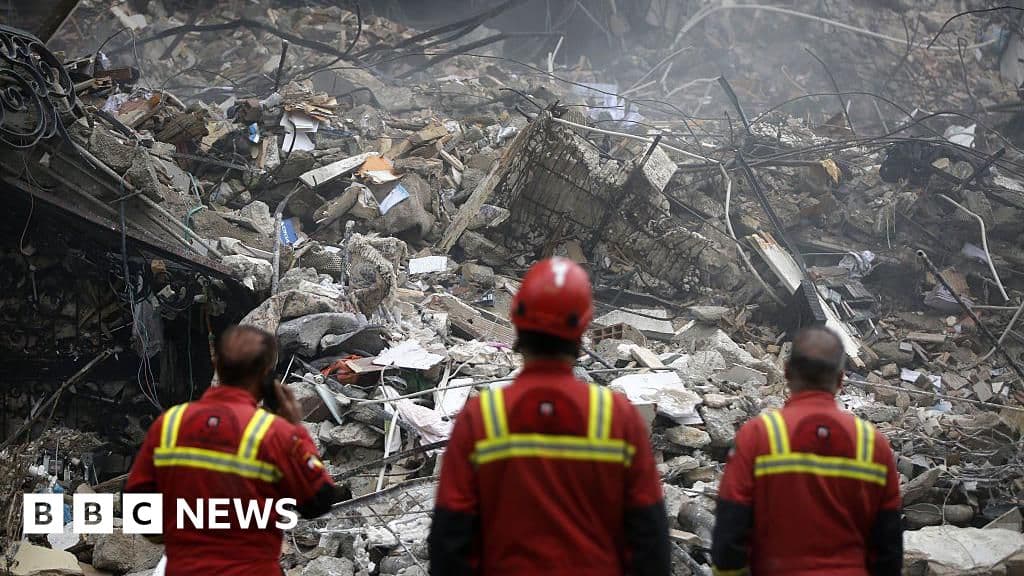
Image: BBC World
Discover the details of the newly agreed two-week ceasefire between the US and Iran, its implications, and what lies ahead for the region.
GlipzoIn a significant turn of events, Iran and the United States have reached a conditional agreement for a two-week ceasefire that allows shipping traffic to resume through the Strait of Hormuz, a critical artery for global oil and trade. This agreement comes on the heels of escalating military tensions in the region, especially following the coordinated attacks by the US and Israel on Iranian targets just over a month ago. The announcement was made shortly after U.S. President Donald Trump issued a stark warning threatening severe consequences for Iran if it did not comply with the reopening of the Strait.
Pakistan's Prime Minister Shehbaz Sharif, who has been playing a mediating role in these negotiations, confirmed that the ceasefire is effective immediately. This diplomatic breakthrough raises numerous questions about the future of US-Iran relations and potential stability in the Middle East.
President Trump stated that he has agreed to “suspend the bombing and attacks on Iran for a period of two weeks” contingent upon Iran's compliance in reopening the Strait of Hormuz. In a post on Truth Social, he remarked that this decision was made because the US had achieved its military objectives in the region. This is a notable shift from his earlier rhetoric, where he warned that “a whole civilization will die tonight” if Iran did not comply with US demands.
Iran's response included a commitment to allow maritime vessels to transit the Strait under the coordination of its military. The Iranian authorities also presented a 10-point plan which outlines the following key elements: - Complete cessation of hostilities in Iran, Iraq, Lebanon, and Yemen. - Full commitment from the US to lift sanctions imposed on Iran. - The release of Iranian funds and frozen assets currently held in the US. - Compensation for reconstruction costs incurred by Iran. - A pledge that Iran will not pursue nuclear weapons.
This plan indicates Iran's willingness to engage diplomatically while asserting its own terms for peace in the region.
The ceasefire is not limited to Iran; it also extends to Lebanon, where tensions have been high due to ongoing conflicts involving Hezbollah, the Iran-backed militant group. However, the Israeli government has not indicated any intention of halting its military operations in Lebanon. Shortly after the announcement, Israeli Prime Minister Benjamin Netanyahu reiterated Israel's support for Trump's ceasefire decision but emphasized that it was conditional on Iran ceasing attacks against the US, Israel, and its allies.
The situation remains precarious, as evidenced by the sirens that rang out in Israel shortly after Trump's announcement, indicating that the Israel Defense Forces were intercepting missiles believed to be launched from Iran. The Israeli military's response underscores the fragile nature of the ceasefire and the immediate threats that linger.
With negotiations set to continue, Pakistan has extended an invitation for delegations to meet in Islamabad on Friday to discuss a more conclusive agreement aimed at resolving ongoing disputes. While the US White House, represented by press secretary Karoline Leavitt, acknowledged these discussions, she emphasized that nothing would be finalized until formally announced by the President or the administration.
Despite the optimistic tone surrounding the ceasefire, the road to lasting peace is fraught with challenges. The stark differences in the US and Iran's interpretations of the ceasefire terms raise concerns that further military tensions could erupt even as talks progress. Previous rounds of negotiations have shown that both nations struggle to maintain dialogue without escalating conflicts.
The implications of this ceasefire extend well beyond the immediate parties involved. A successful resolution could help stabilize a region that has been marred by conflict for decades. It could also set a precedent for future diplomatic efforts regarding nuclear non-proliferation and regional security. Conversely, failure to adhere to this ceasefire could lead to renewed hostilities, endangering not only the involved nations but also global markets reliant on oil transport through the Strait of Hormuz.
As the situation unfolds, observers should be vigilant regarding the outcomes of the upcoming negotiations in Islamabad. The responses from both Iran and the US will be crucial to determining the future of this fragile ceasefire. Key points to watch include: - Iran’s compliance with the ceasefire and its 10-point plan. - The reaction from Israel, particularly regarding Hezbollah's activities. - Potential shifts in US foreign policy under the current administration.
The coming weeks could shape not only US-Iran relations but also the geopolitical landscape of the Middle East for years to come.
---

Tensions soar as the US and Iran engage in air strikes near the Strait of Hormuz, raising concerns over global oil supply and regional stability.
BBC World
Trump's international interventions face serious stalemates. What will this mean for U.S. foreign policy? Explore the critical challenges ahead.
Indian Express
Tehran denies resignation of President Masoud Pezeshkian amid claims of IRGC influence. What does this mean for Iran's political stability? Click to learn more!
Indian Express