
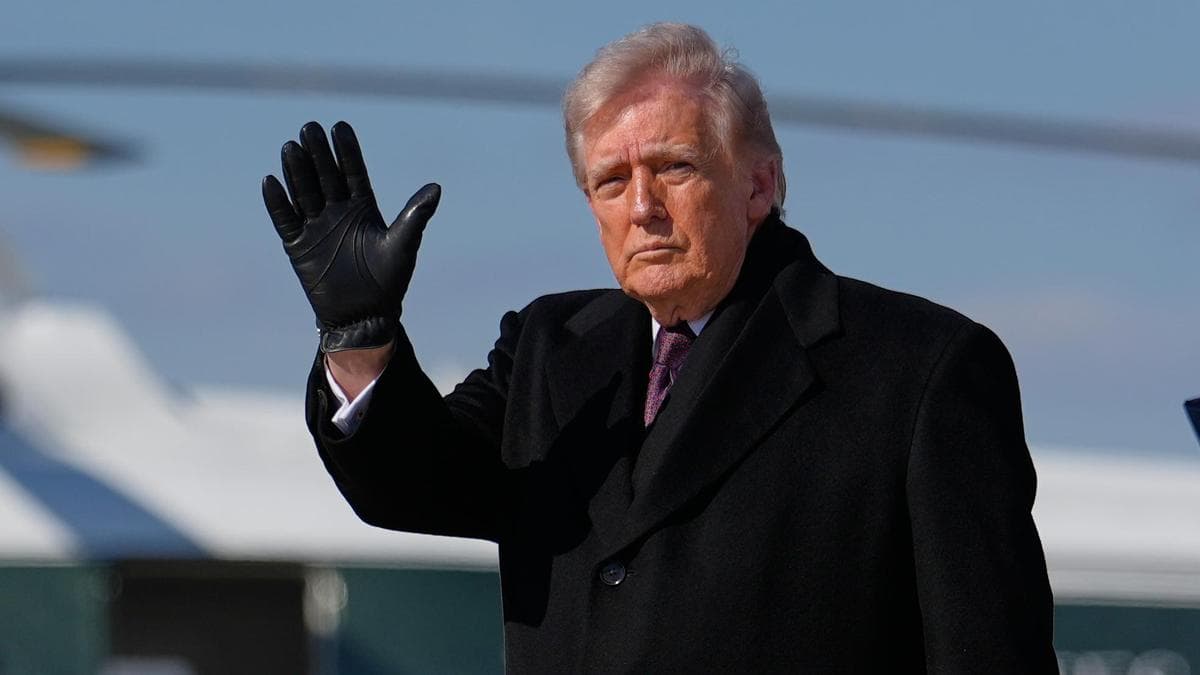
Image: The Hindu
Trump's ultimatum to Iran over the Strait of Hormuz escalates tensions. What could this mean for global stability? Click to find out more!
GlipzoIn a shocking escalation of international tensions, U.S. President Donald Trump has threatened to destroy Iran’s power plants if the country does not fully reopen the Strait of Hormuz within a strict 48-hour deadline. This ultimatum, issued on March 21, 2026, marks a dramatic shift just a day after Trump suggested intentions to de-escalate the ongoing conflict.
Trump's bold proclamation came via social media, where he stated, "If Iran doesn’t FULLY OPEN, WITHOUT THREAT, the Strait of Hormuz, within 48 HOURS from this exact point in time, the United States of America will hit and obliterate their various POWER PLANTS, STARTING WITH THE BIGGEST ONE FIRST!" This threat is particularly alarming as it underscores a growing military standoff that could have far-reaching consequences in the region.
In response to Trump's ultimatum, Iranian military officials have ramped up their rhetoric, warning of potential retaliation against U.S. interests in the region. The Iranian military's operational command, Khatam Al-Anbiya, issued a statement through Fars news agency, declaring that any violation of their fuel and energy infrastructure would lead to targeted strikes against U.S. and allied facilities. This includes crucial installations related to energy, information technology, and desalination.
The conflict has escalated to a point where Israeli officials are noting that Iranian forces have reportedly launched long-range missiles, raising the stakes for military engagement not just in West Asia but potentially beyond. The recent Iranian missile strike also injured several individuals near Israel’s nuclear site, further complicating the already perilous situation.
As tensions rise, the ramifications extend beyond military confrontation. Analysts indicate that the ongoing conflict threatens both domestic urea production in Iran and the stability of its supply chains, particularly as the Strait of Hormuz is a critical chokepoint for global oil transportation. The U.S.-Iran war, coupled with Israeli involvement, poses a significant threat to energy markets and could disrupt global supply chains.
The Strait of Hormuz is vital for global energy supplies, with about 20% of the world's oil passing through this narrow waterway. Disruptions here could lead to soaring oil prices and market volatility. Furthermore, Trump's threats indicate a willingness to engage in military action that could draw in other nations, potentially leading to a wider conflict in the Middle East.
Both Iran and the U.S. have a long history of hostilities, but the current escalation presents a crucial moment—one that could define not just the future of U.S.-Iran relations but also impact geopolitical stability across the globe. The stakes are incredibly high, and any miscalculation could lead to catastrophic consequences.
As the deadline set by Trump approaches, the world is keenly watching for Iran's response. Will Tehran comply with the ultimatum, or will it further entrench its position, leading to military strikes from the U.S.? Observers are also paying attention to how this situation might influence discussions among other global powers regarding sanctions and diplomatic resolutions.
The dynamics in the region are changing rapidly, and as nations position themselves in response to these threats, the potential for escalation remains high. In the coming days, we will see whether diplomatic channels can be opened or if the situation will devolve into broader conflict.
In summary, the unfolding events represent a critical juncture in international relations, one that will require careful navigation to avoid a full-blown crisis. With the world watching closely, the next moves from both the U.S. and Iran could reshape the landscape of global politics significantly.

Tensions soar as the US and Iran engage in air strikes near the Strait of Hormuz, raising concerns over global oil supply and regional stability.
BBC World
Trump's international interventions face serious stalemates. What will this mean for U.S. foreign policy? Explore the critical challenges ahead.
Indian Express
Tehran denies resignation of President Masoud Pezeshkian amid claims of IRGC influence. What does this mean for Iran's political stability? Click to learn more!
Indian Express