
Image: BBC World
Over 500 were arrested in Istanbul during May Day protests as police crack down on demonstrations, raising questions about workers' rights in Turkey.
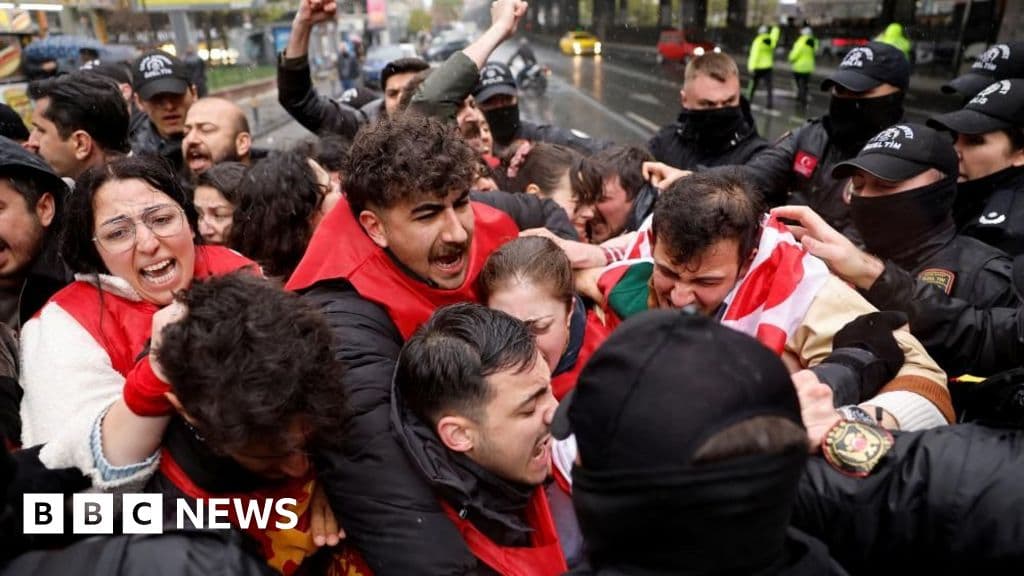
GlipzoIn a significant escalation of tensions surrounding International Labour Day, Turkish police have detained over 500 individuals during May Day protests in Istanbul. This year, the demonstrations were particularly intense as many participants attempted to reach Taksim Square, a focal point for anti-government protests in past years. The police responded with tear gas and a heavy presence, effectively sealing off the square hours before the events commenced.
For years, Taksim Square has been a symbol of resistance, but since 2013, authorities have prohibited gatherings there, leading to heightened security measures on May 1 each year. The CHD lawyers' group, which monitored the situation, confirmed the staggering number of arrests, highlighting the ongoing struggle for workers' rights in Turkey.
Despite the intense crackdown in Istanbul, celebrations unfolded across other cities in Turkey. In Ankara, various groups gathered peacefully in Tandogan Square, while Kadıkoy and Kartal were granted permission to host their May Day events. In Izmir, festivities took place at Gundogdu Square, and Diyarbakır celebrated at Istasyon Square.
As early as Friday morning, security forces set up extensive measures at the entrances of these squares. This was not an isolated event; trade unions organized rallies in multiple cities, including Bursa and Corum, showcasing a nationwide call for workers' rights and solidarity.
In Mecidiyekoy, Istanbul, tensions escalated when a segment of the crowd, including Erkan Bas, president of the Turkish Workers' Party, attempted to breach police barricades. The authorities responded with water cannons and tear gas to disperse the crowd. Bas condemned the police action, labeling the blockade of Taksim Square as illegal and calling for its reopening, underscoring the ongoing struggle for freedom of assembly in the country.
Turkey's President Recep Tayyip Erdogan acknowledged the day through a post on X, extending greetings to all workers and emphasizing the importance of labor in the nation’s progress. This statement came amidst the unrest, reflecting the contrasting narratives surrounding workers’ rights and government authority.
International Labour Day, celebrated on May 1, serves as a critical moment for workers to unite and advocate for their rights. In Turkey, this day carries particular weight given the historical context of protests that have often turned violent. The crackdown seen today is emblematic of the broader tensions between the government and those advocating for labor rights and freedoms.
As the dust settles from today's protests, the future for labor movements in Turkey hangs in the balance. Observers are keen to see how the government will respond to the growing discontent among workers and unions. Will there be a shift towards more open dialogue regarding labor rights, or will the crackdown continue?
With tensions running high and the memory of past protests fresh in the public's mind, the situation remains fluid. Activists are likely to regroup and continue advocating for their rights, especially as economic challenges persist in the country. The coming weeks and months will be critical in determining the trajectory of labor movements in Turkey and the government's approach to dissent.
The resilience of the Turkish workforce is evident, and while today’s protests faced significant opposition, they also serve as a reminder of the enduring fight for justice and equality. May Day 2023 may very well mark a pivotal moment in the ongoing struggle for workers' rights in Turkey.

Tensions soar as the US and Iran engage in air strikes near the Strait of Hormuz, raising concerns over global oil supply and regional stability.
BBC World
Trump's international interventions face serious stalemates. What will this mean for U.S. foreign policy? Explore the critical challenges ahead.
Indian Express
Tehran denies resignation of President Masoud Pezeshkian amid claims of IRGC influence. What does this mean for Iran's political stability? Click to learn more!
Indian Express