
Image: BBC World
Iranian missile strikes hit Dimona, Israel, targeting a nuclear facility. This escalation raises serious concerns for regional security and international diplomacy.
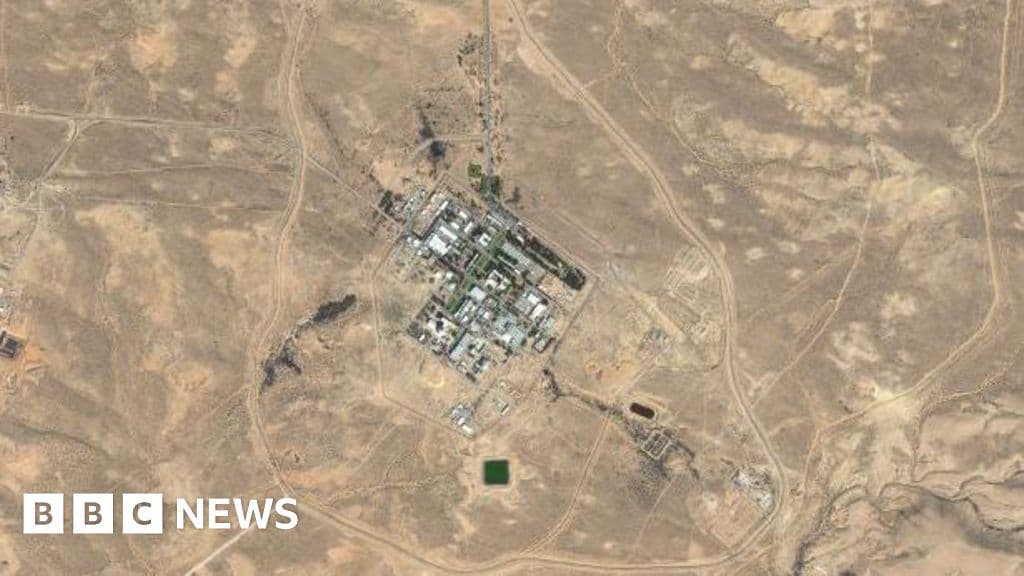
GlipzoOn a tense Saturday, Iranian missile strikes struck the town of Dimona, located in southern Israel, in close proximity to a sensitive nuclear facility. This alarming event raises significant concerns regarding regional security and the potential for escalating military conflict.
The missile attack comes only hours after Iranian state television claimed a response to an earlier incident involving the Natanz nuclear facility in Iran. According to the International Atomic Energy Agency (IAEA), there was no indication of damage to the nuclear research site situated about eight miles (13 km) from Dimona. The IAEA also reported that there had been no increase in off-site radiation levels, alleviating immediate fears about nuclear safety.
Following the missile strikes, Israel's emergency services reported treating 40 individuals in Dimona for injuries, including 37 with mild injuries and a 10-year-old boy in serious condition. Additionally, a separate attack in the nearby town of Arad resulted in injuries to 68 people, with 47 suffering mild injuries and 10 in serious condition. Emergency medical technician Yakir Talkar described the scene in Arad as “very severe,” highlighting the chaotic aftermath of the attacks.
Israeli authorities are now scrutinizing how these missiles evaded the country’s robust air defense systems. Initial reports indicated that interceptors were launched but failed to neutralize the incoming threats, leading to the direct hits on both Dimona and Arad.
The Shimon Peres Negev Nuclear Research Center, often referred to simply as the Dimona reactor, has long been a focal point of concern due to its suspected role in housing Israel's undeclared nuclear arsenal. Officially, the facility is said to engage solely in research activities; however, it has been widely accepted for decades that Israel has developed nuclear weapons there. The ambiguity surrounding Israel’s nuclear capabilities makes any attacks on this facility particularly alarming for the Israeli government.
The significance of Dimona extends beyond its physical location; it symbolizes Israel's position as the only nuclear power in the Middle East. Consequently, any threats aimed at this site are taken with utmost seriousness by the Israeli government, which views its nuclear capability as essential for national security.
In the aftermath of the missile strikes, Iran's Atomic Energy Organisation (AEOI) condemned the attack on Natanz, labeling it as a violation of the Treaty on the Non-Proliferation of Nuclear Weapons. They claimed there was no leakage of radioactive materials, asserting that residents nearby were not in danger. The Natanz facility has been a target in previous conflicts, including the US-Israeli strikes in the early days of the ongoing war that began on February 28.
The tensions between Iran and Israel have reached new heights as both nations continue to grapple with their respective nuclear ambitions. The United States, alongside Israel, has emphasized the need to prevent Iran from acquiring the capability to develop nuclear weapons, marking this as a pivotal point in their strategic objectives.
The recent missile strikes underscore a concerning escalation in hostilities between Iran and Israel. As both nations prepare for further military engagements, the international community watches closely. The potential for conflict could extend beyond these two nations, impacting geopolitical relations throughout the Middle East.
Key Points to Watch: - Will Israel retaliate against Iranian positions following the attacks? - How will the international community, particularly the United States, respond to the escalating tensions? - What measures will be taken to bolster security around nuclear sites in Israel? - Will there be an increase in diplomatic efforts to de-escalate the situation?
The situation remains fluid, and developments in the coming days will be crucial for understanding the future of Iranian-Israeli relations and regional stability. As both sides brace for possible retaliations, the world is left to ponder the consequences of these military actions in an already volatile region.
In conclusion, the Iranian missile strike on Dimona is not just a localized incident; it represents a significant flashpoint that could lead to broader conflicts, challenging international peace efforts and nuclear non-proliferation initiatives.
This incident highlights the fragile nature of peace in the Middle East and underscores the urgent need for diplomatic solutions to prevent military escalation. The ramifications of these attacks could shape the future of nuclear negotiations and regional alliances for years to come.

Tensions soar as the US and Iran engage in air strikes near the Strait of Hormuz, raising concerns over global oil supply and regional stability.
BBC World
Trump's international interventions face serious stalemates. What will this mean for U.S. foreign policy? Explore the critical challenges ahead.
Indian Express
Tehran denies resignation of President Masoud Pezeshkian amid claims of IRGC influence. What does this mean for Iran's political stability? Click to learn more!
Indian Express