
Image: BBC World
Trump's strong statement after gas field attacks raises questions about U.S.-Israel alignment on Iran. What are the implications for future actions?
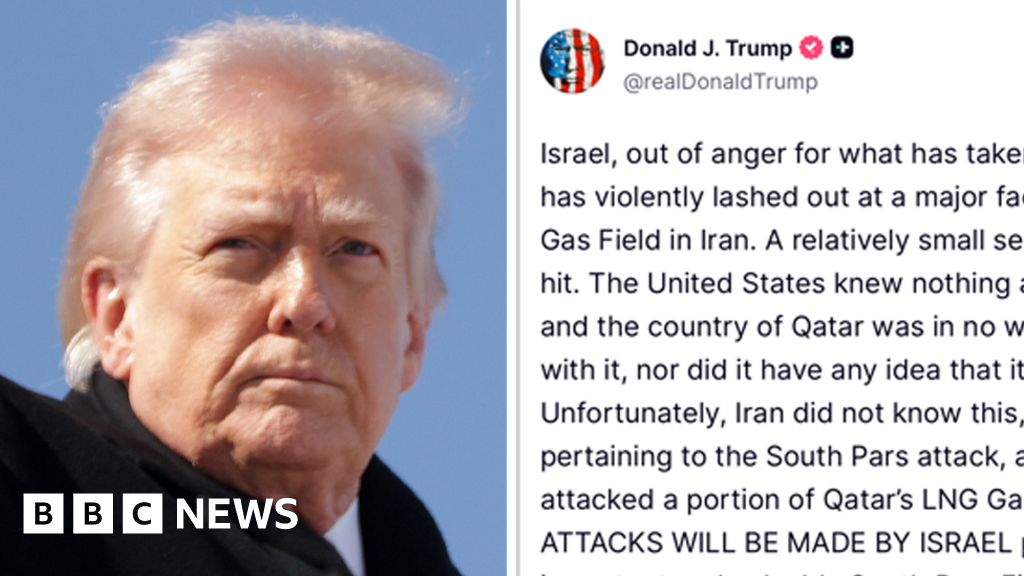
GlipzoIn the latest escalation of tensions surrounding the ongoing conflict involving Iran, U.S. President Donald Trump has issued a striking statement following attacks on a gas field shared by Iran and Qatar on Wednesday. The incident, which saw Israel targeting Iran's South Pars gas field—the largest of its kind globally—has prompted retaliatory actions from Tehran, further intensifying energy price fluctuations and geopolitical unrest.
In a post shared on his Truth Social platform, Trump expressed his displeasure and reiterated threats against Iran, emphasizing that he was unaware of Israel's actions prior to the attack. This assertion raises questions about the level of coordination between the U.S. and Israel, particularly in light of reports suggesting otherwise.
Yedioth Ahronoth, a prominent Israeli newspaper, reported that the operation was pre-coordinated with U.S. officials, claiming that Trump and Israeli Prime Minister Benjamin Netanyahu had discussed the strike over the weekend. In contrast, Israel Hayom, another major outlet, reinforced this claim, stating that the attack was part of a broader strategy agreed upon with leaders from three key Gulf states.
The contrasting narratives highlight the complexity and often murky nature of U.S.-Israeli relations, particularly in military operations against Iran. Trump's phrasing, describing Israel's actions as an “angry lash out,” raises eyebrows—suggesting a lack of strategic finesse typically expected in military discussions between allies.
Trump's choice of words is particularly revealing. By stating that Israel “violently lashed out,” he arguably casts doubt on the calculated nature of the attack. This could imply a subtle criticism of Israel's approach, prompting analysts to ponder whether Trump believes Israel acted rashly.
Moreover, Trump's declaration that “NO MORE ATTACKS” should occur unless provoked by Iran indicates a desire to manage escalation. His statement seems to simultaneously project authority while hinting at possible concerns about Israel's military strategy under Netanyahu's leadership.
Despite Trump's personal statements, Israeli officials assert that their countries remain aligned in their overarching goals regarding Iran. Alex Gandler, a spokesperson for the Israeli embassy in London, stated, “We are very much aligned on most or all of our goals regarding the Islamic regime in Iran.” This declaration seeks to quell any speculation regarding rifts in the alliance, highlighting a shared commitment to countering Iranian threats.
However, a closer examination reveals differing priorities. While both nations express a desire to contain Iran's influence, Israel's narrative leans heavily toward regime change, a goal that has been a longstanding aspect of Netanyahu's policy. Recent Israeli media reports suggest that the attack on South Pars was intended to undermine the Iranian regime's authority, with officials claiming that disrupting gas supplies could lead to increased civil unrest within Iran.
The military strategies of the U.S. and Israel also reflect these differing priorities. The U.S. has focused on degrading Iran's military capabilities, particularly its missile and naval assets, as well as targeting Iranian installations along the Gulf coast. In contrast, Israel has taken a more aggressive approach aimed at eliminating key Iranian figures and dismantling elements of state control, including paramilitary forces responsible for suppressing protests.
As the situation evolves, analysts will be watching closely for further developments in U.S.-Israeli relations and their joint strategies against Iran. Possible outcomes include: - Increased Diplomatic Pressure: The U.S. may seek to exert more diplomatic pressure on Israel to temper its military actions, aiming to avoid an escalation of hostilities. - Energy Market Reactions: Continued attacks and retaliations could lead to increased volatility in global energy prices, impacting economies worldwide. - Public Sentiment: Both countries face domestic pressures regarding their military engagements, with public opinion potentially influencing future actions.
In conclusion, while President Trump's statements suggest a need for strategic alignment between the U.S. and Israel, the complexities of their military tactics and goals raise critical questions about the future of their partnership in confronting Iran. As tensions rise, observers must remain vigilant about the implications for regional stability and international relations.

Tensions soar as the US and Iran engage in air strikes near the Strait of Hormuz, raising concerns over global oil supply and regional stability.
BBC World
Trump's international interventions face serious stalemates. What will this mean for U.S. foreign policy? Explore the critical challenges ahead.
Indian Express
Tehran denies resignation of President Masoud Pezeshkian amid claims of IRGC influence. What does this mean for Iran's political stability? Click to learn more!
Indian Express