
Image: Indian Express
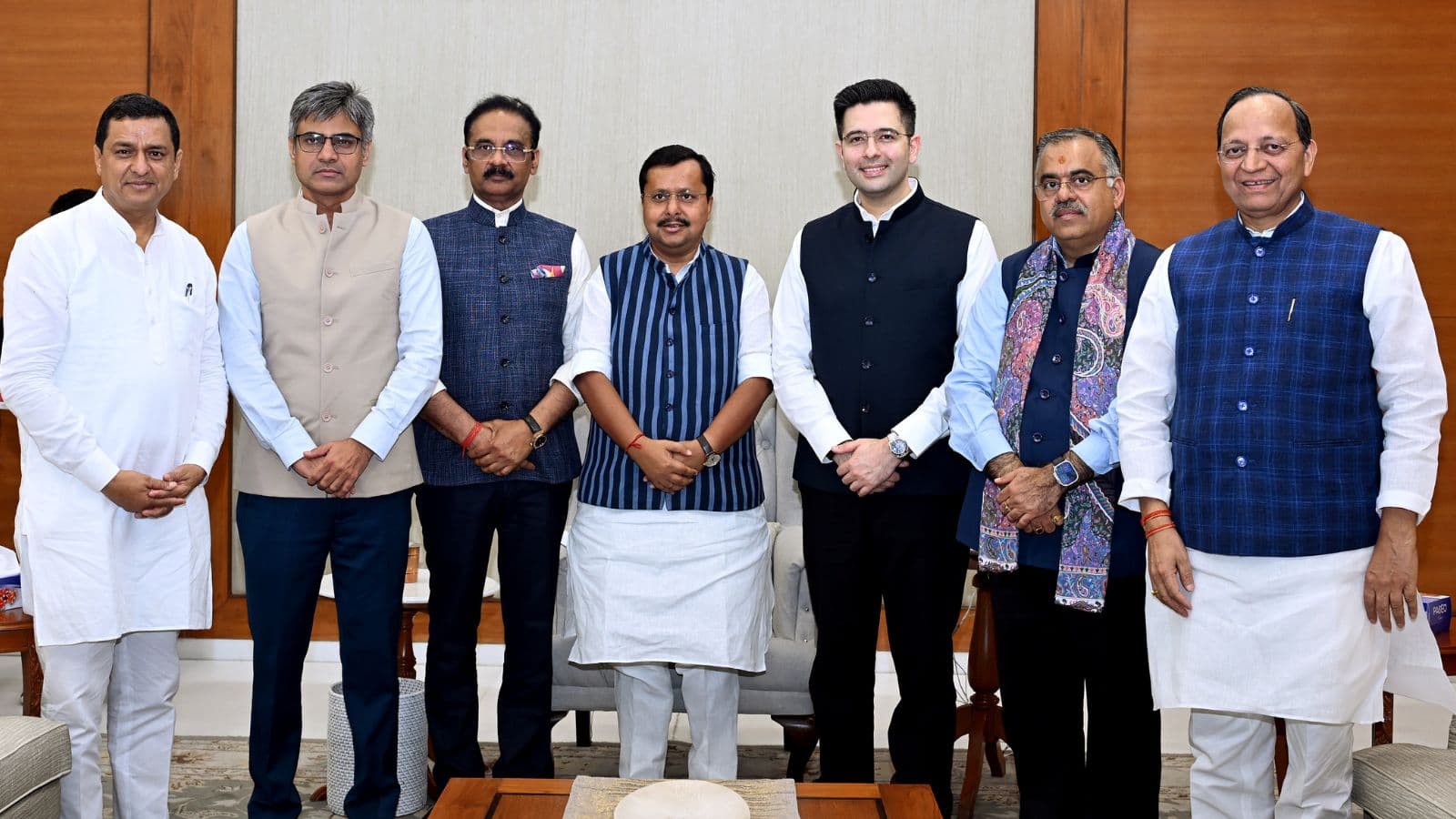
Discover the shocking defections from AAP as seven MPs switch to BJP, revealing deeper political dynamics and implications for the future.
GlipzoIn a surprising political shift, seven Rajya Sabha MPs from the Aam Aadmi Party (AAP) have left the party, raising eyebrows across the political spectrum. While the Bharatiya Janata Party (BJP) is often accused of using intimidation tactics to sway opposition members, the situation within AAP suggests deeper issues at play. Arvind Kejriwal's decision-making process, particularly in nominating individuals based on financial contributions rather than loyalty or political acumen, has been called into question. This mass defection has not only weakened AAP but also illuminated the intricate web of alliances and betrayals in Indian politics.
Among the defectors, one MP is known for manufacturing fertilizers, another for producing towels, and a third operates a large private university in Punjab. The motivations behind their exit are complex, with internal party dynamics and external political pressures contributing to their decisions. One defector even admitted on national television that he and others had met with Amit Shah prior to their departure, suggesting a well-coordinated effort to weaken AAP from within.
The fallout from this political upheaval is palpable, particularly for Raghav Chadha, one of the prominent faces of AAP. Within just three days of leaving the party, Chadha lost nearly two million followers on Instagram, highlighting how quickly public perception can shift in the digital age. His robust social media presence, once considered a strength, is now a testament to the fickleness of political support.
This decline in followers can be traced back to events earlier in March 2024 when Chadha was arrested amid allegations related to a liquor scam. Instead of standing in solidarity with Kejriwal during his leader’s arrest, Chadha chose to seek dental treatment in the UK, a move that did not sit well with many of his supporters. Notably, other MPs with business backgrounds, who had minimal ties to AAP, were also conspicuously absent from rallies supporting their leader.
The BJP's strategy does not end with AAP. Reports indicate that they are eyeing potential defections from other parties, including Uddhav Thackeray's Shiv Sena and Sharad Pawar's Nationalist Congress Party (NCP). Recent observations have revealed that MP Sanjay Jadhav has been missing from recent party meetings, raising questions about his loyalty and future within the Shiv Sena. This calculated approach by the BJP reflects a broader strategy to destabilize and dismantle opposition coalitions across the Rajya Sabha.
While it is not unprecedented for political parties to award Rajya Sabha tickets based on candidates' financial clout, the anti-defection laws have traditionally deterred mid-term affiliation changes. Historical examples, like the late King Mahendra Prasad, who was affiliated with multiple parties over his seven terms, show that political alignments have always been fluid. However, the current landscape, with its opportunistic shift in loyalties, suggests a departure from traditional political norms.
In a related development, Ashok Lahiri, recently appointed as the vice-chairperson of NITI Aayog, has emerged as a significant figure. Known for his economic insights and involvement in electoral politics, Lahiri gained attention during the 2021 West Bengal Assembly elections for his analysis suggesting a potential victory for the BJP. Although the BJP ultimately lost that election, Lahiri secured a seat from Balurghat. His previous experience with the Policy Group, which he co-founded with Prannoy Roy, showcases his deep understanding of voter behavior and political predictions in India.
The recent passing of legendary photographer Raghu Rai has sparked discussions about the evolving nature of political journalism. Rai's intimate photographs provided a rare glimpse into India’s political landscape, often taken from mere feet away from his subjects. Today, however, the distance between journalists and political figures has grown significantly, as access to politicians is increasingly restricted. Nowadays, images of political leaders are often curated by their own media teams, raising concerns about transparency and authenticity in political reporting.
As the political landscape shifts, the Congress party remains hesitant to vacate its long-time headquarters at 24 Akbar Road in Delhi. Despite moving to a new location on Kotla Marg, the reluctance to fully sever ties with their historical base underscores the emotional and strategic complexities facing the party. This attachment to their former headquarters serves as a metaphor for their struggle to redefine themselves amid changing political tides.
The recent defections from AAP signal a troubling trend in Indian politics, where loyalty is increasingly dictated by financial interests rather than ideological commitments. As the BJP continues to target opposition parties for potential defections, the political landscape is likely to become even more fragmented. Observers will be watching closely to see how these shifts affect party dynamics in the upcoming elections and whether any new alliances will emerge in response to the current chaos.
The implications of these developments extend beyond party politics; they pose critical questions about the future of democratic institutions in India, the role of social media in shaping public opinion, and the ethical considerations of political journalism. As the situation unfolds, the resilience of AAP and other opposition parties will be put to the test, ultimately shaping the trajectory of Indian politics for years to come.

Tensions soar as the US and Iran engage in air strikes near the Strait of Hormuz, raising concerns over global oil supply and regional stability.
BBC World
Trump's international interventions face serious stalemates. What will this mean for U.S. foreign policy? Explore the critical challenges ahead.
Indian Express
Tehran denies resignation of President Masoud Pezeshkian amid claims of IRGC influence. What does this mean for Iran's political stability? Click to learn more!
Indian Express