
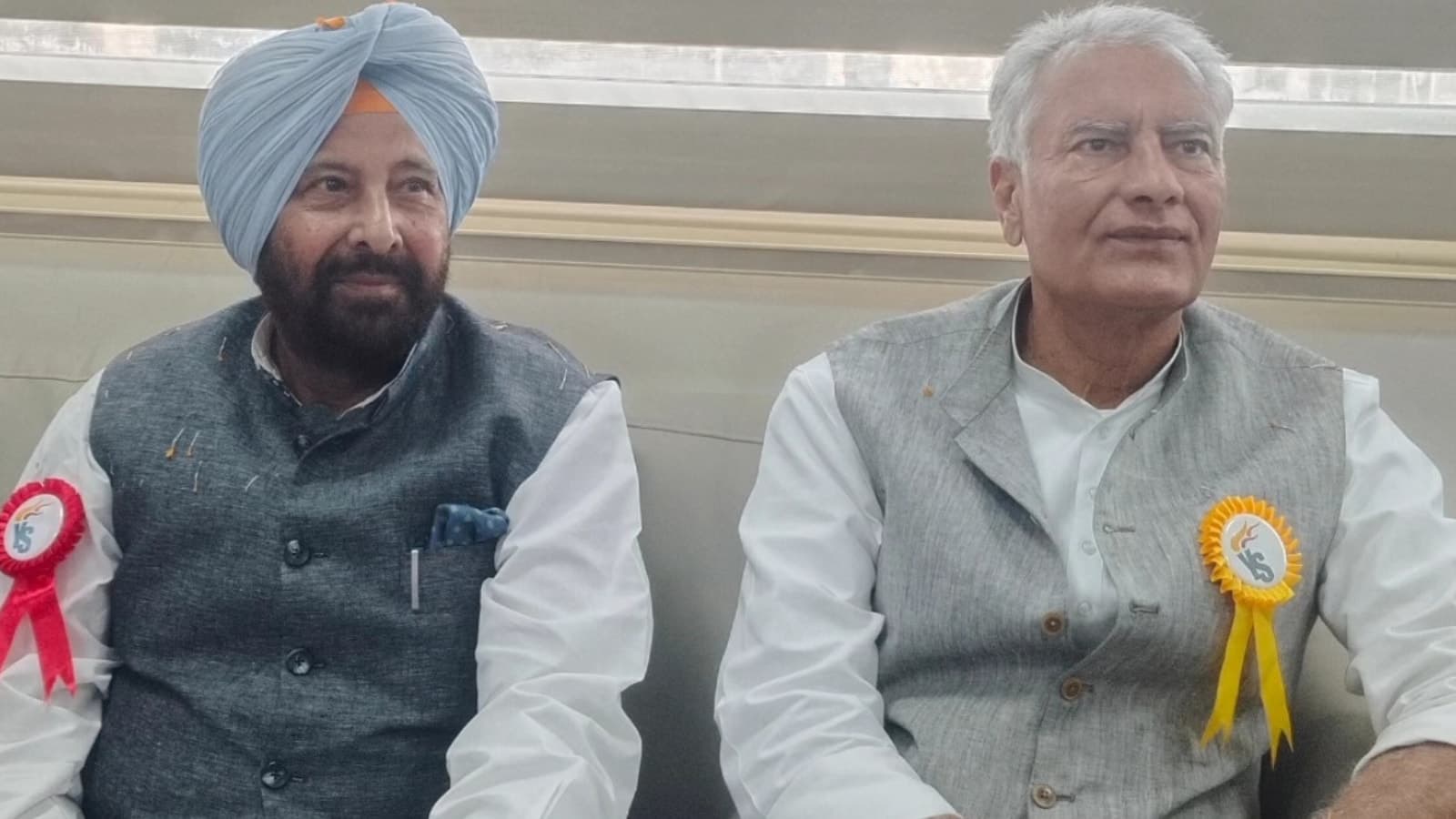
Image: Indian Express
The BJP's recent gains in Punjab's civic elections signal a strategic shift as it prepares for the 2027 Assembly polls. What does this mean for the political landscape?
GlipzoIn a surprising turn of events, the Bharatiya Janata Party (BJP) has significantly increased its presence in Punjab's urban local body elections, marking a pivotal moment for the party as it gears up for the 2027 Assembly elections. This surge follows the party’s historic victory in the West Bengal Assembly elections, and it comes just one day after the appointment of Kewal Singh Dhillon as the first Sikh president of the BJP's Punjab unit. This development is crucial as the BJP aims to broaden its influence in a state traditionally dominated by opposition parties.
The recent elections encompassed eight municipal corporations, 75 municipal councils, and 20 nagar panchayats, spanning a total of 1,977 wards. In a remarkable shift, the BJP's tally in ward wins has jumped from 49 in 2021 to over 170 in the current elections. Although the party finished fifth overall—behind the Aam Aadmi Party (AAP), Congress, Shiromani Akali Dal (SAD), and independents—this improved performance indicates a growing foothold for the BJP in Punjab’s urban and semi-urban areas.
The AAP retained its dominance in many civic bodies, yet the BJP achieved notable victories in several key locations. The standout performance came from the Abohar Municipal Corporation, where the BJP captured 28 of the 50 seats, leaving the AAP trailing with 20 seats. This victory is particularly significant as Abohar is the political stronghold of former Punjab BJP president Sunil Jakhar, whose nephew, Sandeep Jakhar, currently serves as the area's MLA. In contrast, the Congress had previously swept Abohar in the 2021 civic polls, winning 49 wards at that time.
Despite celebrating these gains, BJP leaders raised concerns about alleged irregularities during the counting process. Pritpal Singh Baliawal, the Punjab BJP spokesperson, claimed that their tally had reportedly exceeded 200 wards during the early counting, only to drop dramatically after the State Election Commission's (SEC) website crashed, raising suspicions among party officials. "We are not disheartened, as we anticipated such tactics from the AAP. Our preparations for 2027 are already underway, and we will work diligently towards that goal," Baliawal stated.
What’s noteworthy about the BJP's performance in these civic elections is the broadening of its appeal beyond its traditional strongholds. The party not only secured a majority in Abohar but also made strides in various municipal councils and nagar panchayats across districts such as Mohali, Hoshiarpur, Fatehgarh Sahib, Mansa, Patiala, and Fazilka. For the first time, the BJP also opened its account in the Bathinda Municipal Corporation, a district long considered a bastion of farmers' unions and agrarian politics.
Moreover, the BJP's gains in Mansa district are particularly significant, given the area's historical association with farmer protests against the party's policies. The BJP's winning of six seats in the Mansa Municipal Council is viewed positively, as local activist Gurlabh Singh Mahal pointed out that voters expressed dissatisfaction with the AAP's development initiatives and engagement with constituents. "These results should serve as a referendum for all political parties," Mahal emphasized.
Another notable achievement for the BJP came in the Malerkotla Municipal Council, predominantly a Muslim-majority area. The party managed to win one ward, surpassing the AAP candidate by 265 votes. This victory is emblematic of the BJP's efforts to broaden its appeal among minority populations in Punjab, a region where the party has often struggled for acceptance.
However, the election outcomes were not universally favorable for the BJP. In Barnala, the home district of newly appointed president Kewal Singh Dhillon, the party secured only seven wards out of 50, while the AAP claimed 36 seats. Despite this setback, Dhillon remains optimistic about the party’s future prospects, citing the need for sustained efforts to grow the BJP's base in Punjab.
The results of these civic elections highlight a critical juncture for the BJP in Punjab, serving as both an opportunity and a challenge. As the party prepares for the 2027 Assembly elections, this initial success could be the foundation for a more substantial political strategy in the state. The BJP is likely to focus on the following: - Strengthening Local Engagement: Building on the momentum from the civic polls by enhancing grassroots activism and addressing local issues. - Expanding Outreach: Increasing efforts to appeal to diverse voter demographics, including minorities and regions historically resistant to the BJP's influence. - Countering Opposition Strategies: Actively combatting the narratives and tactics employed by the AAP and other opposition parties, particularly regarding development and governance.
In conclusion, while the BJP's recent performance in the civic elections may not have propelled it to the top of the rankings, it has undeniably laid the groundwork for a more formidable presence in Punjab's political landscape. As the party looks ahead, the focus will be on leveraging these gains to make a significant impact in the upcoming Assembly elections. The next few years will be crucial in determining whether the BJP can translate this electoral momentum into a more prominent role in Punjab's governance and political future.

Tensions soar as the US and Iran engage in air strikes near the Strait of Hormuz, raising concerns over global oil supply and regional stability.
BBC World
Trump's international interventions face serious stalemates. What will this mean for U.S. foreign policy? Explore the critical challenges ahead.
Indian Express
Tehran denies resignation of President Masoud Pezeshkian amid claims of IRGC influence. What does this mean for Iran's political stability? Click to learn more!
Indian Express