
Image: Indian Express
Punjab's CM Bhagwant Mann critiques BJP, Congress, and SAD for nepotism and unveils plans for stringent anti-sacrilege laws ahead of 2027 elections.
GlipzoIn a bold assertion on Sunday, Punjab Chief Minister Bhagwant Mann directly challenged the BJP, Congress, and Shiromani Akali Dal (SAD), accusing these political parties of fostering an environment rife with nepotism and criminality. His remarks underscore a growing dissatisfaction with traditional political structures and a call for accountability in governance.
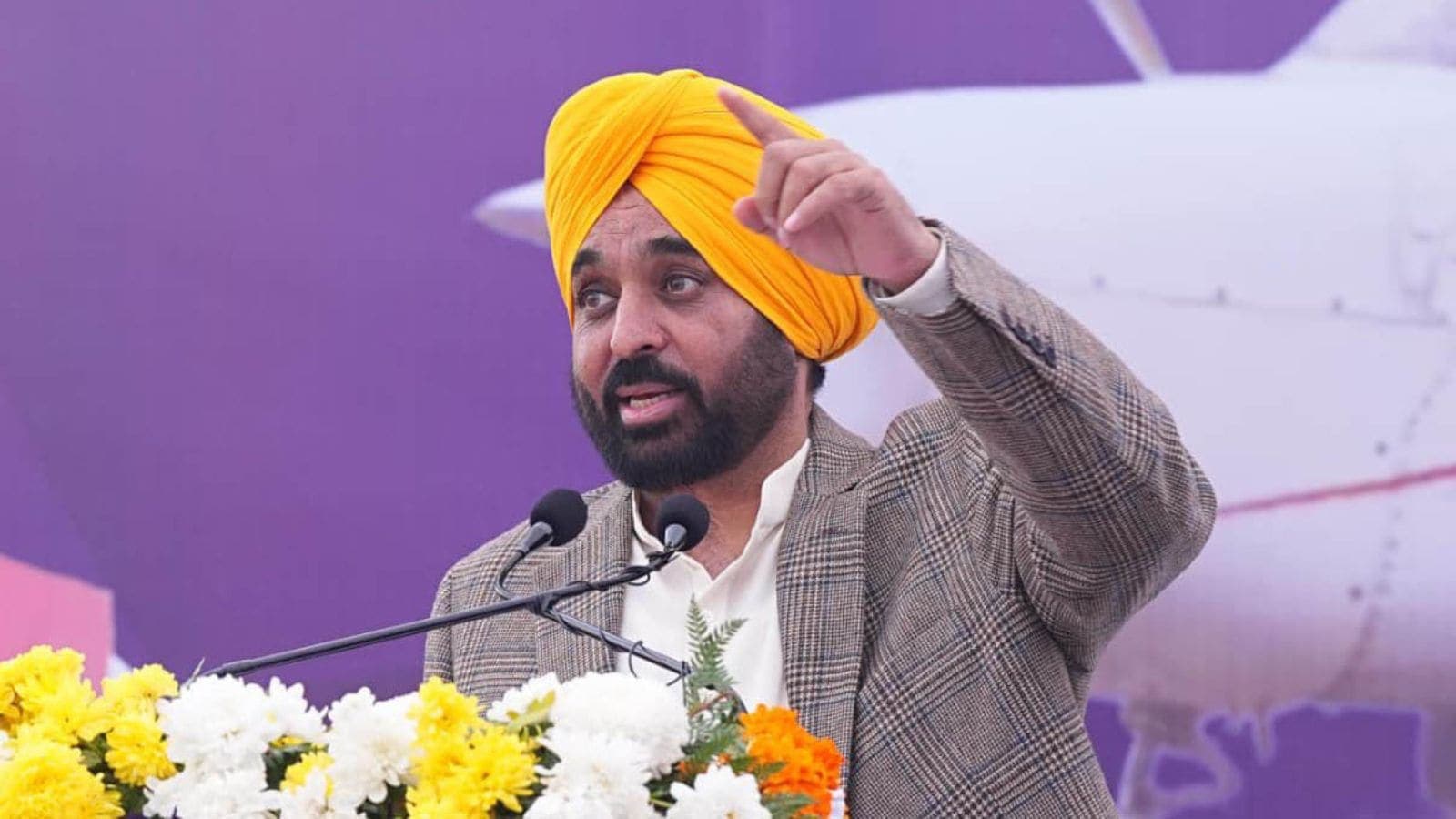
Addressing a gathering in Faridkot’s Jaito, Mann emphasized the need for a political shift, spotlighting the Aam Aadmi Party (AAP) as the viable alternative committed to the principles of justice and transparency. He referenced the 2022 electoral mandate, asserting that it represented a step towards realizing the aspirations of legendary freedom fighter Bhagat Singh. The chief minister’s focus was not solely on criticism but also on progress as he unveiled projects totaling Rs 28.68 crore, which included upgrading a local Community Health Centre into a full-fledged 30-bed hospital and improving drinking water and sports facilities.
During his address, Mann announced significant legislative intentions, revealing plans to enact a stringent anti-sacrilege law. This proposed legislation would impose severe penalties, including a one-year bail prohibition and potential life imprisonment for those convicted of religious desecration. He has scheduled a special assembly session for April 13 to discuss this critical issue, marking an important moment in Punjab’s political landscape.
Mann linked the upcoming 2027 elections to a clear choice for voters, portraying the Congress as synonymous with the legacy of the 1984 anti-Sikh riots and asserting that the Akali Dal's reputation is now tarnished. In stark contrast, he positioned AAP as a party focused on governance and committed to transforming Punjab into a ‘Rangla Punjab’—a vision of a vibrant, prosperous state.
The chief minister's remarks were particularly scathing towards the Akali Dal, accusing them of historical injustices and disrespect towards the Sri Guru Granth Sahib ji. He called attention to the Behbal Kalan and Bargari incidents, where violence erupted in response to sacrilege allegations, stating that the Akali Dal's actions have deeply hurt the sentiments of Sikhs across the region.
Mann did not shy away from pointing fingers at specific leaders, particularly targeting Bikram Singh Majithia, labeling him as a political puppet of British colonialism. He recalled the infamous Jallianwala Bagh massacre of April 13, 1919, alleging that Majithia's family had honored General Dyer, the massacre's architect, by hosting a dinner for him. This historical reference aims to highlight what Mann perceives as a continued betrayal of Punjab’s heritage and values by certain political families.
As Mann laid out his vision for the future, he introduced a metaphorical choice for voters in the upcoming elections: three pens, each representing a different political narrative.
Mann's strategic framing of these choices positions AAP as the party of progress and accountability, contrasting sharply with the legacies of its rivals.
In closing, Mann rallied the people of Jaito, recognizing the region’s historical significance and its role in social movements. He expressed gratitude for their contributions to Punjab’s rich tapestry, urging them to embrace the upcoming electoral choice as a chance to shape a better future for the state.
This challenging rhetoric from Mann indicates a significant shift in Punjab's political dynamics. With the 2027 elections on the horizon, the chief minister's campaign will likely intensify, focusing on accountability, legacy, and the quest for justice in governance. As Punjab approaches this critical juncture, the actions of the BJP, Congress, and SAD will be scrutinized more than ever, potentially reshaping the political landscape.
Mann’s statements reflect a growing discontent with established political norms in Punjab, addressing issues of governance, social justice, and historical grievances. As the state prepares for the next elections, this discourse could significantly influence voter sentiment and participation, making it essential for all parties to reassess their strategies and public engagements.
As the dialogue evolves and the special assembly session approaches, observers should keep an eye on how these political narratives unfold. Will the AAP capitalize on this momentum, or will the traditional parties adapt and respond effectively? The next few months will be pivotal in defining Punjab’s political future, with significant implications for governance and community relations across the state.

Tensions soar as the US and Iran engage in air strikes near the Strait of Hormuz, raising concerns over global oil supply and regional stability.
BBC World
Trump's international interventions face serious stalemates. What will this mean for U.S. foreign policy? Explore the critical challenges ahead.
Indian Express
Tehran denies resignation of President Masoud Pezeshkian amid claims of IRGC influence. What does this mean for Iran's political stability? Click to learn more!
Indian Express