
Image: BBC World
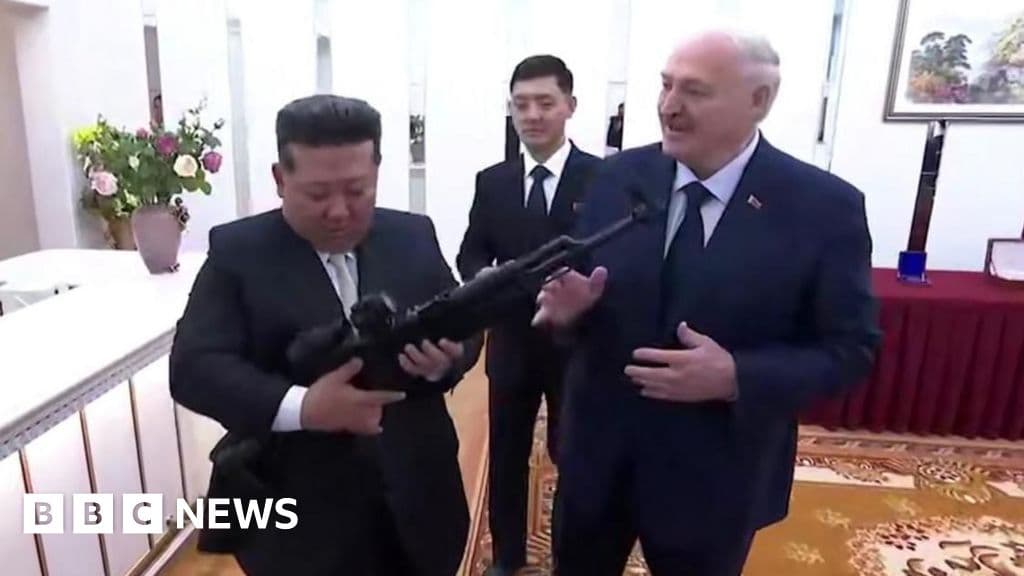
Belarusian President gifts a rifle to Kim Jong Un as they sign a friendship treaty in Pyongyang. Explore the implications of this new alliance.
GlipzoIn a significant diplomatic gesture, Belarusian President Alexander Lukashenko presented a rifle to North Korean leader Kim Jong Un during a recent signing ceremony for a friendship treaty in Pyongyang. This meeting, which took place amidst escalating geopolitical tensions, underscores the growing alliance between two nations often criticized for their authoritarian regimes and alignment with Russia amid the ongoing conflict in Ukraine.
Lukashenko, who has been a vocal supporter of Russia's actions in Ukraine, humorously remarked to Kim about the automatic rifle he brought along, stating it was a gift for “just in case enemies appear.” This light-hearted comment, captured on Belarusian state media, reflects the camaraderie developing between the two leaders. In return, Kim presented Lukashenko with a decorative sword and a vase adorned with his portrait, symbolizing their burgeoning friendship.
During the signing ceremony, both leaders emphasized the importance of their new agreement. Lukashenko expressed confidence in North Korea’s future, stating, “I can tell you as a friend, as a person who has already seen everything in this world: a great future awaits your country with this hardworking, disciplined people.” The Belarusian leader highlighted the necessity of collaboration among countries that face pressure from Western powers, particularly in protecting their sovereignty and enhancing the wellbeing of their citizens.
Kim echoed these sentiments, asserting that the friendship treaty would “further guarantee the stable development of bilateral relations.” Reports from the North Korean state news agency KCNA indicated that the two nations also agreed to foster cooperation in various sectors, including: - Agriculture - Information technology - Public health
This collaboration aims to enhance economic and social ties, ultimately benefiting both countries as they navigate international sanctions.
Both Belarus and North Korea are under stringent sanctions imposed by Western nations due to their alleged human rights violations and their support for Russia in the Ukraine conflict. North Korea, in particular, faces additional sanctions related to its nuclear weapons program, which has raised concerns globally.
Notably, reports indicate that North Korea has been supplying troops to assist Russia in its ongoing military operations in Ukraine, with estimates suggesting that over 10,000 North Korean soldiers have been deployed to fight alongside Russian forces. This military alliance raises alarm bells for the international community, particularly for nations like Ukraine, which has accused Russia of utilizing Belarusian territory as a launchpad for attacks against Ukrainian cities.
During this significant meeting, Kim conveyed a message of solidarity to Russian President Vladimir Putin, asserting that “Pyongyang will always be with Moscow.” This declaration reinforces the strategic partnership between North Korea and Russia, as both nations seek to counterbalance Western influence and strengthen their positions on the global stage.
As the situation in Ukraine continues to evolve, the implications of this friendship treaty could be far-reaching. With both nations facing international scrutiny, their alliance may serve as a foundation for further military and economic cooperation, challenging the current geopolitical landscape.
The signing of this friendship treaty between Belarus and North Korea represents a significant shift in alliances amid a backdrop of international tension. As both countries navigate their respective sanctions, their collaboration may embolden them against Western pressure, potentially leading to a more unified front in the face of international criticism.
This partnership could also serve as a warning sign for nations concerned about the rise of authoritarian regimes and their capacity to forge alliances that defy international norms. The growing relationship between these two countries highlights the complexities of modern geopolitics and raises questions about the future of global diplomacy.
As the world watches the aftermath of this crucial meeting, several aspects will be important to monitor moving forward: - Increased military cooperation: How will this relationship affect military strategies in Ukraine and the broader region? - Economic partnerships: Will Belarus and North Korea pursue joint economic ventures despite sanctions? - Responses from Western powers: How will the United States and its allies react to this strengthening of ties?
In conclusion, the friendship treaty between Belarus and North Korea marks a pivotal moment in international relations. As both nations continue to support each other amidst growing global tensions, the implications of this alliance will likely resonate far beyond their borders, influencing geopolitical dynamics for years to come.

Tensions soar as the US and Iran engage in air strikes near the Strait of Hormuz, raising concerns over global oil supply and regional stability.
BBC World
Trump's international interventions face serious stalemates. What will this mean for U.S. foreign policy? Explore the critical challenges ahead.
Indian Express
Tehran denies resignation of President Masoud Pezeshkian amid claims of IRGC influence. What does this mean for Iran's political stability? Click to learn more!
Indian Express