
Image: BBC World
Austria expels three Russian diplomats over espionage claims, raising security concerns and signaling a shift in diplomatic relations amidst growing tensions in Europe.
GlipzoIn a significant diplomatic move, Austria has expelled three Russian diplomats amid accusations of espionage activities. This decision was made public recently by Beate Meinl-Reisinger, Austria's Foreign Minister, who emphasized that the diplomats had engaged in illicit surveillance practices to gather sensitive information.
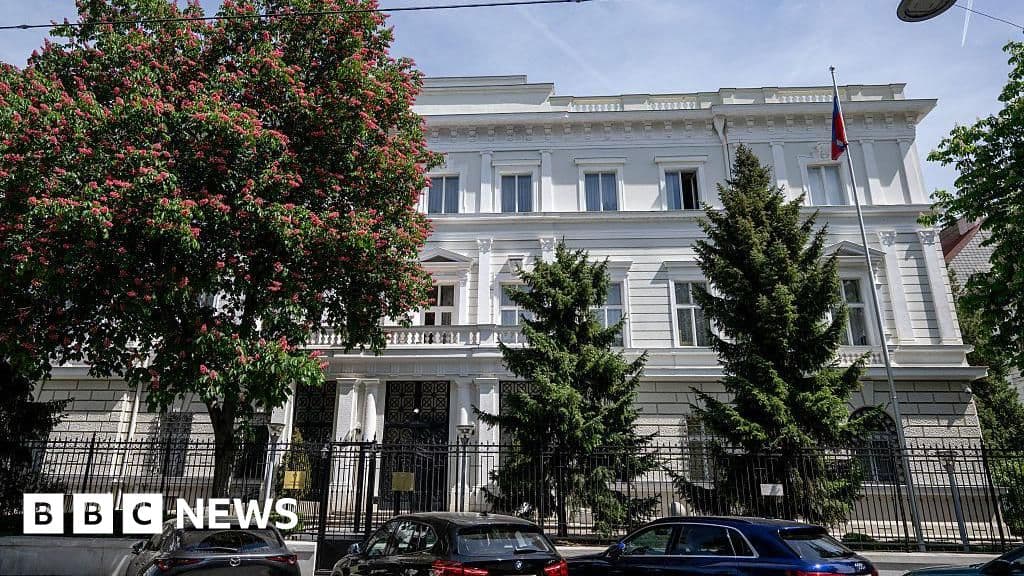
The Russian diplomats have already vacated the country, following revelations that they employed a "forest of antennas" installed atop diplomatic buildings to intercept data. This operation was reportedly based at the Russian embassy in Vienna and a nearby diplomatic compound, raising serious concerns within Austria's intelligence community.
According to a report from the Austrian Broadcasting Corporation (ORF), confirmed by the foreign ministry, the antennas allowed Russian operatives to capture data transmitted via satellite internet, affecting various international organizations. Meinl-Reisinger pointed out that this incident highlights a growing security concern for Austria, stating that "Espionage is a security issue for Austria."
The Foreign Minister reiterated the government's commitment to taking decisive measures against such activities, underlining that using diplomatic immunity to conduct espionage is “unacceptable.” The Russian embassy, however, responded defiantly, labeling the expulsion as “unjustified” and claimed it was driven by political motives.
This expulsion is part of a broader trend of increased scrutiny toward Russian activities in Europe, particularly regarding espionage. In January 2023, Austria witnessed a high-profile trial involving Egisto Ott, a former intelligence operative accused of leaking sensitive information to Russian authorities, including links to Jan Marsalek, the fugitive CEO of Wirecard. Ott's defense has vehemently denied the charges, but the case underscores the ongoing tensions between Austria and Russia concerning intelligence operations.
Germany has also taken similar actions, expelling a diplomat accused of espionage and publicly denouncing such activities as intolerable. The German foreign ministry emphasized that espionage, particularly under the guise of diplomatic immunity, would not be tolerated within its borders.
Vienna has long been recognized as a hotspot for espionage, particularly during the Cold War, when it served as a strategic listening post due to its proximity to the Iron Curtain. The city is currently home to significant international organizations, including the United Nations (UN) and the Organization for Security and Cooperation in Europe (OSCE). This status has led to an influx of diplomatic missions, which not only provide diplomatic immunity but also serve as cover for intelligence operatives.
The Austrian government’s Report on the Protection of the Constitution indicates that Vienna remains a crucial hub for Russian signals intelligence in Europe, citing that the presence of Russian diplomats has been linked to the growing number of espionage activities. As of now, around 220 individuals are still accredited to Russian diplomatic missions in Austria.
The ongoing espionage activities have raised alarms regarding Austria's international reputation. The government report noted that "Austria's international reputation is being damaged by Russian signals intelligence activities originating in Vienna." This statement reflects the complexities of maintaining neutral diplomacy while addressing security risks posed by foreign espionage.
Since the onset of the Ukraine conflict, Austria has expelled 14 Russian embassy staff, a move indicating a significant shift in its diplomatic posture toward Russia. The recent actions serve as a clear message that Austria is taking a firmer stance against espionage and foreign interference.
As tensions escalate, the relationship between Austria and Russia could face further strain. The Russian embassy's vow to respond harshly suggests that retaliation might be forthcoming, potentially leading to a cycle of diplomatic expulsions. Moreover, Austria's actions could inspire other nations to adopt a more vigilant approach to Russian diplomatic missions, particularly in light of heightened security concerns across Europe.
Looking ahead, observers will be keenly monitoring how this diplomatic spat unfolds and whether Austria will continue to strengthen its counter-espionage measures. It will also be crucial to watch how Russia reacts in the coming months, as the geopolitical landscape remains fraught with uncertainty and potential conflict.
The expulsion of Russian diplomats by Austria is not just an isolated incident; it reflects a broader trend of increasing vigilance against espionage in Europe. As more countries reassess their diplomatic relationships with Russia, the implications of such actions extend beyond mere politics, impacting international security and cooperation. This situation will be pivotal in shaping future diplomatic strategies, as nations navigate the complex waters of espionage, security, and international relations.

Tensions soar as the US and Iran engage in air strikes near the Strait of Hormuz, raising concerns over global oil supply and regional stability.
BBC World
Trump's international interventions face serious stalemates. What will this mean for U.S. foreign policy? Explore the critical challenges ahead.
Indian Express
Tehran denies resignation of President Masoud Pezeshkian amid claims of IRGC influence. What does this mean for Iran's political stability? Click to learn more!
Indian Express