
Image: The Hindu
Ashwani Kumar emphasizes the importance of human dignity in democracy during his book launch in New Delhi. Discover why this matters now more than ever.
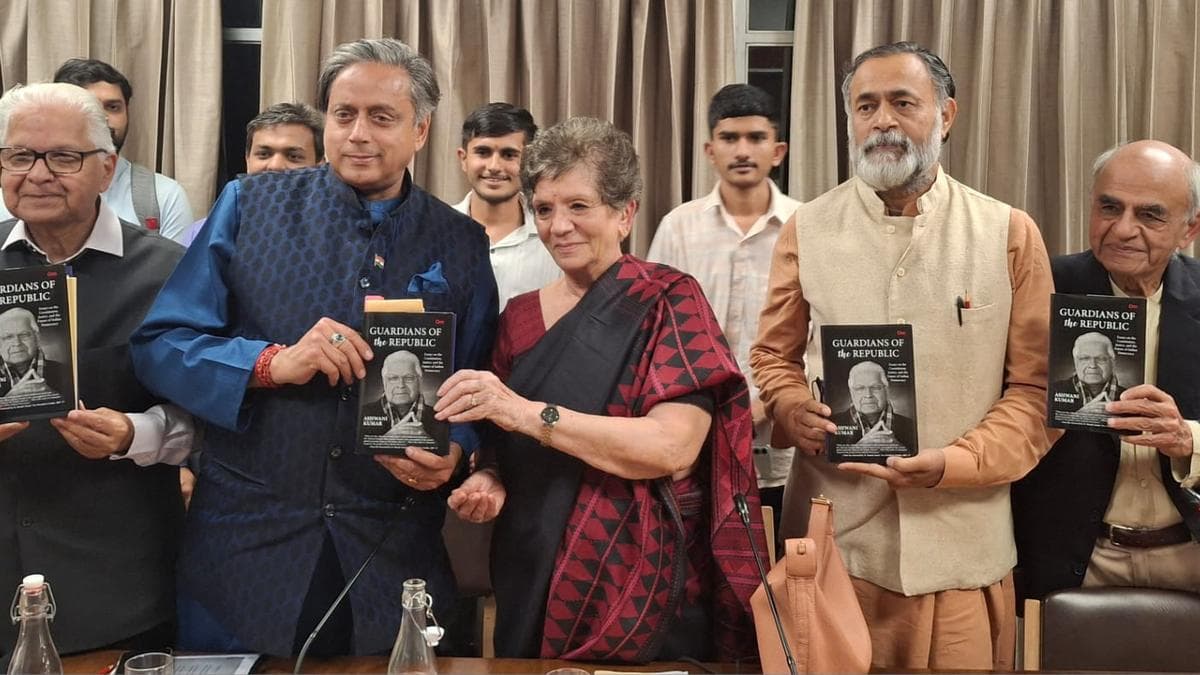
GlipzoIn a compelling statement at the launch of his latest book, 'Guardians of the Republic: Essays on the Constitution, Justice and the Future of Indian Democracy,' former Union Law Minister Ashwani Kumar emphasized the critical importance of human dignity in the framework of constitutional democracy. The event took place on March 20, 2026, in New Delhi, drawing attention from political figures, scholars, and students alike.
Kumar articulated that human dignity should remain "non-negotiable" in the political landscape, highlighting its foundational role in upholding democracy. His remarks came during a discussion that featured notable personalities such as Congress MP Shashi Tharoor, activist Yogendra Yadav, and author Gurcharan Das. The panel was moderated by renowned political theorist Neera Chandhoke and captivated an audience of around 100 participants, including former Chief Justice of India G.B. Pattanaik.
Kumar’s book delves into the intricate relationship between justice, constitutional rights, and the essence of democracy. He argues that for a democratic society to thrive, it is essential that the dignity of every individual is respected and upheld. This perspective resonates deeply in today’s political climate, where debates surrounding civil rights and freedoms are increasingly prevalent.
The discussion provided a platform for engaging dialogue, emphasizing the role of literature and thought leadership in shaping public policy and discourse. Kumar’s eloquent arguments remind us that the fight for dignity is not just a political issue but a fundamental human concern.
The panelists brought their unique perspectives to the discussion, enriching the dialogue. Shashi Tharoor spoke passionately about the historical context of democratic principles in India, while Yogendra Yadav highlighted the grassroots implications of political decisions on ordinary citizens. Gurcharan Das offered a philosophical lens, discussing the moral underpinnings of justice and governance.
During the event, Neera Chandhoke posed critical questions that invited the speakers to reflect on contemporary issues affecting democracy in India. This interaction fostered a rich exchange of ideas, further engaging the audience.
The emphasis on human dignity by Ashwani Kumar is particularly relevant in today's socio-political landscape. As India faces challenges such as social inequality, political polarization, and civil rights violations, the call for a renewed commitment to dignity in governance becomes imperative. Kumar’s work serves as a reminder that democracy is not merely a political system but a commitment to uphold the rights and dignity of every individual.
The book launch and subsequent discussion highlight a pivotal moment in India’s ongoing struggle for democracy, urging all stakeholders to prioritize human dignity above political expediency. As we move forward, it will be crucial to monitor how these discussions translate into actionable policies and societal changes.
As the dialogues sparked by Kumar's book continue, observers should watch for: - Policy Initiatives: Potential reforms inspired by the discussions at the launch. - Continued Advocacy: Engagement from civil society and scholars in promoting human rights. - Public Discourse: Increased focus on dignity in political debates and elections.
In conclusion, Ashwani Kumar’s powerful assertion that human dignity must remain non-negotiable resonates beyond the confines of the book launch. It calls for a collective responsibility to protect and promote the inherent rights of every individual within the democratic framework of India. The future of Indian democracy may very well hinge on this critical dialogue, making it essential for citizens, leaders, and policymakers to engage earnestly in these discussions.

Tensions soar as the US and Iran engage in air strikes near the Strait of Hormuz, raising concerns over global oil supply and regional stability.
BBC World
Trump's international interventions face serious stalemates. What will this mean for U.S. foreign policy? Explore the critical challenges ahead.
Indian Express
Tehran denies resignation of President Masoud Pezeshkian amid claims of IRGC influence. What does this mean for Iran's political stability? Click to learn more!
Indian Express