
Image: BBC World
A 2,500-year-old golden helmet stolen in a Dutch heist has been recovered, raising questions about cultural heritage security and international cooperation.
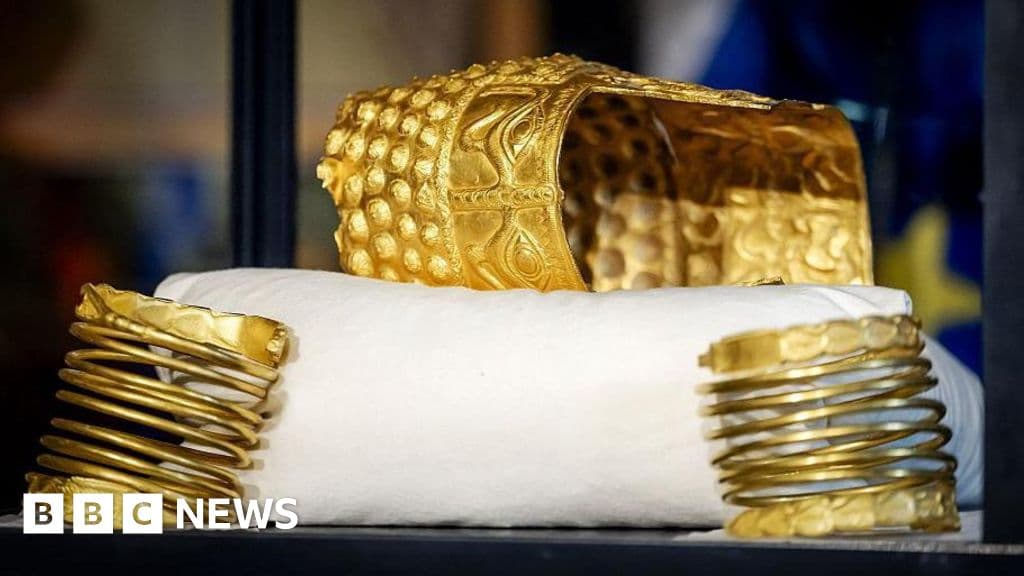
GlipzoA 2,500-year-old golden helmet, one of the most precious artifacts of Romania, has been successfully retrieved over a year after it was stolen during a high-profile heist at a Dutch museum. This remarkable recovery was announced on Thursday, as the helmet and two gold bracelets dating back to around 450 BC were unveiled at the Drents Museum in Assen, under tight security with armed police present.
The third bracelet remains missing, leaving questions about its whereabouts and the ongoing investigation. The theft, which involved an armed gang breaching the museum's security, sparked outrage in Romania and raised serious concerns regarding the protection of invaluable cultural treasures loaned to foreign institutions.
Romanian prosecutor Daniela Buruiană expressed her satisfaction with the recovery, stating, "It's a long-awaited result. We are happy that we are now witnessing here the recovery of the Romanian artefacts." This incident not only highlights the challenges of safeguarding cultural heritage but also brings to light the diplomatic tensions that can arise from such high-profile thefts.
The Coțofenești helmet and accompanying bracelets were part of an exhibition titled "Dacia - Empire of Gold and Silver," showcasing the rich history of the Dacian civilization, which thrived in what is now Romania before the Roman conquest in 106 AD. The theft was a significant blow to Romania's cultural pride and prompted a diplomatic row between Romania and the Netherlands, resulting in the Dutch government reportedly paying €5.7 million (approximately $6.5 million) in insurance compensation.
Romanian officials have remained tight-lipped regarding the future of this compensation, further complicating the narrative surrounding the theft and recovery.
Robert van Langh, the director of the Drents Museum, confirmed that while the helmet had sustained minor damage, it could be restored. Fortunately, the bracelets were found in pristine condition, raising hopes for their return to Romania soon.
Prosecutor Rareș-Petru Stan underscored the significant psychological and cultural impact the theft had on Romania, commending Dutch authorities for their diligence. He stated, "We are continuing the investigation to find the last bracelet, and we are grateful that we will be able to return this treasure to the Romanian people."
The artifacts were handed over to authorities following negotiations involving the defense lawyers of the three suspects arrested shortly after the incident. Two men in their mid-30s and one 21-year-old will face trial later this month, with the recovery of the treasures being part of a pre-trial agreement.
The audacity of the heist not only shocked art experts but also highlighted a concerning trend in the Netherlands, where several provincial museums have been targeted in recent years. The vulnerabilities of museum security systems have come under scrutiny, especially given that the helmet and bracelets were stored in a glass case that proved inadequate against the armed group's assault.
Notably, this incident is part of a broader pattern of thefts, including the 2024 theft of two Andy Warhol works and a Frans Hals painting that was stolen six years ago. These events have underscored the ongoing challenges faced by museums in protecting their collections from increasingly bold criminal activities.
The former head of Romania's national history museum, Ernest Oberländer-Târnoveanu, faced severe backlash and subsequently lost his job following the theft. He expressed relief at the helmet's recovery, emphasizing its importance. "This is a unique item in European and even global cultural heritage. The helmet is an important social and political symbol of Dacian civilization," he stated in an interview with RTL Nieuws.
The recovery of these artifacts is not just about reclaiming lost treasures; it represents a restoration of cultural identity and pride for the Romanian people. As efforts continue to locate the missing bracelet, the attention shifts to how both Romania and the Netherlands will enhance security and cooperation to prevent future incidents.
The recovery of the Coțofenești helmet and other artifacts may signal a turning point in the dialogue surrounding cultural heritage protection. As countries grapple with securing their historical treasures, increased collaboration and innovation in security measures are essential.
Moving forward, art institutions must prioritize the safeguarding of their collections, perhaps adopting advanced technologies and strategies to deter theft. Additionally, the legal proceedings against the suspects will be closely watched, as they could set important precedents for how art theft cases are handled internationally.
In conclusion, while this recovery marks a significant victory for Romania, it serves as a stark reminder of the fragility of cultural heritage. All eyes will be on the ongoing investigations and the eventual fate of the last missing bracelet, as the world reflects on how to better protect its shared history.

Survivors of the Laos cave rescue are aiding efforts to find the last two missing men trapped inside, sharing crucial insights for the search operation.
BBC World
A year after the tragic Air India crash, the Ali family reflects on grief, unanswered questions, and the enduring bonds of love in the face of loss.
BBC Business
A devastating explosion in Myanmar's Kaung Tat village has killed at least 55 people, raising serious safety concerns and questions about civilian protection in conflict zones.
BBC World