
Image: Indian Express
AAP plans to disqualify 7 MPs switching to BJP, citing anti-defection laws. Discover the implications for both parties amid political turmoil.
GlipzoIn a striking political maneuver, the Aam Aadmi Party (AAP) announced on Saturday its intentions to request the disqualification of seven Rajya Sabha MPs who defected to the Bharatiya Janata Party (BJP) just a day prior. This significant shift in allegiance has raised questions about the legality of their departure, as it involves more than two-thirds of AAP's representation in the Upper House.
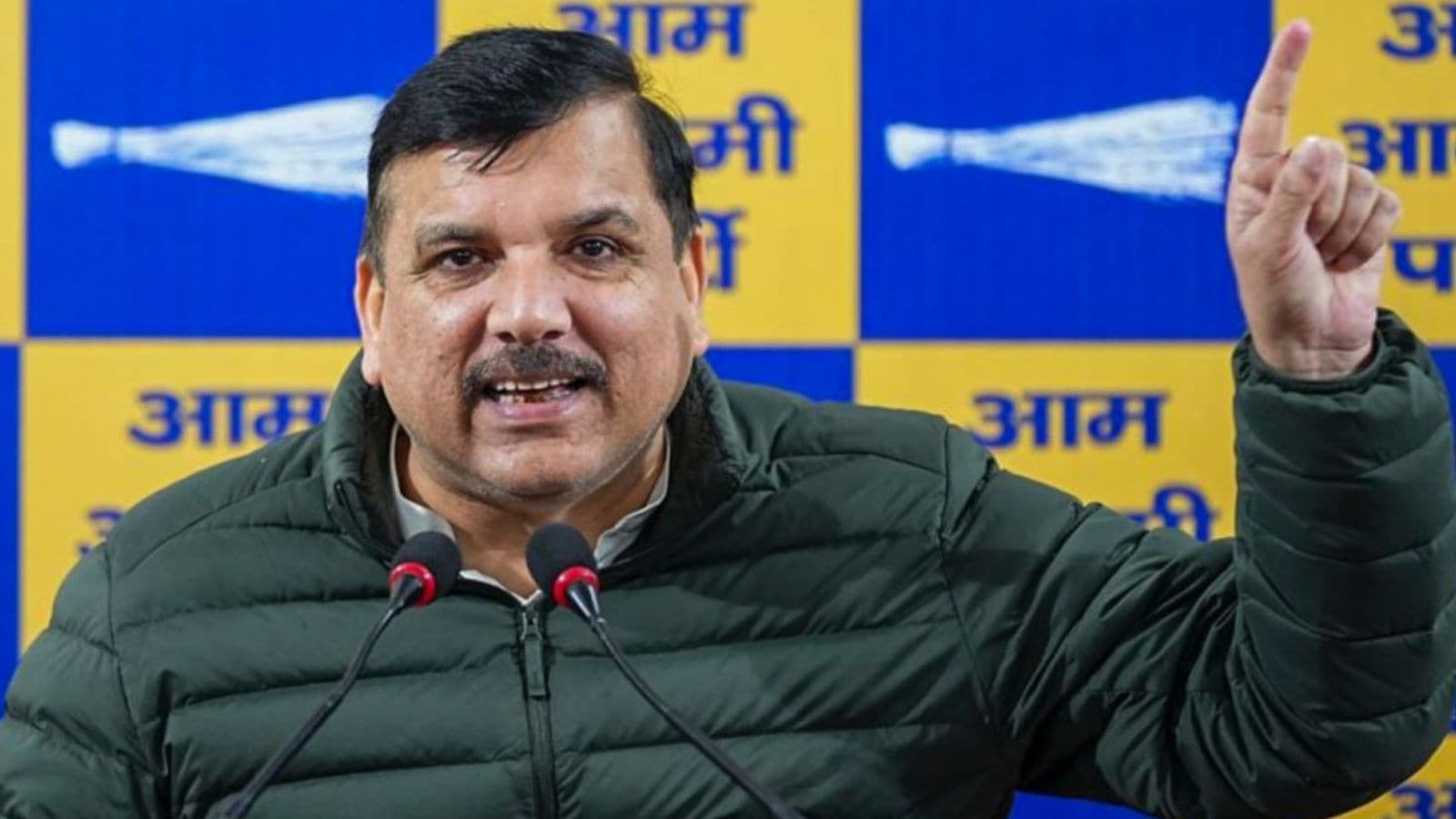
Sanjay Singh, a senior AAP leader, addressed the media to clarify the party's stance, emphasizing that the Tenth Schedule of the Indian Constitution does not recognize splits or breakaway factions in either the Rajya Sabha or Lok Sabha, regardless of the size of the majority. He stated, "The anti-defection law clearly prohibits any form of split in legislative bodies, and this defection is entirely unconstitutional and against parliamentary rules."
Singh further asserted that even if the number of defecting MPs were to increase, it would still lack legal validity under the Tenth Schedule. He cited the Shiv Sena case as a precedent, reinforcing AAP's position on the matter. The seven MPs who switched sides include notable figures such as Raghav Chadha, who was recently removed as the party's deputy leader, and Swati Maliwal, among others.
The AAP's decision to pursue disqualification comes at a time when the party is grappling with significant challenges. Saurabh Bharadwaj, AAP's Delhi president, lamented the ongoing difficulties, stating that the party was built by ordinary workers and that it has lost power in Delhi while facing numerous legal battles.
Bharadwaj highlighted the irony of the current situation, where the government appears to be targeting those who continue to ask tough questions. He remarked, "The seven MPs who left had already stopped questioning the government, so their departure does not impact us. However, we implore our remaining members to continue their inquiries."
The political landscape has shifted dramatically for AAP, especially after losing significant power in the Delhi Assembly. The party has faced ED raids and other governmental pressures, which Bharadwaj claims have forced some leaders to abandon ship. He noted, “Ordinary AAP karyakartas fear little from agencies like the ED since they live modestly on their salaries. It is these individuals that the Prime Minister fears the most.”
In response to AAP's accusations, Virendra Sachdeva, the president of Delhi BJP, criticized the party for its perceived frustration. He claimed that the public understands the motivations behind the defections and accused AAP leaders of attempting to intimidate the departing MPs with threats like the ‘Right to Recall.’ Sachdeva stated, “Kejriwal has been hiding behind other leaders to address this issue, forgetting that these seven MPs are respected individuals who felt stifled within AAP.”
The political tension between AAP and BJP is palpable, with both parties positioning themselves for potential electoral gains. Bharadwaj's comments suggest that AAP is not only concerned about the loss of its MPs but also about the broader implications for its identity and future.
The fallout from these defections could have significant repercussions for both the AAP and the BJP. For AAP, the loss of more than half of its Rajya Sabha representation poses a threat to its influence in legislative matters. The party's efforts to disqualify the MPs reflect its commitment to maintaining its integrity and standing against what it views as opportunistic politics.
Conversely, for the BJP, the addition of these MPs could bolster its numbers in the Upper House, potentially strengthening its legislative agenda. However, this move also invites scrutiny regarding how defections are handled in Indian politics, particularly in light of the anti-defection law.
As the political drama unfolds, the implications of these defections will likely resonate throughout the country. The AAP's legal strategy to disqualify its former members will be closely watched, as it could set precedents for future cases of political defection.
What remains to be seen is how both parties will navigate the fallout from this incident. Will AAP succeed in rallying its remaining members and maintaining its foothold in Indian politics? Or will BJP capitalize on this shift, further consolidating its power in the Upper House? The answers to these questions will shape the political narrative in the coming months.
Stay tuned for further developments as this story progresses.

Tensions soar as the US and Iran engage in air strikes near the Strait of Hormuz, raising concerns over global oil supply and regional stability.
BBC World
Trump's international interventions face serious stalemates. What will this mean for U.S. foreign policy? Explore the critical challenges ahead.
Indian Express
Tehran denies resignation of President Masoud Pezeshkian amid claims of IRGC influence. What does this mean for Iran's political stability? Click to learn more!
Indian Express